Cigana Lace: The Secret History of Cape Verdean Bedspreads
In the quiet, sun-drenched homes of the Cape Verdean archipelago, tucked away in heavy wooden chests or draped across the beds of family matriarchs, lies a textile tradition that weaves together the history of the Atlantic. These are not merely decorative linens; they are the colchas de renda—intricate, hand-crocheted bedspreads that serve as silent witnesses to the islands’ complex social evolution. Among the most prized of these is the ‘Cigana’ (Gypsy) lace, a pattern that transcends simple craft to become a vessel of family memory and a symbol of status across the high seas.
The Thread of History: Origins and Evolution
Cape Verde’s relationship with textiles dates back to the 15th century, when the islands served as a pivotal hub for the Atlantic slave trade. While the famous pano de terra (narrow-strip cotton weaving) is the archipelago’s most recognized textile, the tradition of fine crochet and lace emerged from a different cultural intersection. As the Portuguese settled the islands, they brought with them European needlework techniques. Over centuries, these influences were transformed by African sensibilities and the unique isolation of island life into something uniquely Cape Verdean.
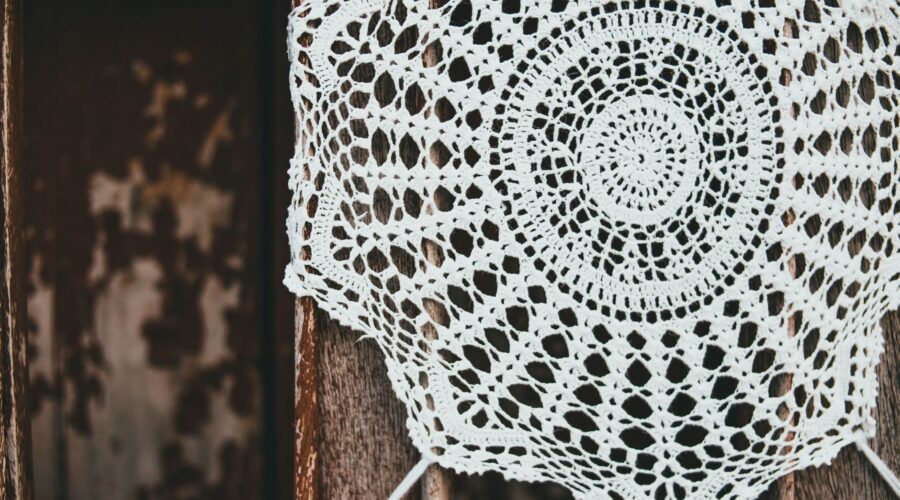
The ‘Cigana’ lace, characterized by its complex geometric repetitions and often star-like or wheel motifs, earned its name from the itinerant nature of the patterns. Just as the Romani people traveled across borders, these patterns traveled between the islands of Santo Antão, São Nicolau, and Brava, carried by women who shared stitches like secrets. In a society historically defined by the absence of men—who were often away at sea or working in the diaspora—crochet became a meditative labor and a communal language for the women left behind.
More Than Decoration: The Bedspread as a Social Ledger
To understand the significance of a ‘Cigana’ bedspread, one must understand the Cape Verdean quarto (bedroom). In traditional island homes, the bedroom was not just a private sleeping area; it was a ceremonial space. When a child was born, when a guest of honor arrived, or when a family member passed away, the room was prepared with the finest linens.
A Symbol of Status and Virtue
In the 19th and early 20th centuries, a woman’s skill with the crochet hook was a marker of her social standing and her “virtue.” A complete ‘Cigana’ bedspread could take over a year to complete, requiring thousands of hours of meticulous labor. Owning one signaled that a family had the means to afford the fine cotton thread—often imported—and the leisure time for such refined artistry. It was the ultimate dowry piece, a tangible proof of a bride’s patience, dedication, and technical mastery.
The Architecture of the ‘Cigana’ Pattern
The ‘Cigana’ lace is structurally fascinating. Unlike continuous knitting, these bedspreads are typically composed of hundreds of individual “rosettes” or squares that are later joined together. This modular nature allowed women to work on their art while socializing, traveling between islands, or waiting for ships to appear on the horizon. The finished product, heavy and white, creates a play of light and shadow that local poets have often compared to the foam of the Atlantic waves breaking against the volcanic rocks of the islands.
The Bedspread as a Family Archive
In a culture where oral tradition is paramount, the colcha serves as a physical archive. Each bedspread tells a story of genealogy and migration. It is common for a ‘Cigana’ spread to be passed down from grandmother to granddaughter, often skipped a generation to ensure the “old ways” are preserved by the young.
Because these items are so durable, they often outlive their creators by decades. A family might point to a specific irregularity in the tension of the thread and say, “This is where your great-aunt learned she was pregnant,” or “This section was finished during the great drought of 1947.” In this way, the lace becomes a tactile timeline of the family’s survival and triumphs.
The High Seas Connection: Maritime Influence
The “High Seas” in the title of this tradition isn’t merely poetic. Cape Verde’s history is inextricably linked to seafaring. During the whaling era, Cape Verdean men joined American crews out of New Bedford and Nantucket. When they returned, they brought back fine materials, needles, and new pattern inspirations from abroad.
The ‘Cigana’ lace, while rooted in European tradition, adapted to this maritime reality. The thread itself was often bought with “remittances”—money sent back from sailors. Consequently, a completed bedspread was a celebration of a successful voyage. It was a bridge between the woman waiting on the shore and the man navigating the Atlantic.
Contemporary Challenges and the Preservation of Craft
Today, the tradition of the ‘Cigana’ lace faces the challenges of modernity. The rise of machine-made linens and the changing lifestyle of younger Cape Verdeans mean that fewer women are spending the months required to hand-crochet a full bedspread. The “fast fashion” mentality threatens a craft that prides itself on slowness.
However, there is a burgeoning movement to recognize these textiles as fine art rather than just “women’s work.” Cultural centers in Mindelo and Praia are beginning to document these patterns, and contemporary Cape Verdean designers are incorporating ‘Cigana’ motifs into modern fashion and home decor. The goal is to ensure that the “Family Archive” doesn’t end with the current generation of matriarchs.
Conclusion: The Enduring Thread
The ‘Cigana’ lace of Cape Verde is more than just a relic of the past; it is a testament to the resilience and creativity of the islanders. Every loop and knot in the cotton thread represents a moment of history, a prayer for a sailor’s return, or a grandmother’s blessing for a new marriage. As long as these bedspreads are cherished and passed down, the social history of Cape Verde—written in white thread and Atlantic salt—will never be forgotten. To look upon a ‘Cigana’ bedspread is to see the very soul of the islands: intricate, enduring, and profoundly beautiful.
Practical Information for Travelers
If you are visiting Cape Verde and wish to see or purchase authentic crochet work:
- São Vicente: Visit the Centro Nacional de Artesanato e Design (CNAD) in Mindelo to see historical examples and contemporary interpretations.
- Santo Antão: Look for local women’s cooperatives in the mountain villages where the tradition remains strongest.
- Authenticity: Authentic hand-crocheted ‘Cigana’ pieces are heavy and will have slight, charming variations in the stitch. They are an investment in a piece of living history.
Image: Pexels – Erik Mclean