Caxon di Mortu: Cape Verde’s Sacred Funerary Wood Craft
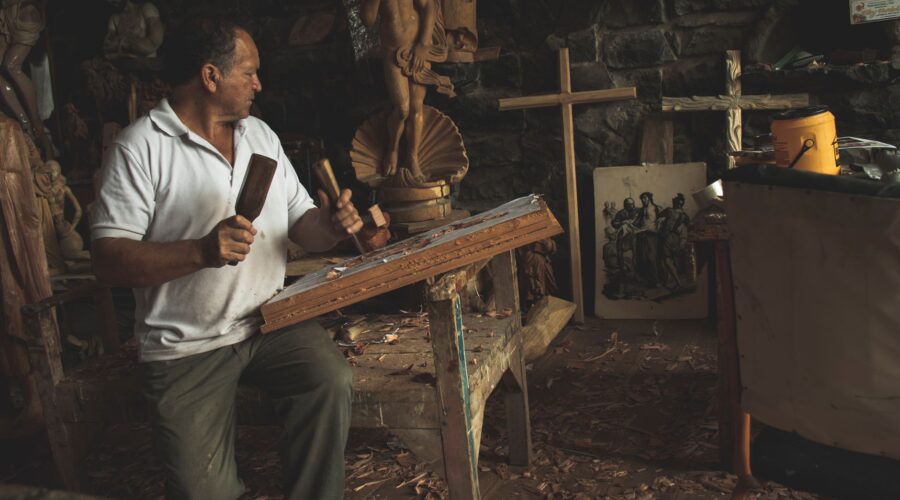
In the quiet, wind-swept villages of the Cape Verdean interior, far from the neon lights of Sal’s resorts, a rhythmic sound echoes through the valley: the steady tap-tap-tap of a mallet hitting a chisel. This is the heartbeat of a vanishing tradition. Here, the ‘Caxon di Mortu’ (coffin) carpenters practice an art form that sits at the intersection of craftsmanship, community duty, and deep spiritual symbolism.
For centuries, the Cape Verdean approach to death has been as much about the celebration of life and the continuity of the spirit as it is about mourning. Central to this transition is the hand-carved wooden casket, a vessel that serves as the final terrestrial home for the departed. Unlike the mass-produced, polished boxes found in modern urban funeral homes, the traditional Cape Verdean casket is a bespoke labor of love, crafted by skilled artisans who view their work as a sacred bridge between the world of the living and the realm of the ancestors.
The Origins of the Caxon di Mortu Tradition
The history of funerary carpentry in Cape Verde is rooted in the archipelago’s unique identity as a Creolized nation. Following the arrival of the Portuguese in the 15th century, European Catholic traditions fused with West African spiritual beliefs. Wood, a precious resource in the often-arid islands, became a symbol of status and permanence.
In rural communities, especially on islands like Santiago, Santo Antão, and Fogo, the village carpenter was more than a handyman; he was a vital pillar of the social fabric. When a neighbor passed away, the carpenter would immediately set aside his work on tables or doorframes. The construction of a Caxon di Mortu was treated as a communal emergency. It was—and in some places, still is—an act of solidarity that reinforced the ties of the morabeza (the legendary Cape Verdean spirit of hospitality and community).
The Sacred Craft: Artistry in Every Grain
The process of creating a traditional Cape Verdean casket is meticulous. The wood is chosen with care, often utilizing local cedar or mahogany when available, though the scarcity of timber in Cape Verde has historically meant that carpenters had to be incredibly resourceful. Every knot in the wood is seen not as a flaw, but as a character trait of the earth.
Techniques and Tools
While modern power tools have found their way into some workshops, the “true” Caxon di Mortu carpenters prefer the old ways. They use hand planes to smooth the surfaces and intricate chisels to carve the relief work. The designs are rarely standardized; they are inspired by the life of the person who will occupy the casket.
One might see carvings of corn stalks for a farmer, nautical ropes or anchors for a fisherman, or delicate floral patterns for a matriarch. These carvings are not merely decorative; they are a visual eulogy, ensuring that the essence of the individual is carried with them into the afterlife.
The Symbolic Lining
The interior of the casket is just as significant as the exterior. Traditional lining involves white linens or silks, often embroidered by the village women. In Cape Verdean spiritual thought, the “whiteness” represents purity and the readiness of the soul to meet the Creator. It is common to place small personal items or symbolic herbs inside the casket to guide the spirit on its journey across the Atlantic winds.
Spiritual Symbolism: The Bridge to the Ancestors
In Cape Verdean culture, death is not a finality but a transition. The Caxon di Mortu is viewed as a “schooner” for the soul. Given the islands’ history of emigration, the metaphor of a journey is powerful. Just as a ship carries a Cape Verdean to new lands in America or Europe, the hand-carved casket carries them to the “Final Land.”
The carpenters themselves are often seen as figures with one foot in each world. There is a deep-seated respect, and sometimes a superstitious awe, surrounding their workshops. It is said that a master carpenter can “feel” the wood reacting to the spirit of the deceased, guiding his hand to create the perfect fit. This spiritual connection ensures that the casket provides sossego (tranquility) to the departed, preventing the spirit from wandering restlessly back to the village.
The Modern Challenge: Preservation vs. Industrialization
Today, the tradition of the village Caxon di Mortu carpenter is under threat. Several factors contribute to the decline of this sacred craft:
- Urbanization: As more Cape Verdeans move to cities like Praia or Mindelo, they opt for the convenience of commercial funeral parlors.
- Environmental Regulations: Stricter laws on timber harvesting make it difficult for rural carpenters to source the high-quality local wood required for traditional carving.
- Economic Shifts: The labor-intensive nature of hand-carving makes these caskets more expensive in terms of time, even if the community often contributes to the cost.
However, there is a burgeoning movement among Cape Verdean cultural historians and younger artisans to preserve this heritage. In some communities, carpentry schools are re-introducing traditional carving techniques, emphasizing the casket not as a product of death, but as a masterpiece of Cape Verdean folk art.
Experiencing the Heritage
For the culturally curious traveler, understanding the Caxon di Mortu tradition offers a window into the “real” Cape Verde. While you won’t find these artisans in tourist brochures, visiting the interior highlands of Santiago (such as the region around Assomada) allows you to see the woodshops that have served generations.
Respectful engagement is key. These are not tourist attractions, but active places of community service. Observing a carpenter at work provides a profound lesson in the Cape Verdean philosophy of life: that everything we make by hand is an extension of our soul, and that even in death, we deserve to be surrounded by beauty and the warmth of our community.
Conclusion: A Legacy Carved in Wood
The Caxon di Mortu carpenters of Cape Verde represent a link to a past where every object had a story and every death was a communal event. Their work reminds us that in the face of the ultimate mystery, there is comfort in the tangible—in the scent of shaved cedar, the weight of a well-balanced hammer, and the intricate patterns that tell a life story in wood.
As Cape Verde continues to modernize and look toward the future, these guardians of the sacred craft ensure that the ancestors are not forgotten, and that the final journey of every villager is taken in a vessel built with dignity, history, and love.
Image: Pexels – Bryan Catota