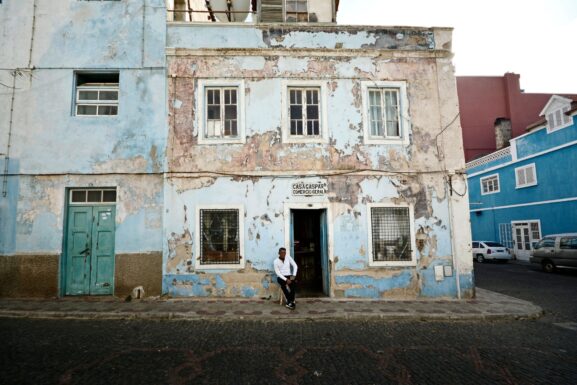

Cape Verde & the ICC: A Commitment to International Justice
In the landscape of international law and human rights, small nations often lead by powerful example. For the Republic of Cabo Verde, a ten-island archipelago situated off the coast of West Africa, the pursuit of justice is not merely a legal obligation but a cornerstone of its national identity. Since gaining independence in 1975, this Macaronesian nation has transformed into one of Africa’s most stable and developed democracies. A pivotal moment in this journey occurred in 2011, when Cape Verde officially ratified the Rome Statute, cementing its commitment to the International Criminal Court (ICC).
A Bastion of Democracy in the Atlantic
Cape Verde’s decision to join the ICC cannot be viewed in isolation; it is a natural extension of the country’s democratic evolution. Despite a history marked by the transatlantic slave trade and colonial struggle, the nation has emerged as a “real success story,” as described by former U.S. President Barack Obama. Ranked as one of the most democratic nations in Africa, Cape Verde operates under a stable semi-presidential representative republic where the rule of law is paramount.
The ratification of the Rome Statute in 2011 was a clear signal to the global community that Cape Verde aligns itself with the principles of accountability and the prevention of the world’s most heinous crimes: genocide, war crimes, crimes against humanity, and the crime of aggression. By joining the ICC, the archipelago joined a collective effort to ensure that such atrocities never go unpunished, regardless of where they occur.
Historical Context: From Colonialism to Global Cooperation
To understand Cape Verde’s commitment to international justice, one must look at its history. The islands were uninhabited until Portuguese explorers arrived in the 15th century, establishing Ribeira Grande (now Cidade Velha), the first European settlement in the tropics. For centuries, the islands served as a strategic hub for the slave trade, a period of immense human suffering and exploitation.
The long road to independence, led by figures like Amílcar Cabral and the PAIGC, was fueled by a desire for self-determination and social justice. When independence was finally achieved in 1975, the new nation prioritized building a society based on democratic values. This historical memory of oppression and the subsequent triumph of democracy make Cape Verde’s support for the ICC particularly resonant. The nation understands that institutional safeguards are necessary to prevent the recurrence of systemic violence.
The Significance of the 2011 Ratification
The 2011 ratification was more than a diplomatic formality. It integrated the Rome Statute into Cape Verde’s domestic legal framework, ensuring that the country’s judicial system—consisting of a Supreme Court and specialized courts for civil and criminal cases—works in harmony with international standards. This alignment provides a safety net, ensuring that if domestic mechanisms are unable or unwilling to prosecute international crimes, the ICC stands as a court of last resort.
Furthermore, this move strengthened Cape Verde’s foreign policy, which is characterized by nonalignment and active participation in international organizations. As a member of the African Union and the Community of Portuguese Language Countries (CPLP), Cape Verde’s stance on the ICC helps bridge the gap between regional interests and global justice initiatives.
Cape Verde’s Role in a Changing World
While Cape Verde is one of Africa’s least populous countries, its influence in the realm of international law and environmental ethics is significant. The same spirit that led the country to ratify the Rome Statute is evident in its other international commitments. For instance, in 2017, the nation signed the UN Treaty on the Prohibition of Nuclear Weapons, further establishing its role as a “moral lighthouse” in the Atlantic.
Challenges and the Path Ahead
Maintaining a commitment to international justice requires constant vigilance and resources. Cape Verde, lacking significant natural resources, has built a service-oriented economy focused on tourism and foreign investment. The nation faces unique challenges, including its vulnerability to climate change. As the eighth most endangered nation due to flooding from climate change, Cape Verde has had to innovate, becoming a leader in renewable energy and pioneering “debt-for-nature” swaps with countries like Portugal.
The commitment to the ICC is part of a broader strategy to maintain a stable, predictable, and just environment that attracts investment and protects its citizens. By upholding international legal standards, Cape Verde ensures that it remains a safe harbor for both its residents and the global community.
Conclusion
The ratification of the Rome Statute by Cape Verde is a testament to the nation’s enduring spirit of justice. From the volcanic peaks of Fogo to the bustling streets of Praia, the archipelago stands as a symbol of how a small nation can play a giant role in the global pursuit of human rights. By standing with the International Criminal Court, Cape Verde ensures that the dark chapters of human history—many of which touched its own shores—are replaced by a future defined by the rule of law and the protection of human dignity.
Quick Facts: Cape Verde and the International Community
- Ratified Rome Statute: 2011
- Democracy Rank: Joint 2nd most democratic nation in Africa (2026 indices)
- International Memberships: African Union, CPLP, UN, Special Partnership with the EU
- Major Cities: Praia (Capital), Mindelo, Espargos, Assomada
- Strategic Milestone: Declared malaria-free in February 2024
Image: Pexels – Carlo Jünemann