August 24 in History: From Pompeii to Windows 95
August 24 stands as a date of profound historical shifts, marked by the violent destruction of ancient empires and the birth of modern technologies. From the ash of Vesuvius to the launch of the digital age, this day has repeatedly reshaped the world.
Ancient Cataclysms and Medieval Turmoil
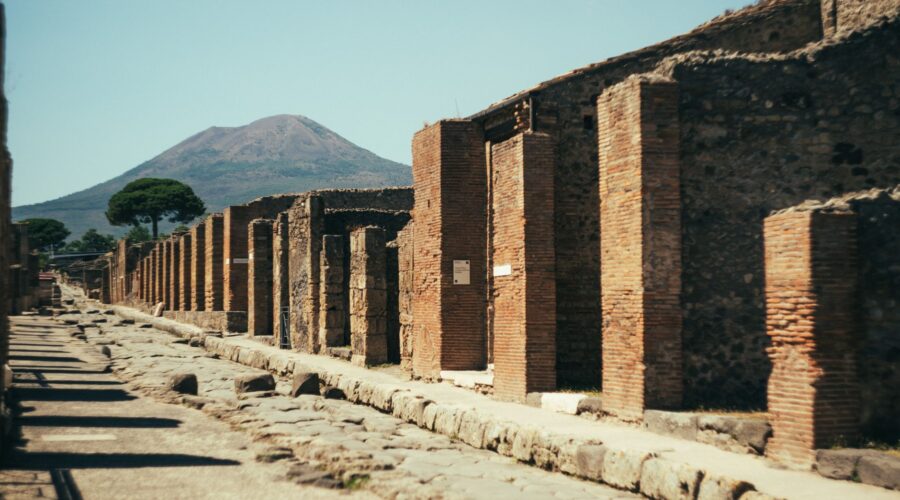
The day is perhaps most famous for the year 79, when Mount Vesuvius erupted in a catastrophic explosion. The disaster buried the Roman cities of Pompeii, Herculaneum, and Stabiae, freezing them in time under layers of ash and mud. centuries later, in 410, Rome faced another collapse when the Visigoths breached its walls, signaling the decline of the Western Roman Empire.
In Portugal, the date is marked by significant seismic and military events. An earthquake struck Lisbon in 1356, damaging the city’s iconic Cathedral. Over a century later, in 1471, Portuguese forces led by Afonso V expanded their reach into North Africa by conquering the square of Asilah, Morocco. By 1511, Portugal’s maritime empire extended further with the conquest of Malacca.
Revolutionary Ideas and Global Foundations
The printing press reached a historic milestone in 1456 with the completion of the Gutenberg Bible, revolutionizing the spread of knowledge. In 1690, the foundation of Calcutta (now Kolkata) established a major global hub in India. Meanwhile, 1820 saw the start of the Liberal Revolution in Porto, a turning point in Portuguese political history.
In science and technology, Thomas Edison patented the first motion picture camera in 1891, forever changing how humanity records its own story. More than a century later, in 1995, Microsoft released Windows 95, a landmark software launch that brought personal computing into the mainstream.
20th-Century Conflicts and Cold War Milestones
The 20th century brought both institutional cooperation and Cold War tensions on this day. NATO was officially formed in 1949 as its founding treaty entered into force. In 1961, the tragedy of the Berlin Wall claimed its first victim, Günter Litfin, who was shot while attempting to flee to the West. In 1968, France joined the nuclear arms race by detonating its first hydrogen bomb in the Pacific.
The era also saw significant political shifts: Ukraine declared its independence from the Soviet Union in 1991, and Poland elected Tadeusz Mazowiecki as its first non-communist Prime Minister in 1989, signaling the beginning of the end for the Eastern Bloc.
Cultural Icons and Modern Legacy
August 24 is the birthday of the legendary Argentine writer Jorge Luis Borges (born 1899), whose labyrinthine stories continue to influence global literature. The world of sports also saw history made: in 1972, Bobby Fischer became the world chess champion, and in 2008, China topped the Olympic medal table for the first time during the Beijing Games.
In more recent years, the day has been a mix of scientific reclassification and environmental mourning. In 2006, astronomers famously stripped Pluto of its status as a planet. In Portugal, 2025 marked a somber anniversary as the Piódão fire—the largest in the nation’s history—was finally brought under control after consuming 64,000 hectares.
Born on This Day:
- 1837: François-Clément-Théodore Dubois, French composer.
- 1899: Jorge Luis Borges, Argentine literary giant.
- 1902: Fernand Braudel, influential French historian.
Died on This Day:
- 1931: Henrique Lopes de Mendonça, author of the Portuguese National Anthem.
- 2014: Richard Attenborough, Oscar-winning director and actor.
- 2021: Charlie Watts, legendary drummer for the Rolling Stones.
“Everything implies the universe.” — Jorge Luis Borges
Image: Pexels – Benni Fish