History of Cape Verde: 125 Million Years of Geology
Rising like emerald and amber jewels from the deep blue of the Atlantic, the Cape Verde archipelago—officially known as the Republic of Cabo Verde—is far more than just a tranquil tourist destination. Located between 600 and 850 kilometers west of Dakar, Senegal, these ten volcanic islands hold within their basaltic foundations a geological chronicle spanning a staggering 125 million years. While the human history of the islands began a mere six centuries ago, the story written in the rocks below tells a tale of tectonic shifts, magnetic mysteries, and Eocene births.
The Prehistoric Blueprint: 125 Million Years of Magnetic Anomalies
To understand Cape Verde, one must look beneath the waves at the Cape Verde Rise. This massive bathymetric swell is one of the largest protuberances in the world’s oceans, lifting the seabed by 2.2 kilometers over a semi-circular region of 1,200 square kilometers. But the true intrigue lies in the “magnetic anomalies” identified in the vicinity of the archipelago.
Geologists have discovered magnetic signatures in the oceanic crust surrounding the islands that date back 125 to 150 million years. These anomalies act as a prehistoric compass, recording the orientation of the Earth’s magnetic field during the Cretaceous period. While the islands as we see them today are much younger, these ancient structures indicate that the volcanic “plumbing” and the tectonic framework for the archipelago were established long before the first peaks broke the surface. The oldest exposed rocks, found on the island of Maio and the northern peninsula of Santiago, are pillow lavas aged between 128 and 131 million years, offering a rare glimpse into the volcanic activity of the Mesozoic era.
The Eocene Awakening: The Birth of the Islands
While the foundations are ancient, the “modern” Cape Verde archipelago began its ascent during the Eocene epoch, approximately 40 to 50 million years ago. This was a time of significant geological transition globally, and for Cabo Verde, it marked the beginning of sustained volcanic growth. The islands were formed by a “hotspot”—a plume of molten rock rising from deep within the Earth’s mantle through the African tectonic plate.
The progression of the islands’ ages follows a distinct pattern:
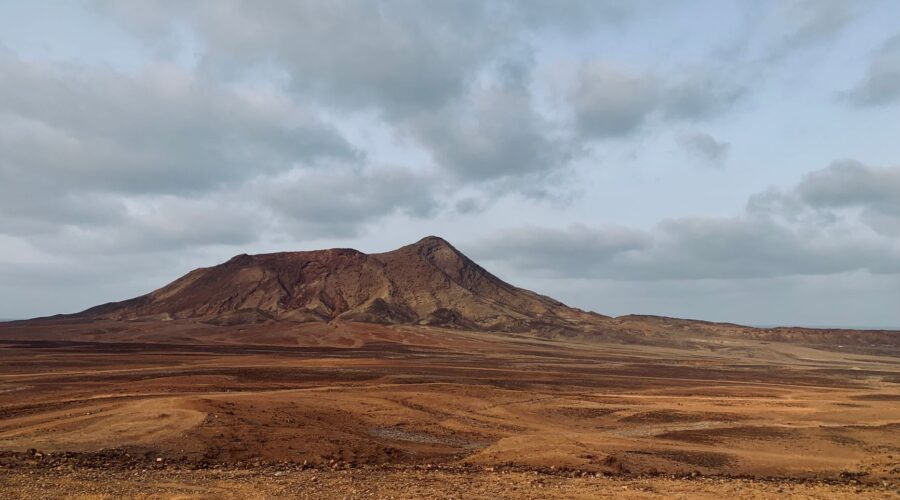
- Eastern Islands: Sal, Boa Vista, and Maio are the elder statesmen of the group. These islands are approximately 20 million years old. Over millennia, erosion and subsidence have worn them down, resulting in the flat, sandy, and desert-like landscapes they are famous for today.
- Western Islands: The younger islands, such as Santo Antão and Brava, date back roughly 8 million years. These islands retain their rugged, towering silhouettes and steep mountain peaks because they have not yet been subjected to the same level of long-term erosion.
This volcanic activity reached its peak during the Miocene period, when the islands achieved their maximum sizes, setting the stage for the unique ecosystems and microclimates found there today.
A Living Laboratory: Fogo and the Modern Volcano
The geological story of Cape Verde is not a closed book. While most of the islands have seen their volcanic activity go dormant, the island of Fogo remains a vivid reminder of the archipelago’s fiery origins. Pico do Fogo, standing at 2,829 meters above sea level, is the largest active volcano in the region.
Fogo’s landscape is dominated by a massive eight-kilometer-wide caldera, formed when a prehistoric magma chamber partially collapsed. As recently as 2014, Pico do Fogo erupted, reshaping the local terrain and reminding the world that the African Plate continues to shift and breathe. The islands are primarily composed of igneous rocks—specifically soda-alkaline basalt—a signature characteristic of the Macaronesian ecoregion, which also includes the Azores, the Canary Islands, and Madeira.
Geology Meets Climate: The Rain-Shadow Effect
The dramatic physical geography of the islands directly influences their climate. While the eastern islands like Sal are arid deserts with as little as 67mm of annual rainfall, the mountainous islands like Santiago and Santo Antão capture moisture from the Atlantic air. This “orographic precipitation” allows for the growth of lush laurel forests and dry monsoon forests in the highlands, creating a stunning contrast to the salt flats found at sea level.
From Geological Foundations to Human Discovery
For tens of millions of years, these islands remained a sanctuary for endemic species like the Raso lark and the Cape Verde warbler, untouched by human presence. It wasn’t until 1456 that Genoese and Portuguese navigators, including António de Noli and Diogo Gomes, first sighted the archipelago. Finding the islands uninhabited, the Portuguese established Ribeira Grande (now Cidade Velha) on Santiago in 1462—the first permanent European settlement in the tropics.
The islands’ strategic location quickly made them a central hub for the transatlantic slave trade and, later, a vital stopping point for mid-Atlantic shipping routes. Even Charles Darwin recognized the geological significance of the archipelago, making Cape Verde his first stop during the voyage of the HMS Beagle in 1832.
A Modern Success Story
Today, the Republic of Cabo Verde is celebrated as a “success story” in Africa. Since gaining independence in 1975, it has evolved into a stable, representative democracy, ranking among the most developed nations on the continent. With a population of approximately 530,000, the nation has shifted from a trade-dependent economy to a thriving service and tourism-oriented market.
In a poetic full circle, the country is now utilizing its unique geography to lead the way in environmental preservation. In 2023, Portugal signed a landmark “debt-for-nature” swap, forgiving €140 million of debt in exchange for Cape Verde’s investment in climate-related projects. As a leader in renewable energy, Cabo Verde aims to source 50% of its power from renewable resources by 2030, ensuring that the 125-million-year history of these islands is preserved for future generations.
Quick Facts for the Modern Traveler
- Capital: Praia (Santiago Island)
- Language: Portuguese (Official), Cape Verdean Creole (National)
- Unique Weather: The islands are the birthplace of “Cape Verde-type hurricanes,” some of the most intense storms in the Atlantic.
- Health Milestone: In 2024, Cape Verde was officially declared malaria-free by the WHO.
Whether you are drawn by the haunting beauty of Fogo’s volcanic cone, the ancient magnetic secrets buried in the seabed, or the vibrant culture of Mindelo, Cape Verde stands as a testament to the enduring power of the Earth’s geological evolution.
Image: Pexels – Bibi Kiekens