The Discovery of Cape Verde: The Legacy of António de Noli
In the mid-15th century, the Atlantic Ocean was the final frontier for European explorers. Driven by the “Age of Discovery,” navigators pushed further south along the African coast, searching for trade routes, gold, and legendary kingdoms. At the center of this maritime revolution was a man whose name remains etched in the foundation of an entire nation: António de Noli. As the Genoese navigator credited with the discovery of the Cape Verde Islands and their first governor, de Noli’s legacy is the bridge between the uninhabited volcanic peaks of the past and the vibrant, democratic republic of today.
The Quest into the Unknown
Cape Verde (officially Cabo Verde) is an archipelago of ten volcanic islands located approximately 600 to 850 kilometers west of Dakar, Senegal. Formed 40 to 50 million years ago, these islands remained untouched by human footprints for millennia. That changed in 1456 when António de Noli, a skilled navigator from Genoa serving the Portuguese crown, set sail under the patronage of Prince Henry the Navigator.
Historical records, including those from King Afonso V of Portugal, identify de Noli as the primary figure in the discovery. Accompanied by other notable explorers such as Diogo Gomes, Alvise Cadamosto, and later Diogo Afonso, de Noli navigated the treacherous Atlantic currents to find a cluster of “green capes” in the sea. The archipelago was named after the Cap-Vert peninsula on the Senegalese coast, which Portuguese explorers had dubbed Cabo Verde just years earlier in 1444.
The First Governor and the Birth of Ribeira Grande
Upon the discovery, King Afonso V appointed António de Noli as the first Governor of Cape Verde. His mandate was clear: establish a permanent presence for the Portuguese Empire in the tropics. In 1462, the first settlers arrived on the island of Santiago, the largest and most populous island of the archipelago.
The settlement they founded, Ribeira Grande (now known as Cidade Velha), holds a unique place in global history. It was the first permanent European colonial settlement in the tropics. Under de Noli’s administration, the town became a vital maritime hub. However, its prosperity was deeply intertwined with the burgeoning transatlantic slave trade. Because of its strategic position between Africa, Europe, and the Americas, Ribeira Grande became a primary depot for the trade of gold, ivory, and human lives—a dark but defining chapter in the islands’ history.
A Strategic Atlantic Outpost
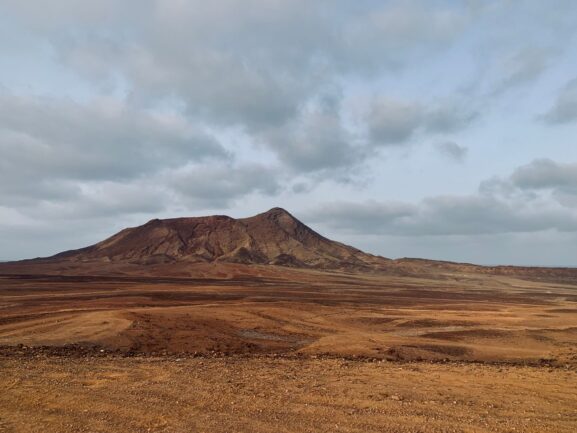
The geography of the islands made them indispensable. While islands like Sal and Maio were flat and arid—eventually becoming famous for their salt flats—the rugged, mountainous terrain of Santiago and Santo Antão allowed for more diverse agriculture. De Noli oversaw the early stages of an economy that would eventually sustain passing ships for centuries. In 1832, even Charles Darwin would stop here during his voyage on the HMS Beagle, marveling at the volcanic geology de Noli had first claimed for the West.
The Legacy of António de Noli
António de Noli’s arrival marked the beginning of a complex cultural synthesis. The islands were uninhabited when he arrived, meaning the Cape Verdean people—the Cabo-verdianos—trace their ancestry back to the 15th-century Portuguese settlers and the West African populations brought to the islands. This fusion birthed the Cape Verdean Creole (Crioulo), a language that remains the heartbeat of national identity today.
While de Noli represented the start of colonial rule, his discovery also set the stage for the archipelago’s eventual rise as a sovereign nation. By the 1950s, the dissatisfaction with colonial rule led to the rise of nationalism, championed by Amílcar Cabral. Cape Verde eventually secured its independence in 1975, but the administrative structures and the very location of its capital, Praia (which replaced Ribeira Grande in 1770), can be traced back to the initial territorial organization under de Noli.
Cape Verde Today: From Discovery to Democracy
Centuries after de Noli’s caravel first spotted the volcanic peaks of Fogo and Santiago, Cape Verde has transformed into one of Africa’s most stable and prosperous nations. It is a “success story” of democratic governance, ranking as one of the most democratic countries on the continent alongside Mauritius and South Africa.
The modern traveler visiting Cape Verde will find a country that honors its history while looking toward a sustainable future. Key highlights include:
- Cidade Velha: Now a UNESCO World Heritage site, visitors can walk the streets de Noli established, seeing the ruins of the first cathedral in the tropics.
- Sustainable Energy: Once a stopping point for coal and oil-powered ships, Cape Verde is now a leader in renewable energy, aiming for 50% renewable power by 2030.
- Tourism: The islands of Sal and Boa Vista, with their vast beaches and turquoise waters, have become global hotspots for windsurfing and relaxation.
Practical Information for Visitors
If you are planning to follow in the wake of António de Noli to explore these islands, here are a few essentials:
- Official Language: Portuguese, though you will hear Crioulo everywhere.
- Currency: Cape Verdean Escudo (CVE), which is pegged to the Euro.
- When to Go: The climate is mild year-round, but “Cape Verde Season” is typically from November to July when the trade winds provide a cooling breeze.
- Health: In 2024, Cape Verde was officially declared malaria-free by the WHO, making it a safe destination for families and international travelers.
Conclusion
The discovery by António de Noli was more than just a maritime achievement; it was the birth of a crossroads. From a deserted volcanic archipelago to a bustling center of the transatlantic trade, and finally to a beacon of African democracy, Cape Verde’s journey has been extraordinary. De Noli’s name serves as a reminder of the era when the world was first becoming truly connected—an era that began with a single Genoese navigator and a “Green Cape” in the middle of the Atlantic.
Image: Pexels – Rob Mowe