Cape Verde’s Transition: From Desalination to Green Hydrogen
In the middle of the North Atlantic Ocean, the volcanic archipelago of Cape Verde (Cabo Verde) is staging a quiet revolution. Long defined by its scarcity of freshwater and its reliance on expensive imported fuels, this nation of ten islands is repositioning itself as a global laboratory for the “Hydro-Hydrogen” frontier. By bridging the gap between seawater desalination and green hydrogen production, Cape Verde is creating a blueprint for island nations worldwide.
The Paradox of Thirst and Wind
Cape Verde faces a geographic paradox. It is surrounded by the vast Atlantic Ocean, yet it is one of the most water-stressed nations on Earth. With minimal rainfall and limited groundwater, the country relies heavily on desalination—a process that strips salt from seawater to provide drinking water for its population of 560,000. Currently, desalination accounts for over 90% of the water supply in urban centers like Praia and Mindelo.
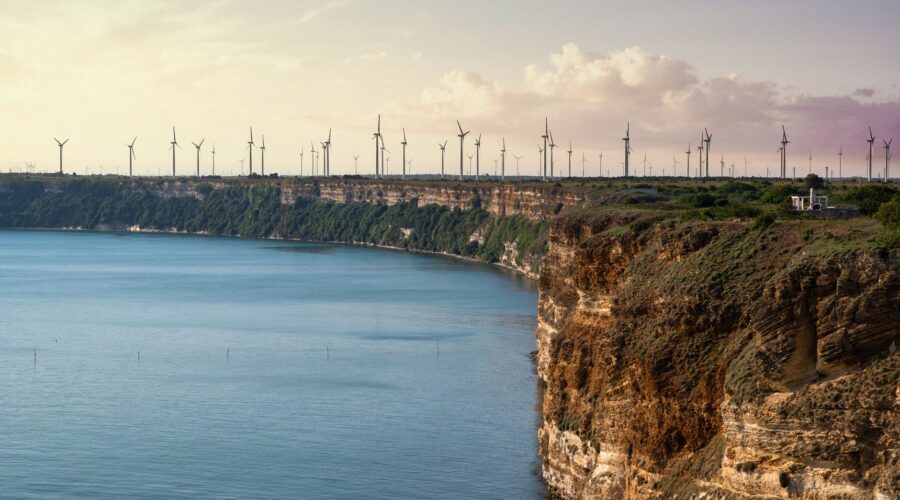
However, desalination is an energy-intensive process. Historically, this meant burning imported diesel to create freshwater, leading to high utility costs and a significant carbon footprint. Simultaneously, Cape Verde is blessed with some of the most consistent trade winds and highest solar irradiation levels in the world. The challenge has always been storage: how to capture that immense renewable energy and use it to solve both the water and energy crises.
The Brine Dilemma: From Waste to Resource
A major environmental byproduct of desalination is “brine”—a hyper-saline liquid residue that is typically pumped back into the ocean. While modern discharge techniques attempt to minimize local ecological impact, the sheer volume of brine produced globally is a growing concern. In Cape Verde’s new industrial vision, this brine is no longer viewed as waste, but as a potential feedstock for the next generation of energy: Green Hydrogen.
The concept of the “Hydro-Hydrogen” frontier involves integrating the desalination process with electrolysis. In this model, renewable energy (wind and solar) powers an electrolyzer that splits water molecules into hydrogen and oxygen. By utilizing the existing infrastructure of desalination plants, Cape Verde can create a “circular” water-energy nexus.
Green Hydrogen: The New Atlantic Export?
In 2021, the Cape Verdean government launched its “National Strategy for Green Hydrogen.” The goal is ambitious: to transform the country into a regional hub for green hydrogen production and bunkering. Given its strategic location at the crossroads of the Atlantic—connecting Africa, Europe, and the Americas—Cape Verde is perfectly positioned to refuel hydrogen-powered cargo ships of the future.
Why Cape Verde?
- Consistent Wind: The “Leste” and trade winds provide a capacity factor for wind turbines that exceeds the global average.
- Geopolitics: As a stable democracy with strong ties to the European Union (through a Special Partnership), it is a de-risked environment for international energy investments.
- Existing Infrastructure: The transition is not starting from scratch. Renewable energy penetration in Cape Verde is already among the highest in Africa, with some islands reaching over 30% renewable contribution at peak times.
Technical Synergy: How the Transition Works
The technical heart of this transition lies in the synergy between Desalination (Reverse Osmosis) and Electrolysis. Electrolyzers require high-purity water to function efficiently. By co-locating green hydrogen plants with desalination facilities, the islands can produce the required ultra-pure water on-site.
Furthermore, the “waste” heat generated by electrolysis can be used to pre-heat seawater for desalination, which reduces the energy needed for the reverse osmosis process. This mutualistic relationship lowers the Levelized Cost of Hydrogen (LCOH) and the cost of freshwater simultaneously—a win-win for a developing island economy.
The Port of Mindelo: A Hydrogen Hub
The city of Mindelo on the island of São Vicente is slated to be the centerpiece of this transition. Its deep-water port and long maritime tradition make it the ideal site for a hydrogen bunkering station. As the shipping industry faces mounting pressure to decarbonize (led by International Maritime Organization regulations), the demand for “Green Ammonia” and “Liquid Hydrogen” is expected to skyrocket.
By producing green hydrogen locally using wind power and desalinated water, Cape Verde can move from being an energy importer to an energy exporter, fundamentally altering its trade balance and national GDP.
Challenges on the Horizon
While the vision is compelling, the road to a hydrogen-powered Cape Verde is not without hurdles. The primary challenge is capital expenditure (CAPEX). Electrolyzers and large-scale wind farms require massive upfront investment. To address this, the government is working with the World Bank, the African Development Bank, and private investors from the EU to secure green financing.
There is also the technical expertise gap. Transitioning an entire industry requires a workforce skilled in hydrogen safety, chemical engineering, and advanced grid management. To combat this, the Atlantic Technical University (UTA) in Mindelo is increasingly focusing on renewable energy curricula to train the next generation of Cape Verdean engineers.
Cultural Context: ‘Morabeza’ Meets Modernity
The Cape Verdean spirit of Morabeza (hospitality and resilience) is deeply tied to the sea. For centuries, the ocean was a source of isolation and hardship (famines caused by droughts). Today, that same ocean, combined with the wind that once blew sailing ships across the Atlantic, is the key to the country’s independence.
For the average citizen, this transition isn’t just about global carbon markets; it’s about the “Water-Energy-Food” nexus. Lowering energy and water costs directly impacts agriculture and food security, allowing the islands to become more self-sufficient in a volatile global economy.
Conclusion: A Blueprint for the “Blue Economy”
Cape Verde’s journey from desalination brine to green hydrogen is more than a local project; it is a signal to the world that small island developing states (SIDS) are not just victims of climate change, but leaders in the solution. By harnessing the wind and the waves, the “Little Country” (as Cesária Évora famously sang) is making a big noise in the energy world.
As the “Hydro-Hydrogen” frontier expands, Cape Verde stands at the prow, steering toward a future where thirst is quenched by the wind and the Atlantic becomes the engine of a new, green prosperity.
Image: Pexels – Son Tung Tran