Guide to Maio: Discover Cape Verde’s Secret Island Paradise
In the constellation of the Cape Verdean archipelago, where Sal and Boa Vista shine with the neon lights of large-scale tourism and Santiago hums with the political energy of the capital, there lies a quiet, golden secret. The island of Maio, often referred to as the “forgotten” island, is a sanctuary of peace, authenticity, and raw natural beauty. For the traveler who seeks the luxury of silence rather than the luxury of five-star resorts, Maio offers a charm that is increasingly rare in the modern world.
The Island of Silence: An Introduction to Maio
Maio is one of the eastern, geologically older islands of Cape Verde. Like its larger neighbors Sal and Boa Vista, it is relatively flat and arid, characterized by vast expanses of white sand dunes, volcanic plains, and salt pans. However, unlike its siblings, Maio has resisted the march of mass tourism. There are no international airports with dozens of daily flights, nor are there massive hotel complexes lining the shore.
The island’s economy remains rooted in traditional salt production, fishing, and livestock. This lack of rapid industrialization has preserved a “Morabeza” (the Cape Verdean spirit of hospitality) in its purest form. On Maio, time isn’t measured by a watch, but by the departure of the fishing boats in the morning and the slow descent of the orange sun behind the Atlantic horizon in the evening.
Vila do Maio: A Pastel-Colored Capital
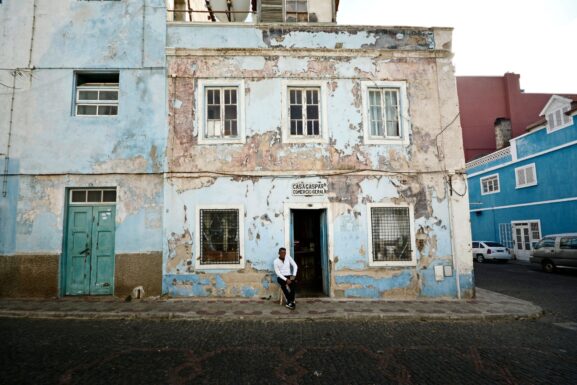
The journey into the charms of Maio usually begins in Vila do Maio, also known as Porto Inglês. The town’s name is a nod to the long history of British ships that frequented the island in the 17th and 18th centuries to trade for salt. Today, the town is a picturesque collection of pastel-colored houses, cobblestone streets, and blooming bougainvillea.
At the heart of the town stands the Church of Nossa Senhora da Luz, a stunning example of colonial Portuguese architecture painted in brilliant white and soft yellow. A walk through the town leads you to the fortress of São José, built in the 18th century to protect the island’s precious salt from pirate attacks. Today, the fort serves as a peaceful viewpoint overlooking the harbor, where you can watch the colorful “botes” (traditional wooden boats) bobbing in the turquoise water.
The Beaches: Miles of Solitude
If Maio has a superpower, it is its coastline. The beaches here are among the finest in the Atlantic, yet you will often find yourself the only person on them for miles.
Praia da Ponta Preta
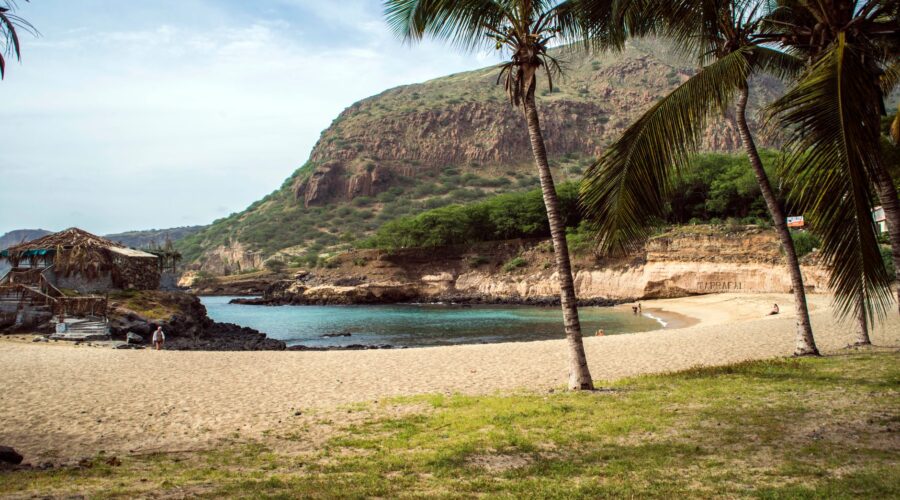
Located just a short walk from the main town, Ponta Preta is a majestic stretch of golden sand that seems to go on forever. The water is crystalline, shifting from pale emerald to deep sapphire. It is the perfect spot for a long sunset walk, where the only sound is the rhythmic crash of the waves against the shore.
Bitxe Rotxa
For those who prefer calmer waters, Bitxe Rotxa is the local favorite. Located near the harbor, it is protected from the stronger Atlantic swells, making it ideal for swimming. In the late afternoon, the beach comes alive as locals gather to play football or share a drink at the small beach shacks, offering a glimpse into the joyful, community-centric life of the islanders.
The Wild North
Venturing north to places like Santana or Baía da Calheta rewards the adventurous with rugged, wild landscapes. These areas are virtually untouched by infrastructure. Here, the desert meets the sea, and the sense of isolation is profound and meditative.
Natural Wonders: Salt Pans and Forests
While the beaches are the main draw, Maio’s interior holds its own quiet fascinations. The Salinas (salt pans) of Porto Inglês are a National Heritage site. Walking through these shimmering white expanses is like walking across a different planet. While the industrial scale of salt production has diminished, you can still see local women harvesting salt by hand, a grueling tradition passed down through generations.
Maio also surprises visitors with the largest forest area in Cape Verde. In an effort to combat desertification, the government planted thousands of acacia and eucalyptus trees in the central part of the island. This “green lung” provides a stark, beautiful contrast to the surrounding sand dunes and offers a habitat for various bird species, including the rare Iago Sparrow, which is endemic to the archipelago.
A Sanctuary for Wildlife
Environmental preservation is a cornerstone of Maio’s identity. The island is one of the most important nesting sites in the world for the Loggerhead Sea Turtle (Caretta caretta). From June to October, volunteers and rangers from the Maio Biodiversity Foundation patrol the beaches to protect the nesting females and their eggs. Travelers can join guided night tours to witness this ancient ritual with minimal disturbance to the animals.
Beneath the waves, Maio is a diver’s paradise. The lack of large-scale boat traffic means the coral reefs are healthy and teeming with life. Divers often encounter lemon sharks, nurse sharks, rays, and, during the spring months, migrating humpback whales that pass close to the shore.
Savoring the Flavors of Maio
The culinary experience on Maio is a celebration of the sea. “Peixe fresco” is not a marketing slogan here; it is a way of life. In the local “restaurantes,” you will find grilled tuna, wahoo, and grouper caught just hours before. The island is also famous for its local goat cheese, which is surprisingly creamy and often served with “doce de papaia” (papaya jam).
Don’t leave without trying the national dish, Cachupa, a slow-cooked stew of corn, beans, and fish or meat. On Maio, the pace of the meal mirrors the pace of the island—slow, deliberate, and meant to be shared with friends.
Practical Information for the Intentional Traveler
Getting There
Reaching Maio requires a bit of planning, which is exactly what keeps it so quiet. Bestfly Cabo Verde operates short flights (about 15-20 minutes) from the capital city of Praia on Santiago. Alternatively, there is a ferry service from Praia, which takes between two to four hours depending on the sea conditions. Schedules can change, so it is always wise to check a few days in advance.
Where to Stay
Accommodation on Maio consists mostly of small boutique guesthouses and apartment rentals. This allows for a more intimate connection with the local community. Staying in Vila do Maio is the most convenient option for access to restaurants, while Morro offers some beautiful beachfront villas for those looking for total seclusion.
Best Time to Visit
Maio is a year-round destination with a warm, dry climate. For turtle watching, visit between July and September. For the best hiking and slightly cooler temperatures, the months of November through April are ideal. Regardless of when you go, the “Vento de Leste” (East Wind) can occasionally bring dust from the Sahara, creating an ethereal, hazy atmosphere.
The Magic of the “Unseen”
The true charm of Maio isn’t something you can photograph. It’s the feeling of total safety walking home under a canopy of stars. It’s the sound of the wind whistling through the acacias. It’s the genuine smile of a fisherman who invites you to help pull in his nets. Maio is a reminder that the world is still big, still quiet, and still tremendously beautiful if you are willing to look beyond the popular path.
Image: Pexels – Sandro Lopes Art