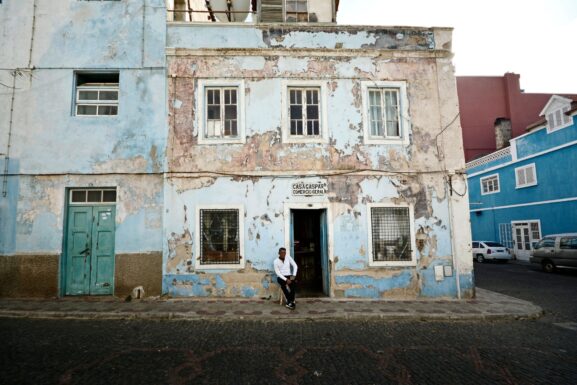

Digitization in Cape Verde: Transforming Education & Health
In the middle of the Atlantic Ocean, the ten-island archipelago of Cape Verde (Cabo Verde) is orchestrating a silent revolution. Long defined by its lack of natural resources and geographical fragmentation, this middle-income developing nation is turning to technology to bridge the physical gaps between its islands. Digitization is no longer just a luxury in Cape Verde; it has become the cornerstone of the government’s “Digital Hub” ambition, fundamentally reshaping how its citizens learn and heal.
The Archipelagic Challenge: Technology as a Bridge
Cape Verde faces a unique developmental hurdle: territorial discontinuity. With nine inhabited islands, providing equitable access to secondary schools and specialized hospitals is logistically complex and prohibitively expensive. Historically, residents of smaller islands like Brava or Maio often had to travel by boat or plane to Santiago or São Vicente for basic administrative or medical needs.
Recognizing this, the Cape Verdean government launched the “Digital Strategy” (Estratégia Digital de Cabo Verde), aiming to position the country as a regional tech leader in West Africa. By prioritizing high-speed internet connectivity—bolstered by subsea fiber optic cables like Ellalink—the nation has laid the groundwork for a digital leapfrog in education and healthcare.
Revolutionizing Education: From Chalkboards to Cloud Computing
Education has always been a priority in Cape Verdean culture, boasting one of the highest literacy rates in Africa. However, digitization is taking this commitment further by democratizing access to quality resources.
WebLab: Empowering the Next Generation
One of the flagship initiatives is the WebLab project. These are containerized laboratories equipped with modern technology (PCs, 3D printers, and robotics kits) installed in secondary schools across all islands. These labs provide students with hands-on experience in coding, hardware maintenance, and digital creative tools. The goal is simple: ensure that a student in a remote village on Santo Antão has the same technological fluency as a student in the capital, Praia.
The Rise of E-Learning and Connectivity
The COVID-19 pandemic acted as a catalyst for digital transformation in the classroom. The government launched the “Resumption of Learning” program, which integrated televised lessons with online platforms. Today, the Moodle platform and other Learning Management Systems (LMS) are being integrated into the national curriculum, allowing for a hybrid model of education that supports continuous learning even in remote areas.
Furthermore, the Cabo Verde Digital initiative supports young entrepreneurs through coding bootcamps and startups, ensuring that the digital education path leads directly to economic opportunity. By fostering a “digital nomad” friendly environment, the government is also encouraging international knowledge exchange.
Healthcare: Bridging the Gap with Telemedicine
If digitization in education is about the future, in healthcare, it is about saving lives in the present. Cape Verde’s healthcare system is hierarchical, with specialized equipment and doctors concentrated in the central hospitals of Praia and Mindelo. For a resident on a remote island, a consultation with a specialist could take weeks of planning and significant travel costs.
The National Telemedicine Network
Cape Verde is a pioneer in African telemedicine. Through the National Telemedicine Program, regional health centers are connected to central hospitals via high-definition video conferencing and digital diagnostic tools. A doctor in Fogo can share real-time images of an ultrasound or an EKG with a specialist in Praia for an immediate second opinion.
This system has drastically reduced the number of medical evacuations—which are costly and risky—while ensuring that “geography is not destiny” for patients requiring specialized care. In recent years, the integration of digital health records has also begun, allowing for more seamless patient tracking across different islands.
SIGHO: Managing the Health Cloud
The Integrated Hospital Management System (SIGHO) is another pillar of this digital shift. By digitizing patient records, pharmacy inventories, and appointment scheduling, the health system has become more efficient. Digital prescriptions are reducing errors, and data analytics now allow health officials to track disease outbreaks or vaccine distribution with unprecedented accuracy.
The “Digital Hub” Ambition and Infrastructure
For these systems to work, the infrastructure must be world-class. Cape Verde has invested heavily in its Data Center in Praia, which serves as the technological “brain” of the country. This Tier-III facility hosts the government’s cloud services, ensuring that educational data and medical records are stored securely within the country.
The country is also leveraging its strategic location between Africa, Europe, and the Americas. By connecting to major international fiber-optic cables, Cape Verde provides some of the fastest and most reliable internet in the region, which is essential for the high-bandwidth requirements of telemedicine and remote learning.
Challenges on the Horizon
Despite significant progress, the journey toward a fully digital society faces hurdles:
- The Digital Divide: While urban centers are well-connected, some rural areas still struggle with high data costs and inconsistent hardware access.
- Digital Literacy: It is not enough to provide tablets and laptops; teachers and healthcare professionals require ongoing training to integrate these tools effectively into their daily workflows.
- Sustainability: Maintaining high-tech equipment in a tropical, salty environment requires significant capital and technical expertise.
Conclusion: A Blueprint for Small Island States
Cape Verde’s embrace of digitization in education and healthcare is more than an administrative upgrade; it is a strategy for national survival and prosperity. By investing in the “soft” infrastructure of its people through e-learning and the “hard” infrastructure of fiber optics and data centers, the archipelago is transforming its geographic isolation into a digital advantage.
As the nation continues to refine its digital landscape, it serves as a powerful case study for other developing nations. It proves that with political will and strategic investment, technology can effectively erase the borders created by the sea, ensuring that every citizen—regardless of which island they call home—has access to the knowledge and care they deserve.
Image: Pexels – Tessy Agbonome