Katem: The Secret Whistling Language of Santo Antão
High above the Atlantic, where the jagged basalt peaks of Santo Antão pierce the clouds, a sound defies the laws of modern communication. It is not the ring of a smartphone or the hum of a radio, but a sharp, melodic sequence of whistles that bounces off the canyon walls of the Ribeira Grande and Paúl valleys. This is Katem—the secret, coded language of the Cape Verdean mountains.
For centuries, the inhabitants of Santo Antão, the northernmost and most rugged island of the Cabo Verde archipelago, have used this sophisticated system of whistling to bridge the gap between isolated ridges. In a landscape defined by deep gorges (ribeiras) and vertical cliffs, a neighbor might be visible across a valley but require a three-hour hike to reach. In these vertical worlds, Katem became the primary social network, an acoustic bridge connecting remote farming communities.
The Origins of the Mountain Echo
While many are familiar with the “Silbo Gomero” of the Canary Islands, the whistling language of Santo Antão remains one of the Atlantic’s best-kept secrets. The origins of Katem are a blend of necessity and cultural fusion. When Portuguese settlers and enslaved West Africans first populated the rugged interior of Santo Antão in the 16th and 17th centuries, they encountered a terrain that made traditional shouting ineffective. The high-pitched frequencies of a whistle, however, could cut through the wind and travel over two kilometers.
The term “Katem” itself is rooted in the local Crioulo (Kreyol) culture, representing more than just noise. It is a phonetic translation of spoken language into melodic trills. Unlike a simple “wolf whistle,” Katem is a complex system where different pitches and durations represent specific vowels and consonants. In essence, the practitioners—known locally as assobiadores—are “speaking” Cape Verdean Crioulo through their breath.
How Katem Works: The Mechanics of Sound
In the amphitheater-like valleys of Santo Antão, sound behaves differently. A deep voice is often swallowed by the dense vegetation or distorted by the wind. A whistle, however, creates a clean, high-frequency wave that mimics the intonation of the human voice.
To communicate via Katem, a whistler typically uses their fingers (often the thumb and index finger) or stays “hands-free” by manipulating their tongue and lips to achieve maximum volume. The “vocabulary” of Katem covers essential daily life in the ribeiras:
- Warnings: Alerting neighbors to approaching storms or wandering livestock.
- Logistics: Coordinating the harvest of sugar cane or the arrival of a merchant boat at the distant coast.
- Socializing: Inviting someone for a glass of grogue (the local rum) or announcing a birth or a funeral.
- Emergency: Signaling for help when someone is injured on the steep caminhos de cavalo (donkey paths).
The Geography of Communication
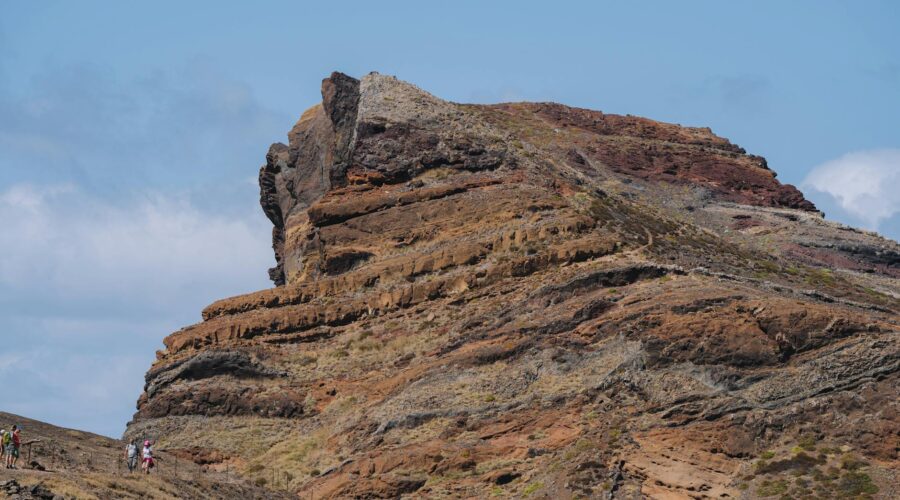
The effectiveness of Katem is tied directly to the island’s unique geology. Santo Antão is a volcanic masterpiece of “cuestas” and “caldeiras.” In the Ribeira da Torre, the walls are so steep and the air so still in the mornings that a single whistled sentence can be heard by dozens of families living on different terraced levels of the mountain. It is a communal broadcast system where everyone is “in on the call.”
Cultural Significance and the Identity of the Highlands
For the people of Santo Antão (known as Santantonenses), Katem is a badge of identity. It represents the resilience of a people who refused to be silenced by the geography of their island. In the era before telecommunications reached the remote settlements of Fontainhas or Altomira, the whistle was the heartbeat of the community.
There is also an element of “secrecy” to the code. Because the whistles mimic the tonal shifts of the local dialect, an outsider—even one who speaks fluent Portuguese—would find it nearly impossible to decipher the meaning. It was, historically, a way for the locals to communicate privately in the presence of colonial authorities or strangers.
Is the Whistle Fading? The Challenge of the Digital Age
Like many ancient traditions, Katem faces the existential threat of modern technology. With the arrival of mobile towers and satellite internet even in the deep valleys, the practical necessity of whistling has diminished. Younger generations are more likely to send a WhatsApp message than to step onto a balcony and whistle across the ravine.
However, the tradition is far from dead. In recent years, there has been a resurgence of interest in preserving the “Hidden Voice of the Ribeiras.” Local cultural associations and hikers are recognizing Katem as an intangible heritage that is just as important as the island’s famous Morna music or its production of grogue.
Eco-Tourism and the Revival of Katem
Today, travelers trekking the spectacular trails of Santo Antão may still be lucky enough to hear the echoes of Katem. Guides are increasingly incorporating demonstrations of the whistling language into their tours, explaining to international visitors that the “birdsong” they hear is actually a farmer telling his cousin that the coffee beans are ready for picking.
Efforts are being made to document the specific codes used by the elder assobiadores. Linguists and anthropologists have begun visiting the island to record these sounds, fearing that if the “language of the wind” isn’t codified, it may eventually vanish into the very echoes it created.
Practical Information for Travelers
If you wish to experience the magic of the Katem code firsthand, here are a few tips:
- Best Locations: Focus your travels on the northern valleys of Ribeira Grande, Paúl, and Xôxo. This is where the tradition is most active due to the extreme verticality of the terrain.
- Timing: The best time to hear the whistles is early morning (6:00 AM – 8:00 AM) or late afternoon (5:00 PM – 7:00 PM) when farmers are moving between their homes and their terraced fields.
- Respect the Culture: Remember that Katem is a functional language. While locals are often happy to demonstrate, it is a living part of their daily routine, not a performance for tourists.
Conclusion: A Song for the Wind
The Katem code of Santo Antão is a testament to human ingenuity. In a world increasingly dominated by silent screens and digital data, the whistling language reminds us of a time when the human voice—and a bit of wind—was all it took to conquer a mountain. To hear a whistle pierce the mist of a Cape Verdean peak is to hear the spirit of the island itself: resilient, melodic, and forever reaching across the divide.
As Cabo Verde continues to modernize, the preservation of Katem ensures that the “Secret of the Gorges” remains a living melody, echoing through the canyons for generations to come.
Image: Pexels – Diogo Miranda