Música d’Intervenção: The Soundtrack of Cape Verdean Freedom
In the silence of the Atlantic, beneath the weight of centuries of Portuguese colonial rule, a melody began to rise. It wasn’t just a song of sorrow, though there was plenty of that in the arid soil of the archipelago. It was a song of resistance. In Cape Verde, the path to independence on July 5, 1975, was not only paved with political diplomacy and armed struggle in Guinea-Bissau; it was composed, lyric by lyric, through the powerful Música d’Intervenção (Intervention Music) movement.
For the Cape Verdean people, music has always been more than entertainment. It is a historical record, a social commentary, and a survival mechanism. During the mid-20th century, as the winds of liberation began to blow across the African continent, the musicians of the islands turned their instruments into weapons, using the profound beauty of Morna and Coladeira to dismantle the psychological and cultural chains of colonialism.
The Cultural Catalyst: Claridade and the Seeds of Identity
To understand the protest songs of the 1960s and 70s, one must look back to the 1930s and the Claridade (Clarity) movement. This literary revolution, led by figures like Baltasar Lopes and Manuel Lopes, sought to define a distinct Cape Verdean identity—one that acknowledged the archipelago’s African roots as well as its European influences.
This “Cape Verdean-ness” provided the intellectual foundation for Música d’Intervenção. By asserting that they were a people with a unique culture, language (Cape Verdean Creole), and history, musicians began to challenge the colonial narrative that Cape Verde was merely an overseas province of Portugal. Music became the bridge that took these academic ideas to the masses.
The Language of Resistance: Why Creole Mattered
One of the most radical acts of the Música d’Intervenção movement was the choice of language. While the colonial administration enforced Portuguese as the official language of education and government, the protest singers sang in Kriolu (Cape Verdean Creole).
Singing in Creole was a double-edged sword against the PIDE (the Portuguese secret police). On one hand, it was an act of cultural reclamation; on the other, it allowed for metaphors and “codes” that locals understood but colonial censors often missed. The use of traditional rhythms like the Batuque—which had been historically suppressed by the Catholic Church and colonial authorities for being “too African”—became an explosive statement of defiance.
Key Figures: The Voices that Defied an Empire
Several artists and groups stand out as the architects of this musical revolution. Their songs were often recorded in secret, smuggled between islands, or broadcast from abroad to avoid the prying eyes of the colonial regime.
Os Tubarões
Perhaps the most iconic group of the era, Os Tubarões (The Sharks) became the voice of the revolution. Formed in the late 1960s, they popularized the “Electric Coladeira,” infusing traditional rhythms with a modern, high-energy sound that energized the youth. Their lyrics were deeply political, addressing the hardships of the drought-stricken islands and the yearning for Libertadi (Freedom). After 1975, they remained the “official” voice of the transition period, performing at independence ceremonies across the islands.
Bana and the Diaspora Voice
The legendary Bana, often called the “King of Morna,” played a crucial role from the diaspora. Based in Lisbon and later Paris, Bana provided a platform for Cape Verdean musicians to record songs that would have been banned in the islands. His presence ensured that the international community heard the soulful yearning for a free Cape Verde.
Luis Morais and the Mindelo Sound
In the cosmopolitan port city of Mindelo on São Vicente, Luis Morais and his ensemble revolutionized the instrumentation of Cape Verdean music. By incorporating jazz and Caribbean influences, they created a sophisticated sound that asserted Cape Verde’s place in the modern world, proving that “protest” didn’t always have to be somber—it could be vibrant and forward-looking.
Themes of the Movement: Land, Labor, and Liberty
Música d’Intervenção revolved around several core themes that resonated with the everyday struggles of Cape Verdeans:
- The Droughts (As Secas): Recurrent famines were a tragic part of Cape Verdean history. Musicians blamed colonial neglect for the lack of infrastructure and aid, turning natural disasters into political grievances.
- Emigration: The forced and voluntary departure of Cape Verdeans to work in plantations in São Tomé and Príncipe or the docks of America was a constant theme, symbolized by the “saudade” (longing) for a home that was free.
- Anti-Colonial Unity: Many songs celebrated the PAIGC (African Party for the Independence of Guinea and Cape Verde) and its leader, Amílcar Cabral. Cabral himself understood the power of culture, famously stating that national liberation is, above all, “an act of culture.”
The Carnation Revolution and the Crescendo to 1975
The turning point came on April 25, 1974, with the Carnation Revolution in Portugal. This military coup overthrew the Estado Novo dictatorship, effectively signaling the end of the Portuguese Colonial War. In the months that followed, Música d’Intervenção exploded. No longer forced into the shadows, musicians took to the streets of Praia and Mindelo.
During the transition period between April 1974 and July 1975, songs became pedagogical tools. They were used to explain the upcoming elections, the importance of unity, and the vision for a post-colonial society. The music didn’t just celebrate the end of the old; it began the difficult work of imagining the new.
The Legacy of Protest Songs in Modern Cape Verde
Today, the spirit of Música d’Intervenção lives on. While the political battle for independence has been won, Cape Verdean artists continue to use their voices to address modern issues like social inequality, climate change, and political transparency.
Contemporary artists such as Mayra Andrade, Tcheka, and the late global icon Cesária Évora have all drawn from the well of resistance established by the 1975 generation. They carry forward the idea that a song is never just a song—it is a vessel for the collective soul of a nation.
Practical Information for Travelers and Music Lovers
If you are visiting Cape Verde today and wish to experience this history firsthand, there are several ways to do so:
- Cesária Évora Museum (Mindelo): Located in the “Barefoot Diva’s” home island, this museum offers insights into the cultural history of the islands’ music.
- Live Music in Praia: Visit the plateau of Praia on Santiago island, where venues like Quintal da Música often feature artists performing classic intervention songs.
- Atlantic Music Expo (AME): An annual event in Praia that showcases the evolution of Cape Verdean music, from traditional rhythms to modern protest songs.
Conclusion
Independence for Cape Verde was not granted; it was earned through diplomacy, sacrifice, and song. The Música d’Intervenção movement remains a testament to the power of art in the face of oppression. By turning the bitter history of the islands into melodies of hope, the musicians of Cape Verde ensured that when the new flag was raised in 1975, the people already had a voice to sing its praises. The rhythms of the revolution continue to beat in the heart of every Cape Verdean, a reminder that the song of freedom is never truly finished.
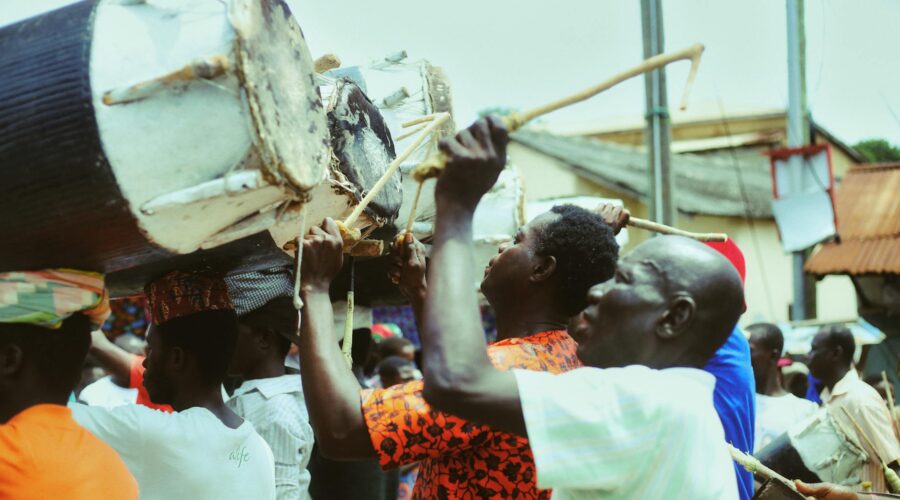
Image: Pexels – Oswald Yaw El-Saboath