Archaeologists Uncover Notorious Punishment Cell at Tarrafal
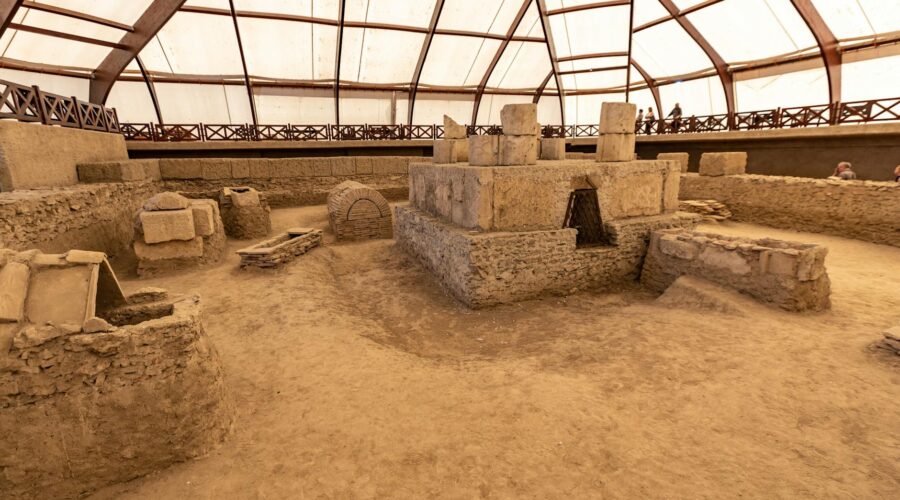
Archaeologists in Cape Verde have unearthed the physical remains of “The Skillet” (A Frigideira), a notorious punishment cell within the Tarrafal concentration camp. The discovery, announced by the Cape Verdean government, provides tangible evidence of the extreme brutality used against political prisoners during the Portuguese dictatorship.
A Tool of Torture
Founded by the Salazar regime, “The Skillet” was a windowless isolation cell designed to maximize human suffering. Built following a mass escape attempt in August 1937, the structure was engineered for psychological and physical torment. Prisoners were subjected to extreme isolation, complete lack of ventilation, and scorching temperatures—conditions that earned the cell its chilling nickname.
Material remains of the structure were identified during ongoing excavations at the camp, which is now the Museum of Resistance. Historians describe the cell as the “main device for extreme punishment” within the prison’s repressive system.
Path to UNESCO Recognition
The archaeological campaign is being led by the Cultural Heritage Institute (IPC) of Cape Verde in partnership with André Teixeira, a professor from the Nova University of Lisbon. This research is a critical step in the archipelago’s bid to have the Tarrafal site recognized as a UNESCO World Heritage site.
The excavation team is working to document, analyze, and interpret the camp’s evolution, focusing specifically on how structures of control and repression changed over time. The project aims to recover the footprints of buildings and equipment that vanished after the camp’s closure.
The “Camp of Slow Death”
Tarrafal operated in two distinct phases under Portuguese colonial rule: from 1936 to 1954, and again from 1961 to 1974. During these periods, more than 500 political prisoners were incarcerated there in conditions so dire it became known as the “Camp of Slow Death.”
The camp held dissidents from across the Portuguese Empire, including activists from Portugal, Guinea-Bissau, and Angola. A memorial plaque on the grounds currently honors 36 men who died behind its walls—32 Portuguese nationals, two from Guinea-Bissau, and two from Angola. The identification of “The Skillet” serves as a somber reminder of the price paid by those who resisted colonial authoritarianism.
Image: Pexels – Boris Hamer