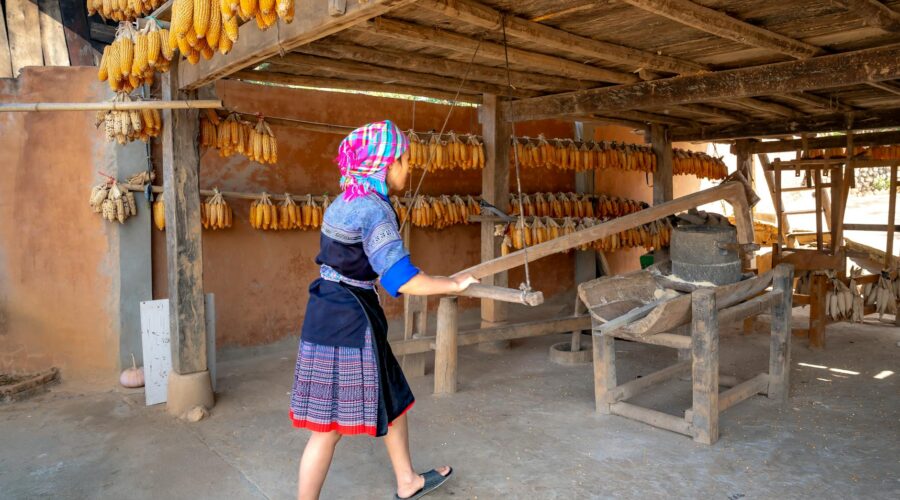
Xerém Ritual: Cape Verde’s Sacred Corn-Grinding Tradition
In the heart of almost every Cape Verdean household, particularly those nestled in the emerald valleys of Santo Antão or the volcanic slopes of Fogo, there is a sound that echoes through generations. It is the rhythmic, heavy thud of the pilão (mortar) and the grinding stones—a percussion of daily life that signals the creation of Xerém. While to an outsider it may look like simple ground corn, to a Cape Verdean, Xerém is a vessel of history, a symbol of resilience, and the centerpiece of the archipelago’s most sacred rituals.
The Foundations of Xerém: From Grain to Identity
Xerém (pronounced she-rem) is essentially coarsely ground corn, but its simplicity is deceptive. In the arid landscape of Cape Verde, where rainfall is unpredictable and the volcanic soil demands hard labor, maize became the “golden grain” of survival. Introduced during the colonial era, corn adapted to the islands better than many European crops, eventually becoming the backbone of the local diet alongside beans.
The process of making Xerém is labor-intensive, traditionally requiring a moinho de mão (hand mill) or the pilão. This physical labor transformed the preparation of food into a communal activity. Women would gather, often singing finanças or batuku rhythms, to rhythmically crush the dried corn kernels until they reached the desired consistency—finer than Italian polenta but coarser than American cornmeal.
The Ritual of the Wedding: Xerém de Festa
Nowhere is the cultural significance of this dish more evident than in the “Xerém de Festa.” In islands like Santiago and São Nicolau, a traditional wedding is incomplete without the communal preparation of corn. This isn’t just a culinary task; it is a rite of passage known as the pilado.
Days before the ceremony, the village women gather at the bride’s home. As they work the heavy wooden pestles in unison, they sing songs that offer advice to the bride, recount family histories, or playfully mock the groom. This ritual serves to welcome the new couple into the fabric of the community. Variations like Xerém de Noiva are enriched with premium ingredients—fatty pork, rich chorizo, and local beans—symbolizing the wish for a prosperous and “fat” life for the newlyweds.
Regional Variations: A Journey Across the Islands
While the base ingredient remains the same, the preparation of Xerém reflects the unique microclimates and histories of Cape Verde’s different islands. Understanding these variations is key to understanding the country’s regional identities.
1. Santiago: The Heart of the Pilão
On the largest island, Santiago, Xerém is often served with peixe seco (dried fish) or fried pork. Here, the texture tends to be slightly coarser. It is frequently associated with the “Tabanca” festivals, where it is served to participants in large communal bowls, emphasizing the African roots of the island’s culture.
2. Fogo: The Volcano’s Bounty
On the island of Fogo, Xerém takes on a luxurious quality. Known for its fertile volcanic soil, Fogo residents often prepare Xerém com Leite (Xerém with milk). This dish is creamy, almost like a savory porridge, often enriched with local goat cheese or served alongside a rich stew of djagacida. In Fogo, it is a staple during the Festas de São Filipe, where the grain is used to fuel the horse racers and drummers.
3. Santo Antão and São Vicente: The Northern Soul
In the northern islands, Xerém often meets the sea more frequently. In Mindelo (São Vicente), it might be served as a side to a sophisticated fish caldeirada. In the rugged mountains of Santo Antão, it remains a hearty farmer’s fuel, often mixed with feijão congo (pigeon peas) to create a dense, nutritious meal that provides energy for the grueling trek up the island’s steep ribeiras.
Xerém vs. Cachupa: Understanding the Difference
International travelers are often familiar with Cachupa, the national dish of Cape Verde. While both rely on corn, the distinction is vital. Cachupa uses whole kernels (hominy) that are slow-cooked for hours. Xerém is the result of the grinding process. If Cachupa is the king of Cape Verdean cuisine, Xerém is the versatile queen—appearing as a breakfast porridge, a wedding feast, or a humble side dish for a weekday lunch.
The Spiritual and Symbolic Dimensions
Beyond the plate, Xerém has a spiritual role. In traditional funeral rites in rural areas, corn-based dishes are sometimes prepared as an offering to the community in honor of the deceased, reinforcing the idea that the grain connects the living with the ancestors. It represents the “Sodade” (longing) that defines the Cape Verdean spirit—a longing for the land, even when the rains don’t come.
The act of “pilar o milho” (pounding the corn) is also a symbol of female strength and solidarity. In a society where many men emigrated to find work abroad, the women remained as the “pillars” of the home. The rhythmic pounding of the mortar became a metaphor for their resilience against poverty and isolation.
Practical Information: Where to Experience Xerém Today
For those visiting Cape Verde, finding authentic ritual Xerém requires moving beyond the resort buffets of Sal or Boa Vista. To truly taste the tradition:
- Visit a ‘Casa de Pasto’: In the interior of Santiago or Santo Antão, look for small, family-run eateries where the menu changes daily based on what’s in the garden.
- Attend a Festival: If you are in Cape Verde in May, the festivals of São Filipe in Fogo offer the best opportunity to see traditional corn preparation on a grand scale.
- The Markets: Visit the Mercado de Sucupira in Praia. You will see vendors selling different grades of ground corn, allowing you to see the manual effort involved in categorizing the grain by texture.
The Future of a Tradition
As Cape Verde modernizes, the mechanical electric mill is replacing the hand-turned stones, and imported rice is sometimes favored for its convenience over the labor-intensive corn. However, a cultural resurgence is underway. Young Cape Verdean chefs in the diaspora—from Lisbon to Pawtucket—are reimagining Xerém, using it as a “Cape Verdean Risotto” to introduce their heritage to a global fine-dining audience.
Xerém remains much more than a meal. It is a percussive rhythm, a communal song, and a testament to the fact that in Cape Verde, even the simplest grain can tell the story of a nation’s soul.
Image: Pexels – Quang Nguyen Vinh