Portugal Construction: Fast-Track Visas vs 90,000-Worker Gap
The Portuguese construction sector is praising the efficiency of the “Regulated Labor Migration” visa protocol one year after its implementation, but industry leaders warn that more public resources and specialized training are needed to solve a crippling labor shortage.
Rapid Processing, Growing Demand
Manuel Reis Campos, president of the Association of Construction and Public Works Industrialists (Aiccopn), reported that public services are “scrupulously” meeting deadlines for visa appointments. According to Reis Campos, the streamlined process has seen high participation, with the government approving 3,328 visas out of 5,183 requests made through business associations.
Aiccopn, the nation’s largest construction association, has submitted applications for 1,676 workers. Most are already on-site in Portugal or in the final stages of placement. While the majority of recruits come from Portuguese-speaking nations like Brazil, Angola, and Cape Verde, the sector is increasingly looking toward Latin America (specifically Colombia and Peru) as well as Morocco, Pakistan, and India.
A Sector Under Pressure
Despite the protocol’s success, the industry is struggling to keep pace with demand. “Currently, a deficit of 80,000 to 90,000 professionals is estimated in the construction sector,” Reis Campos noted. This shortage spans all levels of expertise, from laborers and bricklayers to specialized welders, solar panel technicians, and engineers.
The need for manpower has been further heightened by recent natural disasters. A series of storms and floods across central Portugal has created an urgent demand for reconstruction, making the legal and rapid recruitment of foreign workers a “strategic relevance” for the country.
Calls for Investment and Integration
Industry leaders are now calling on the government to bolster the Agency for Integration, Migration and Asylum (AIMA) with more technical and human resources to handle the rising volume of requests. However, Reis Campos emphasized that visas alone are not a “silver bullet.”
To address the structural labor gap, the association is demanding:
- Increased funding: More support for companies to qualify staff and expand the capacity of dedicated training centers.
- Educational reform: Promotion of technical-professional careers through funded post-secondary courses at universities.
- Integrated policies: A strategy that balances immigrant integration with the retraining of the local workforce.
The New Path to Legal Residency
Following the recent abolition of the “expression of interest”—a legal loophole that previously allowed migrants to apply for residency after arriving on tourist visas—the work visa protocol has become the primary legal pathway for foreign nationals seeking employment in Portugal.
An official source from the Secretary of State for the Presidency and Immigration stated that the government views the protocol as a success, citing average response times of just 21 days for companies. While agriculture accounts for 60% of these visas and construction for 40%, interest is now spreading to the retail and industrial sectors as the efficiency of the regulated channel becomes evident.
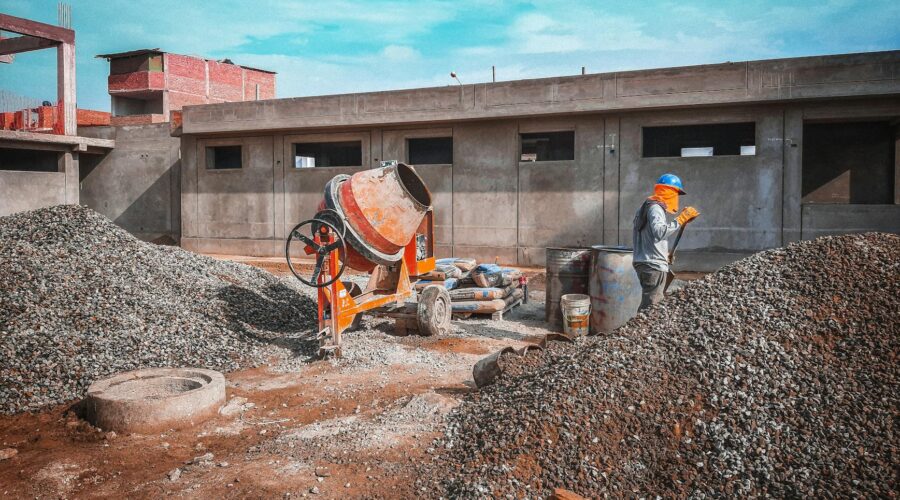
Image: Pexels – CONSTRUCCIÓN TOTAL