Pano d’Obra: The Heritage of Cape Verdean Weaving
In the quiet workshops of Santiago and Fogo, the rhythmic clacking of the loom serves as a heartbeat for Cape Verdean culture. This sound belongs to the production of Pano d’Obra (literally “work cloth”), a textile tradition that has survived for over five centuries. More than just a fabric, the Pano d’Obra is a visual language, a symbol of resistance, and a profound link to the archipelago’s Luso-African identity.
For the uninitiated, these narrow strips of hand-woven cotton, characterized by intricate geometric patterns in indigo and white, might look like simple artisanal crafts. However, to understand the Pano d’Obra is to unlock the history of the Transatlantic trade, the social hierarchies of the colonial era, and the resilient spirit of the Cape Verdean people.
The Origins: A Convergence of Continents
The history of Pano d’Obra begins in the 15th century, shortly after the Portuguese discovered the uninhabited islands of Cabo Verde. Positioned as a strategic crossroads between Europe, Africa, and the Americas, the islands became a hub for the slave trade and the cultivation of cotton and indigo.
The weaving technique itself is a hybrid. The narrow-strip loom (horizontal loom) was brought to the islands by enslaved West Africans, particularly from the Upper Guinea Coast (modern-day Guinea-Bissau and Senegal). However, while the technology was African, the aesthetic evolution of the patterns was influenced by European Renaissance motifs. This fusion created a textile that was entirely unique to Cape Verde—a “Creole” cloth that mirrored the emerging Creole identity of the population.
The Anatomy of Pano d’Obra: Materials and Technique
The authenticity of Pano d’Obra lies in its meticulous construction. Historically, the process involved several specialized stages:
1. Cotton and Indigo
Cape Verdean soil, particularly on the islands of Santiago and Fogo, was once famous for its high-quality cotton. To achieve the deep blue hues, weavers used the stover (wild indigo plant), which grew abundantly on the islands. The fermentation of indigo was a guarded skill, producing shades ranging from a pale sky blue to a black-blue so deep it appeared metallic.
2. The Narrow-Strip Loom
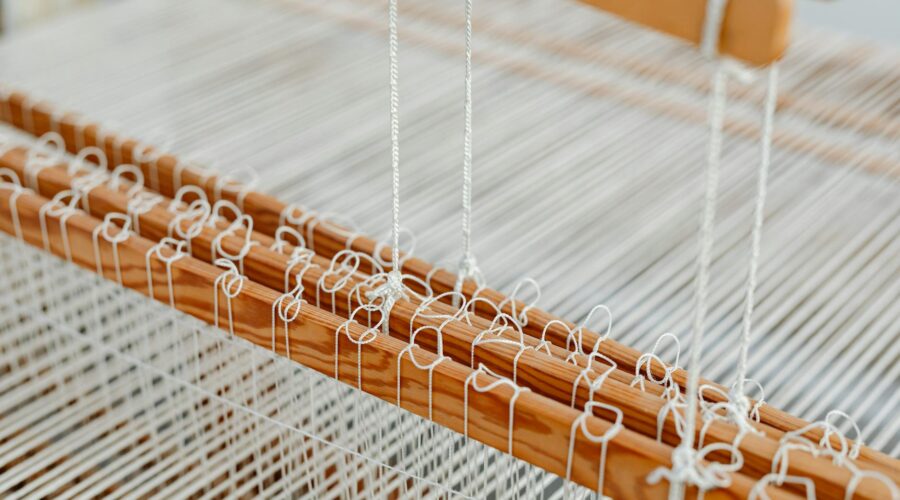
Unlike European wide-looms, the Cape Verdean loom produces long, narrow strips of fabric known as teadas, usually no wider than 15 to 20 centimeters. To create a full garment or shawl, six of these strips are meticulously sewn together edge-to-edge. The alignment of the patterns across these six strips is a testament to the weaver’s mathematical precision.
3. Weaving the “Obra”
The term “Obra” (Work) refers specifically to the most complex version of the cloth. While plain blue cloth was common, Pano d’Obra features “extra-weft” patterns. This means the weaver manually inserts additional threads during the process to create floating geometric designs that appear on the surface of the fabric.
Decoding the Patterns: A Silent Language
The patterns of Pano d’Obra are not merely decorative; they are rhythmic and symbolic. Traditionally, the complexity of the design indicated the wealth and status of the wearer. Experts categorize the cloth into three main types:
- Pano Chã: A plain or simple striped cloth used for everyday wear or as a basic trade commodity.
- Pano d’Adiça: A more detailed cloth featuring small, repetitive geometric motifs.
- Pano d’Obra: The most prestigious variety, featuring large, intricate compositions.
Common motifs include the escada (stairs), tapete (carpet), and various diamond and star shapes. During the height of the plantation era, these cloths were so highly valued they were used as a form of currency (moeda de pano) along the African coast, traded for gold, ivory, and even enslaved people. The Portuguese crown eventually tried to monopolize this “textile currency,” recognizing its immense economic power.
Cultural Significance: From Birth to Burial
In Cape Verdean society, the Pano d’Obra—specifically the Pano di Terra—is woven into the milestones of human life. Traditionally, women wore the cloth wrapped around their hips (the tala), particularly during the performance of the Batuque, the islands’ oldest musical genre. The cloth provides a percussive element when struck with the hands and symbolizes a woman’s modesty and strength.
Historically, a Pano d’Obra was a vital part of a bride’s dowry. It was also used to carry infants (a practice known as mambai) and played a solemn role in death, often used as a shroud to cover the coffins of the respected elderly. It represents a “social skin”—a layer of protection and identity that connects the individual to their ancestors.
The Modern Renaissance and Challenges
Like many traditional crafts, Pano d’Obra faced a decline during the mid-20th century due to the influx of cheap, factory-made textiles and the arduous nature of the work. However, recent years have seen a powerful resurgence.
Today, Cape Verdean designers are reimagining the cloth for the modern world. It is no longer found only in rural villages but on fashion runways in Praia and Lisbon. Contemporary artists use Pano d’Obra patterns in upholstery, high-end handbags, and even architectural motifs. The Centro de Artesanato e Design in Mindelo and the weaving cooperatives in Santa Catarina (Santiago) are at the forefront of preserving the technical knowledge of the tecelões (weavers).
However, the craft face challenges. The cultivation of local cotton has largely disappeared, forcing weavers to rely on imported yarn. Furthermore, the time required to produce a single authentic Pano d’Obra—often several weeks—makes it a luxury item that is difficult to scale for a global market.
Where to Experience Pano d’Obra Today
For travelers visiting Cape Verde, witnessing the creation of this textile is a highlight of a cultural itinerary:
- Santiago Island: Head to the interior towns like Assomada or the village of Fonte Lima. Here, you can still find traditional weavers working in their homes or small cooperatives.
- The Museum of Tabanka: Located in Assomada, this museum offers deep insights into the cultural rituals where these textiles are prominently featured.
- Loja do Artesanato (Mindelo, São Vicente): A curated space where high-quality, authentic Pano d’Obra is sold alongside modern interpretations of the craft.
Conclusion: A Thread That Never Breaks
The Pano d’Obra is more than just Cape Verde’s most famous handicraft; it is a repository of the nation’s soul. In every indigo thread and every complex geometric turn, there is a story of a people who took the tools of their oppression and wove them into a garment of pride. Whether draped over the shoulders of a Batuque singer or framed as a piece of art in a modern home, the Pano d’Obra remains a vibrant, tactile reminder that culture, when woven with care, is indestructible.
Image: Pexels – www.kaboompics.com