
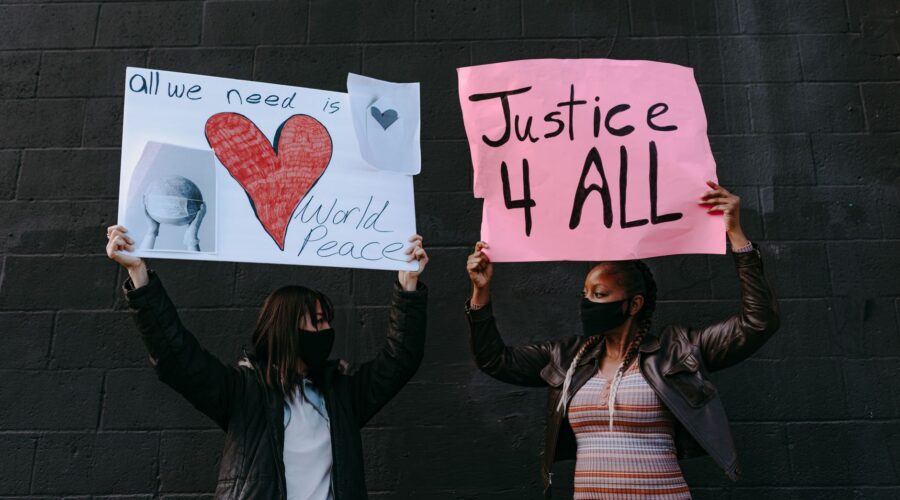
80% of Africans Demand Better Legal Protection for Women
Nearly 80% of African citizens are calling for police and the judiciary to ramp up protections for women and girls against discrimination and harassment, according to a sweeping new study. The findings, released by pan-African polling network Afrobarometer, highlight a widespread dissatisfaction with the current efforts of authorities to combat gender-based violence and inequality.
The report, published on the International Day for the Elimination of Violence against Women, reveals that 78% of respondents believe authorities should do “much more” or “somewhat more” to protect women. In contrast, only 19% of those surveyed believe current measures are sufficient. This demand for action is echoed almost equally by both women (79%) and men (77%), with the urgency for reform rising alongside levels of education and poverty.
Widespread Harassment in Schools and Public Spaces
The study paints a sobering picture of the daily risks faced by women and girls across the continent. More than one in four respondents (27%) reported that female students “often” or “always” face discrimination, harassment, and demands for sexual favors from their teachers. Similarly, 28% noted that sexual harassment is a frequent occurrence in public spaces such as markets, streets, and on public transportation.
Geographical data highlights specific crisis zones. In Gabon and Guinea-Bissau, more than half of the population (57% and 55%, respectively) reported that women are frequently harassed in public. Portuguese-speaking African nations also showed high rates of public harassment, with São Tomé and Príncipe (34%), Cape Verde (33%), Angola (31%), and Mozambique (31%) all exceeding the continental average.
Academic Vulnerability
The classroom offers little sanctuary for many. In Guinea-Bissau, 45% of respondents said female students are frequently targeted by teachers. High rates were also reported in São Tomé and Príncipe (33%), Mozambique (31%), and Angola (30%). Cape Verde was the only Portuguese-speaking nation in the study to fall below the average, at 23%.
A Glimmer of Faith in the System
Despite the high rates of harassment, a majority of Africans (65%) believe that women and girls will be taken seriously if they come forward to report discrimination or abuse. This sentiment holds true in 35 of the 38 countries surveyed.
Among Portuguese-speaking nations, São Tomé and Príncipe showed the highest confidence in the reporting system at 73%, followed by Mozambique (64%), Angola (63%), and Cape Verde (59%).
Calls for Urgent Reform
The demand for judicial and police intervention is most acute in Cape Verde, where 61% of citizens insist that authorities must do “much more.” Similar calls for decisive action were high in São Tomé and Príncipe (55%), Guinea-Bissau (50%), Mozambique (47%), and Angola (44%).
The Afrobarometer study, conducted throughout 2024 and 2025, involved more than 50,000 face-to-face interviews. The data provides a statistically representative look at 38 African countries, utilizing a margin of error between two and three percentage points.
Image: Pexels – RDNE Stock project