Cape Verde: The Atlantic’s New Submarine Cable & Data Hub
For centuries, the volcanic archipelago of Cape Verde (Cabo Verde) served as a vital maritime crossroads, a “stopping point” in the middle of the Atlantic for ships navigating between Europe, Africa, and the Americas. Today, that legacy is being reimagined for the 21st century. Instead of galleons and coal, the islands are now positioning themselves to manage the flow of the world’s most precious commodity: data.
With the launch of the ambitious “Atlantic Quantum Leap” strategy, the Cape Verdean government is setting its sights on a sophisticated niche in the global digital economy. The plan is twofold: to become the premier submarine fiber-optic cable repair hub for the Middle and South Atlantic, and to establish itself as a “Data Sentinel”—a secure, neutral hosting ground for the Southern Hemisphere’s digital sovereignty.
The Strategic Geometry of the Atlantic
Cape Verde’s geography is its greatest asset. Located approximately 570 kilometers off the coast of West Africa, the islands sit at the intersection of the main submarine cable routes linking South America to Europe and Africa to North America. As the world becomes increasingly interconnected, the “Atlantic Corridor” has seen an explosion in subsea cable deployments, including Google’s Equiano cable and the EllaLink system.
However, the infrastructure that powers our global internet is surprisingly fragile. Submarine cables are susceptible to damage from fishing trawlers, anchors, seismic activity, and underwater landslides. Currently, when a cable breaks in the South Atlantic, repair vessels often have to travel from as far away as France or South Africa, leading to costly delays and prolonged internet outages for developing nations. Cape Verde aims to close this gap by providing a localized, high-tech rapid-response center.
Building the Submarine Repair Hub
The centerpiece of the “Quantum Leap” is the development of specialized port infrastructure and technical expertise to service the subsea industry. By establishing a dedicated base for Cable Ships (CS) and Remotely Operated Vehicles (ROVs), Cape Verde can significantly reduce the “mean time to repair” (MTTR) for regional telecommunications giants.
This initiative involves more than just deep-water berths. The government is investing in:
- Technical Training: Partnering with international maritime and engineering academies to train a local workforce in the high-precision art of fiber-optic splicing and undersea robotics.
- Logistics and Warehousing: Creating “bonded zones” where international cable consortiums can store thousands of kilometers of spare fiber-optic cable, ready for immediate deployment.
- Regulatory Incentives: Streamlining customs and immigration procedures to allow specialized technicians and equipment to move in and out of the country with the speed required by a digital emergency.
The Data Sentinel: Sovereignty and Neutrality
While the physical repair of cables addresses the hardware, Cape Verde is equally focused on the “software” of global geopolitics. As a stable democracy with strong ties to both the European Union and the African Union, the country is pitching itself as a “Data Sentinel”—a safe harbor for data storage and processing.
The Cape Verde Tech Park, with campuses in Praia (Santiago) and Mindelo (São Vicente), serves as the backbone of this vision. These state-of-the-art facilities are designed to host Tier III data centers. The goal is to offer “Digital Embassy” services, where sovereign nations or international corporations can store their data under Cape Verde’s robust legal framework, which emphasizes data privacy and neutrality.
By positioning itself as a neutral intermediary, Cape Verde hopes to attract African nations that wish to keep their data on the continent but lack the infrastructure, as well as international firms looking for a secure bridge between the Global North and South.
Economic Diversification and the ‘Blue Economy’
For a nation that has traditionally relied heavily on tourism (which accounts for roughly 25% of GDP), the Atlantic Quantum Leap represents a critical move toward economic diversification. The tech sector offers a path to “de-risk” the economy from global travel fluctuations, such as those seen during the COVID-19 pandemic.
This strategy also aligns with the broader “Blue Economy” framework. Cape Verde recognizes that its territorial waters are 200 times larger than its landmass. By integrating digital infrastructure with maritime services, the country is creating a new value chain that includes marine research, climate monitoring via subsea sensors, and high-tech port management.
Challenges on the Horizon
Despite the optimism, the road to becoming a mid-Atlantic tech titan is not without hurdles. The primary challenge is energy. Data centers and industrial port facilities are energy-intensive. Cape Verde currently has high electricity costs and a reliance on imported fuels. To counter this, the government is aggressively pursuing a transition to renewable energy, aiming for 50% renewable penetration by 2030, leveraging the islands’ abundant wind and solar resources.
Furthermore, competition is stiff. Other regional players, such as Senegal and Morocco, are also vying for the title of West Africa’s digital hub. Cape Verde’s edge lies in its unique insular stability, its strategic Atlantic position, and its historical role as a diplomatic bridge between Lusophone, Francophone, and Anglophone worlds.
Fast Facts: Cape Verde’s Digital Connectivity
- EllaLink: A low-latency cable connecting Brazil to Portugal with a dedicated branch to Praia.
- Equiano: The Google-funded cable connecting Portugal to South Africa, passing through Cape Verde.
- WACS: The West Africa Cable System, providing critical redundancy for the region.
Conclusion: A New Horizon for the Islands
The Atlantic Quantum Leap is a bold bet on the future. By transforming from a remote archipelago into a central nervous system for Atlantic data, Cape Verde is proving that size is no barrier to ambition in the digital age. As the repair ships begin to dock in Mindelo and the servers hum in Praia, the country is successfully pivoting from the age of discovery to the age of connectivity.
For the international community, Cape Verde offers more than just a tropical getaway; it offers a vision of a more resilient, localized, and secure global internet. If successful, this “Quantum Leap” will ensure that while the islands remain anchored in the middle of the ocean, their economy will be flying high in the digital cloud.
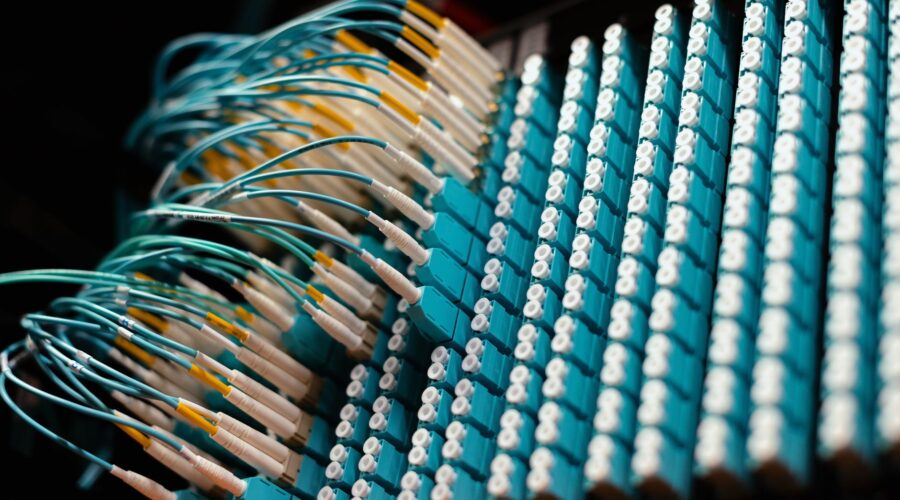
Image: Pexels – Brett Sayles