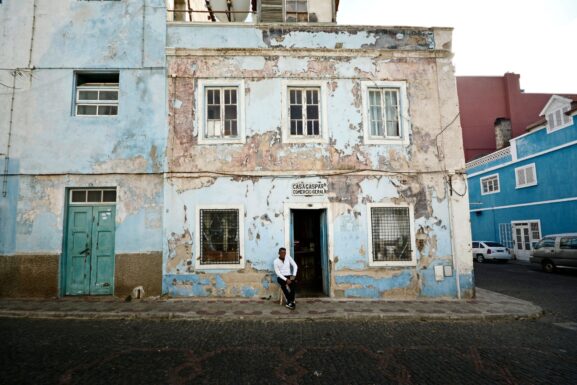

Judicial System of Cape Verde: Supreme Court & Judiciary
Since achieving independence in 1975 and transitioning to a multi-party democracy in the early 1990s, the Republic of Cabo Verde has emerged as a beacon of political stability in Africa. Central to this success is its robust judicial system, which serves as the guardian of the constitution and the rule of law. Ranking as one of the most democratic nations on the continent, Cape Verde’s legal framework is built on a foundation of independence, transparency, and a clear separation of powers.
A Foundation of Democracy: The Constitutional Framework
The Cape Verdean judicial system is defined by the Constitution adopted in 1980 and significantly revised in 1992, 1995, and 1999. As a unitary semi-presidential representative democratic republic, the country divides its power among the executive, legislative, and judicial branches. While the President serves as the head of state and the Prime Minister as the head of government, the judiciary remains an autonomous entity, insulated from political interference to ensure impartial justice for its 530,000 citizens.
The system is hierarchical, consisting of the Supreme Court of Justice at the apex, followed by regional courts of first and second instance. Specialized courts also exist to handle civil, constitutional, and criminal matters, ensuring that the legal process is tailored to the specific nature of each case.
The Supreme Court of Justice: The Ultimate Arbiter
The Supreme Court of Justice (Supremo Tribunal de Justiça) is the highest judicial body in Cape Verde. Its primary role is to ensure the uniform application of the law across the archipelago—from the bustling capital of Praia on Santiago island to the volcanic heights of Fogo and the tourism hubs of Sal and Boa Vista.
Composition and Appointment
The composition of the Supreme Court is a testament to the country’s checks and balances. The justices are not appointed by a single authority but through a collaborative process involving the three main pillars of government:
- The President of the Republic
- The National Assembly (the legislative body)
- The Board of the Judiciary (Conselho Superior da Magistratura Judicial)
This tripartite appointment process prevents any single branch of government from exerting undue influence over the highest court, maintaining the “success story” status that international leaders, including former U.S. President Barack Obama, have praised.
Jurisdiction and Responsibilities
As the court of final appeal, the Supreme Court hears cases that have moved through the regional courts. Its mandates include:
- Constitutional Review: While specific constitutional matters may be handled by a specialized chamber, the Supreme Court plays a vital role in ensuring that laws passed by the National Assembly align with the nation’s fundamental principles.
- Appellate Oversight: It reviews decisions from lower courts to correct errors of law or procedure.
- Harmonization: It resolves conflicting interpretations of the law to provide legal certainty for citizens and foreign investors alike.
The Board of the Judiciary: Guarding Judicial Independence
While the Supreme Court handles the interpretation of the law, the Board of the Judiciary (Conselho Superior da Magistratura Judicial) is the administrative and disciplinary backbone of the system. It is the body responsible for the management of the judiciary, ensuring that judges adhere to the highest ethical standards.
The Role of the Board
The Board of the Judiciary acts as a buffer between the political world and the courtroom. Its duties include:
- Appointment and Promotion: The Board manages the careers of judges, overseeing their recruitment, placement, and advancement based on merit.
- Disciplinary Action: It has the authority to investigate and sanction judicial misconduct, ensuring that the integrity of the courts remains beyond reproach.
- Administrative Management: The Board oversees the budget and logistical needs of the courts, ensuring they have the resources to function efficiently.
By placing these powers in the hands of an independent board rather than a government ministry, Cape Verde protects its judges from “green-on-green” political pressure or executive overreach.
Efficiency and Challenges in a Developing Nation
Despite its high rankings in democratic indices (ranking 40th in the world in 2026 according to V-Dem), the Cape Verdean judicial system faces practical challenges common to archipelagic nations. Geographic fragmentation across ten volcanic islands means that providing equal access to justice requires significant logistical effort. While the most populous islands like Santiago and São Vicente are well-served, the judiciary must continuously work to ensure that residents of smaller islands like Brava or Santo Antão have timely access to legal recourse.
Furthermore, as the economy shifts toward services, tourism, and foreign investment, the courts have seen an increase in complex commercial and maritime cases. The legal system’s ability to handle these cases efficiently is crucial for maintaining the country’s reputation as a safe and stable environment for international business.
The International Dimension
Cape Verde’s commitment to justice extends beyond its shores. The country is a member of the African Union and the Community of Portuguese Language Countries (CPLP). In 2011, it ratified the Rome Statute of the International Criminal Court (ICC), signaling its dedication to global human rights and the fight against impunity. Additionally, the judiciary plays a key role in supporting the National Guard and Coast Guard in efforts like “Operation Flying Launch,” which successfully targeted international drug trafficking rings using the islands as a transit point between South America and Europe.
Conclusion
The judicial system of Cape Verde is a cornerstone of the nation’s identity as a stable, democratic, and developed African state. Through the balanced power of the Supreme Court of Justice and the protective oversight of the Board of the Judiciary, the Republic of Cabo Verde ensures that its “green cape” remains a land where the law is applied fairly to all. As the country looks toward 2030, its commitment to judicial excellence remains as steadfast as its commitment to environmental sustainability and democratic progress.
Image: Pexels – SHOX ART