Guinea-Bissau: Opposition Leader in Limbo Year After Coup
One year after a military coup derailed Guinea-Bissau’s democratic process, the legal status of the nation’s leading opposition figure, Domingos Simões Pereira, remains in a “particularly worrying” state of limbo. According to Sophia Birchinger, a researcher at the Peace Research Institute Frankfurt (PRIF), the expiration of Pereira’s suspended preventive detention has left his future—and his safety—shrouded in uncertainty.
A Democracy Interrupted
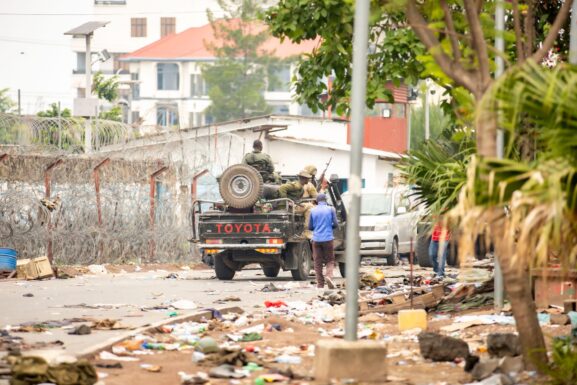
The crisis dates back to November 26, 2025, when a self-styled “Military High Command” seized power. The coup occurred just as the country awaited the results of general elections held on November 23. In the upheaval, the military deposed President Umaro Sissoco Embaló, dissolved the parliament, and installed General Horta Inta-a as the Transitional Head of State.
Pereira, the leader of the historic African Party for the Independence of Guinea and Cape Verde (PAIGC), was barred from the 2023 elections and subsequently arrested. Although he was allowed to travel to Portugal in July for medical treatment, his legal standing at home has disintegrated. His preventive detention order reportedly expired in October, but Bissau-Guinean authorities have provided no public clarity on his current status.
Justice in the Crosshairs
One of the most alarming developments since the coup, Birchinger noted, is the use of military courts to prosecute civilians. “It is very clear that military courts should not and cannot try civilians,” she told Lusa, citing the African Charter on Human and Peoples’ Rights and Guinea-Bissau’s own constitution.
The researcher described a chaotic legal landscape where a military investigating judge initially suspended proceedings against Pereira to consult the Supreme Court, only to abruptly reverse course and order his detention. Birchinger suggests this indicates an “invisible hand” manipulating the judiciary to neutralize political rivals, signaling a desperate struggle for authority between civilian and military institutions.
A Climate of Fear
For the citizens of Guinea-Bissau, the political environment has grown increasingly hostile. Birchinger highlighted a systematic crackdown on civil liberties, including bans on political party activities, public demonstrations, and the repression of journalists and independent radio stations.
“All of these are signs that the environment for the political opposition is not very safe,” Birchinger warned. As Pereira remains in Portugal, the question of whether he would face immediate rearrest or house arrest upon returning to Bissau remains “very unclear,” leaving the country’s political future as fractured as its legal system.
Image: Pexels – Andrew PaKip