Darwin in Cape Verde: Geological Secrets of Quail Island
In January 1832, a small brig-sloop named the HMS Beagle anchored in the volcanic waters of the Cape Verde archipelago. On board was a 22-year-old recent graduate named Charles Darwin. While the world would eventually know him for his theory of evolution, it was on the dusty, sun-scorched shores of Santiago Island that Darwin first truly discovered his passion as a geologist.
Cape Verde (officially Cabo Verde) is an archipelagic nation consisting of ten volcanic islands located approximately 570 kilometers off the coast of West Africa. For Darwin, this first landfall of his five-year voyage was not just a welcome break from sea-sickness; it was the classroom where he began to decode the history of the Earth. Specifically, his observations at Quail Island (now known as Ilhéu de Santa Maria) in the harbor of Praia would become a cornerstone of his early scientific reputation.
The Arrival at Santiago
The HMS Beagle arrived at Praia, the capital of Santiago, on January 16, 1832. At the time, Cape Verde was a central stopping point for transatlantic shipping routes, despite undergoing an economic decline due to the fading slave trade and persistent droughts. For Darwin, the arid landscape was a revelation. He wrote in his journal: “The island at a distance has a most forbidding aspect… the sun burns brightly, and the atmosphere is so clear.”
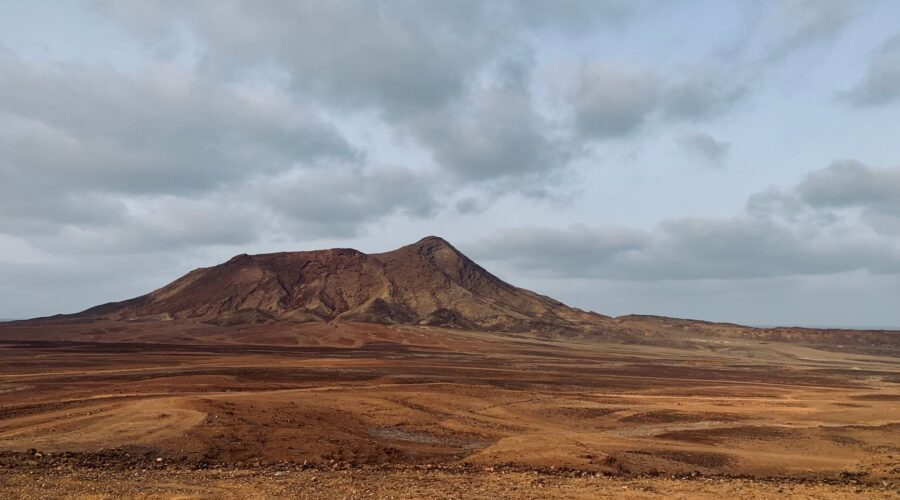
Unlike the lush, green “Cabo Verde” described by 15th-century Portuguese explorers, the Santiago Darwin encountered was a stark volcanic landscape. The islands, formed between 40 and 50 million years ago during the Eocene epoch, offered a pristine look at the raw materials of the planet. Darwin spent three weeks exploring the island, but it was a small, uninhabited islet in the bay—Quail Island—that captured his geological imagination.
The “White Band” Mystery
As Darwin walked the cliffs of Quail Island, he noticed a striking feature: a horizontal white band of limestone, about twenty feet above the current sea level, sandwiched between two layers of dark volcanic basalt. This limestone was filled with the shells of marine organisms, many of which were identical to the species still living in the surrounding sea.
This observation was a “lightbulb moment” for the young scientist. Using the principles of Lyell’s Principles of Geology, which he had been reading on the ship, Darwin deduced that the limestone must have originally formed on the seabed. He theorized that a volcanic eruption had poured lava over the sea floor, and subsequently, the entire island had been pushed upward by tectonic forces. This confirmed the idea of “gradualism”—that the Earth’s surface is constantly, slowly changing over vast periods.
Geological Significance of the Cape Verde Rise
Modern geology confirms Darwin’s early intuitions. The Cape Verde archipelago sits atop the Cape Verde Rise, one of the largest bathymetric swells in the world’s oceans. The islands are a “soda-alkaline petrographic province,” characterized by igneous rocks and pyroclastic debris. The oldest exposed rocks on Santiago date back roughly 128 to 131 million years, consisting of pillow lavas that formed deep underwater.
Darwin’s work at Quail Island allowed him to visualize the sequence of events:
- Deposition: Marine shells and sediment accumulated on the ocean floor.
- Volcanism: Molten lava flowed over the sediment, baking it into hard limestone.
- Uplift: Seismic activity pushed the ocean floor above the water, creating the cliffs Darwin stood upon.
A Bridge to Biology
While the visit to Santiago was primarily geological, it also provided Darwin with his first encounters with the unique biodiversity of Macaronesia. Cape Verde’s isolation has resulted in numerous endemic species. Darwin noted the birds and reptiles, including the Iago sparrow (Passer iagoensis), which is endemic to the archipelago. These early observations of island-specific variations would later serve as the foundation for his work on the Galapagos finches.
Cabo Verde Today: A Modern Perspective
Since Darwin’s 1832 visit, Cape Verde has transformed from a colonial outpost to one of Africa’s most stable and developed democracies. Gaining independence in 1975, the nation has shifted from a slave-trade hub to a service-oriented economy with a growing focus on tourism and environmental sustainability.
The “forbidding” landscape Darwin described is now a leader in renewable energy. As of 2023, 20% of the country’s energy is renewable, with a goal of 50% by 2030. The nation is also at the forefront of “debt-for-nature” swaps, recently agreeing with Portugal to invest debt repayments into environmental projects to combat the effects of climate change—a critical issue for an archipelago Darwin once noted for its extreme aridity.
Visiting Darwin’s Footsteps
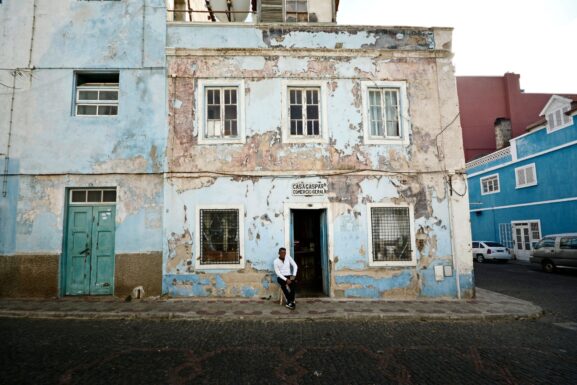
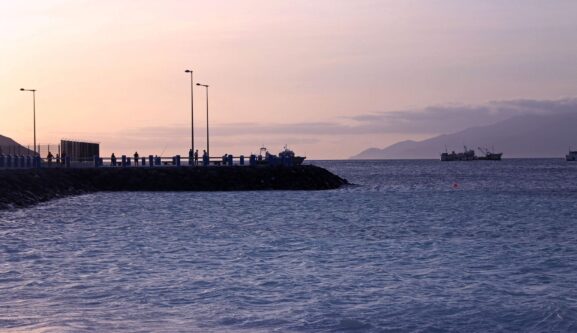
For modern travelers and science enthusiasts, Praia remains a vibrant gateway. Quail Island (Ilhéu de Santa Maria) is still visible in the harbor, though it is now closer to the bustling urban life of a city of 137,000 people. The “white band” Darwin discovered remains a silent witness to the geological forces that built the islands.
Visitors to Santiago can explore the mountains where humid air condenses to create “dry monsoon forests,” a stark contrast to the salt flats of Sal and Maio. The archipelago offers a unique blend of African and Portuguese culture, where the sounds of Cape Verdean Creole (Crioulo) fill the air, and the history of the world—both human and geological—is etched into every volcanic cliff.
Conclusion
Charles Darwin’s 1832 visit to Cape Verde was more than a maritime stopover; it was the birth of a scientific titan. The rocks of Quail Island taught him that the world was not static, but a place of constant, magnificent change. Today, as Cabo Verde continues to evolve as a beacon of democracy and sustainability in the Atlantic, it remains a vital site for anyone wishing to understand the history of our planet and the man who dared to explain it.
Image: Pexels – Bibi Kiekens