Barbearia Social: The Heart of Cape Verdean Community Culture
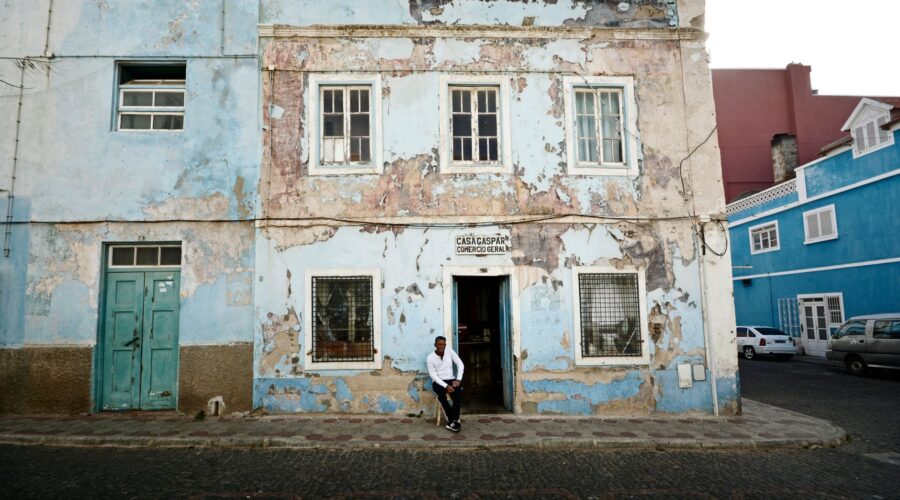
In the winding, cobblestone streets of Plateau in Praia or the vibrant neighborhoods of Mindelo, a rhythmic sound often cuts through the humid air: the synchronized snip-snip of scissors and the low hum of electric clippers. But step inside a traditional Cape Verdean barber shop, and you will quickly realize that hair is merely the pretext for the gathering. You have entered a Barbearia Social—a foundational pillar of Cape Verdean society that functions as a neighborhood parliament, a philosophical forum, and a living archive of the archipelago’s history.
More Than a Haircut: The Origins of the Social Barber Shop
To understand the ‘Barbearia Social’ culture, one must first look at the unique history of Cape Verde. As a crossroads between Africa, Europe, and the Americas, the islands developed a distinct “Creole” identity characterized by Morabeza (hospitality) and a deep intellectual tradition. During the colonial era, spaces where men could gather freely were limited. The barber shop emerged as a rare “third space”—neither home nor work—where the rigid hierarchies of the day could be momentarily suspended.
Historically, the Cape Verdean barber was more than a craftsman; he was often a storyteller, a musician, and a confidant. Because the profession required intimate physical proximity and time, it naturally fostered deep conversation. In a culture where oral tradition is paramount, the barber shop became the primary venue for disseminating news long before the arrival of widespread television or the internet.
The Barber as Philosopher and Arbitrator
The “Barbeiro” (barber) in Cape Verdean culture holds a position of significant informal power. He is the moderator of the tertúlia—a Portuguese term for a social gathering of friends to discuss literature, politics, and current affairs. In the Barbearia Social, the barber ensures that everyone has a voice, from the elder statesman reminiscing about the independence movement to the young student debating the merits of modern Afro-pop.
Philosophy in these shops isn’t found in textbooks; it is “street philosophy.” Conversations often revolve around the concept of Sodade—that uniquely Lusophone longing for people and places lost—and the resilience required to live on an archipelago defined by the sea and periodic drought. Here, men deconstruct the complexities of life, offering advice on marriage, parenting, and survival, often punctuated by the clicking of a domino game in the corner.
A Political Hub: From Colonialism to Democracy
Politics is the lifeblood of the Cape Verdean barber shop. During the struggle for independence from Portugal, which culminated in 1975, these shops were clandestine meeting points. While the clippers ran to mask the sound of voices, activists shared pamphlets and discussed the ideologies of Amílcar Cabral. The barber shop provided a “safe harbor” where the seeds of revolution could be sown without attracting the immediate suspicion of colonial authorities.
In the modern era, this political tradition continues. Cape Verde is widely regarded as one of Africa’s most stable democracies, and much of that democratic fervor is fueled in the barber chair. During election seasons, candidates often make unofficial stops at well-known neighborhood barber shops, knowing that winning over the “barbershop influencers” is key to securing the local vote. The debates are fierce but typically respectful, reflecting the islands’ commitment to civil discourse.
The Architecture of the Shop
A traditional Barbearia Social is easily identifiable. The walls are usually a gallery of Cape Verdean life: faded posters of the national football team (the Blue Sharks), portraits of Amílcar Cabral, and often a guitar or cavaquinho hanging within reach. The seating is arranged not just for those waiting for a trim, but for those who have simply come to “estar”—to be. It is common to see men spend three hours in a shop only to leave without ever sitting in the barber’s chair.
The Cultural Impact of the Diaspora
Cape Verde has a larger population living abroad (in the US, Portugal, and France) than on the islands themselves. For the diaspora, the barber shop is an essential link to their heritage. When Cape Verdeans return for the summer holidays, the barber shop is their first stop. It is the place where they “re-Cape Verdeanize,” catching up on years of local gossip, politics, and language shifts in a single afternoon.
In cities like Brockton, Massachusetts, or Lisbon’s Pawtucket, Cape Verdean barber shops serve as cultural embassies. They are places where the Creole language (Kriolu) is spoken exclusively, and where the next generation of Cape Verdean-Americans or Cape Verdean-Europeans learns about their roots while getting a modern fade.
Preserving the Tradition in a Digital Age
As with many traditional institutions, the Barbearia Social faces the challenge of modernization. High-end salons and social media are changing how young people interact. However, the core essence of the Cape Verdean barber shop remains remarkably resilient. In a world of digital silos, the physical, face-to-face interaction of the barber shop offers something a smartphone cannot: a sense of belonging and a groundedness in community.
For the traveler visiting Cape Verde, a visit to a local barber shop (even if you don’t need a haircut) offers the most authentic window into the soul of the islands. It is a place where the history is told by those who lived it, and where the future of the nation is debated one trim at a time.
Summary of the ‘Barbearia Social’ Experience
- The Moderator: The barber acts as a social glue and intellectual gatekeeper.
- The Topics: Ranging from the philosophy of Sodade to the latest government policies.
- The Atmosphere: A blend of Morabeza, competitive dominoes, and the sounds of Morna or Funaná music.
- The Function: An informal parliament that sustains Cape Verde’s democratic spirit.
The Barbearia Social is not just a business; it is a sacred secular space. It proves that as long as there is a mirror, a chair, and a willing listener, the philosophical and political heartbeat of Cape Verde will continue to thrive.
Image: Pexels – damien Saillet