Cape Verde vs Cabo Verde: The UN Name Change Explained
In the world of international diplomacy, names carry weight. They represent history, identity, and sovereignty. In 2013, a small but significant shift occurred on the world stage when the United Nations officially updated its records for a ten-island archipelago off the coast of West Africa. The country, long known to the English-speaking world as Cape Verde, requested that all nations and international bodies refer to it exclusively by its Portuguese name: Cabo Verde.
The Decree: More Than Just a Translation
In October 2013, the government of the Republic of Cabo Verde formally notified the United Nations that it wished to no longer have its name translated into different languages. For decades, the country had been “Cap-Vert” in France, “Cabo Verde” in Portugal and Brazil, and “Cape Verde” in the United Kingdom and the United States.
The request was clear: for all official purposes—from passports and diplomatic seating charts to trade agreements and international sporting events—the name must be Cabo Verde. The government expressed that the name is a proper noun that represents the nation’s specific cultural identity, much like how “Cote d’Ivoire” remains “Cote d’Ivoire” in English, rather than being translated to “Ivory Coast.”
The Etymology: Roots of the “Green Cape”
The name itself predates the discovery of the islands. In 1444, Portuguese explorers reached the westernmost point of continental Africa, a lush peninsula in modern-day Senegal. They named it Cabo Verde (Green Cape) because of its striking contrast to the arid Saharan landscape nearby. When the uninhabited islands 600 to 850 kilometers to the west were discovered a few years later, they were named after that mainland landmark.
Historically, the islands have been a crossroads of the Atlantic. From the 15th century onward, they served as a vital hub for the transatlantic slave trade and later as a crucial commercial stop for shipping routes. This history of blending West African populations with Portuguese settlers created a unique Crioulo culture. By insisting on the name “Cabo Verde,” the nation is reclaiming the original linguistic heritage that has defined it since it was first settled in 1462.
Why the Change? Identity and Branding
The move to standardize the name was driven by a desire for consistency and national branding. When a country’s name is translated into dozens of different languages, it can dilute its “brand” on the global stage. By choosing one official name, Cabo Verde ensures that its identity remains distinct and recognizable, whether in a UN session in New York or a tourism bureau in Berlin.
Furthermore, the 2013 change was a statement of sovereignty. As the country transitioned from a former Portuguese colony to a stable representative democracy—ranking as one of the most developed and democratic nations in Africa—establishing control over how it is addressed by the world was a symbolic step toward full self-determination.
Interesting Facts About Cabo Verde
- A Democratic Leader: In 2026, Cabo Verde was ranked the joint second most democratic nation in Africa, alongside Mauritius and South Africa.
- Volcanic Majesty: The islands are formed of volcanic rock. Pico do Fogo, the largest active volcano, stands at 2,829 meters and last erupted in 2014.
- Environmental Pioneers: Cabo Verde is a leader in renewable energy. By 2023, 20% of its energy was renewable, with a goal of 50% by 2030. It also participated in one of Africa’s first “debt-for-nature” swaps with Portugal.
- The Diaspora: There are more Cabo Verdeans living abroad (primarily in the US and Portugal) than there are on the islands themselves.
Geography of the Islands
Cabo Verde is divided into two main groups of islands, categorized by their position relative to the wind:
The Barlavento (Windward) Islands
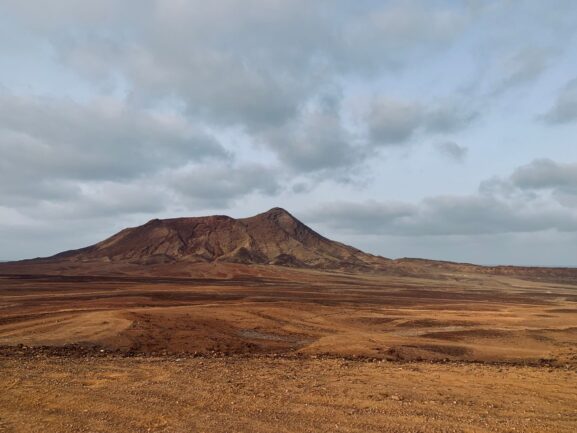
Located to the north, these include Santo Antão, São Vicente, Santa Luzia, São Nicolau, Sal, and Boa Vista. Islands like Sal and Boa Vista are famous for their flat, sandy deserts and world-class beaches.
The Sotavento (Leeward) Islands
Located to the south, these include Maio, Santiago, Fogo, and Brava. Santiago is the most populous island and home to the capital city, Praia. These islands are generally rockier and more mountainous, offering a stark contrast to the sandy plains of the north.
Practical Implications of the Name Change
While the UN and international organizations adopted the name immediately, the transition in common parlance has been slower. Many English speakers still reflexively say “Cape Verde.” However, travelers will notice that airlines, official travel documents, and Olympic broadcasts now exclusively use “Cabo Verde.”
For the traveler, the name change reflects a country that is proud of its roots. Whether you are visiting the historic ruins of Cidade Velha—the first permanent European settlement in the tropics—or listening to the soulful sounds of Morna music in Mindelo, you are experiencing a nation that is uniquely and officially Cabo Verde.
Cabo Verde Today: A Success Story
Beyond the name, the country has earned its reputation as “a real success story,” as described by former US President Barack Obama. Despite lacking significant natural resources, it has built a service-oriented economy focused on tourism and foreign investment. It recently achieved a major public health milestone, becoming the third African country to be declared free of malaria in 2024.
As the world moves forward, the name “Cabo Verde” serves as a reminder of the nation’s resilience, its strategic importance in the Atlantic, and its vibrant, luso-African identity. While “Cape Verde” may linger in history books, “Cabo Verde” is the name of the future.
Image: Pexels – Ana Marta Jorge