African Migrant Women Perform Life Stories in Portugal Stage
The untold stories of resilient African migrant women are taking center stage in Portugal this Sunday. In a powerful display of documentary theater titled Maria-Mundu, a cast of 56 women—ranging in age from 64 to 94—will perform their own life stories at the Ruy de Carvalho Municipal Auditorium in Carnaxide.
A Journey of Survival and Hope
The performers are members of “As Marias,” a municipal project in Oeiras designed to support women who migrated to Portugal decades ago. While many hailed from Cape Verde, Mozambique, Guinea-Bissau, and India, others arrived from rural regions of Portugal like Minho and Alentejo. Despite their different origins, they shared a common goal: escaping war and poverty to build a better life.
Upon arriving in Portugal as young adults, many found shelter in makeshift, neglected neighborhoods like Pedreira dos Húngaros and Santa Filomena. They spent their lives in precarious jobs, often without social protections or benefits, laboring to raise families and build homes where none existed.
From the Shadows to the Spotlight
Director Rita Wengorovius of Teatro Umano, who has led the company since 1998, describes the play as a tribute to the strength of the migrant spirit. “It is a tribute to these women, to migration, and to women who are capable of building and rebuilding—of weaving humanity together,” she told Lusa news agency.
The play chronicles the entire arc of their lives: the painful departure from their homelands, the early mornings spent commuting to grueling jobs, and the eventual demolition of their original neighborhoods to make way for modern housing. While the move to brick-and-mortar buildings improved their living conditions, it often severed the tight-knit social bonds of their former communities—bonds they are now recreating through art.
Combatting Loneliness Through Community
For many of the performers, the “As Marias” project is a lifeline against the isolation of widowhood and the distance of grown children. Beyond the theater, the women participate in sewing, swimming, and even capoeira.
“Maria-Mundu” serves as a mapping of the cultural and emotional riches these women brought to Portugal. It tells the story of how they reinvented themselves in a new community, transforming from laborers to artists. By sharing their “affective legacy,” these 56 women stand as symbols for the thousands of migrants who continue to shape the social fabric of Portugal today.
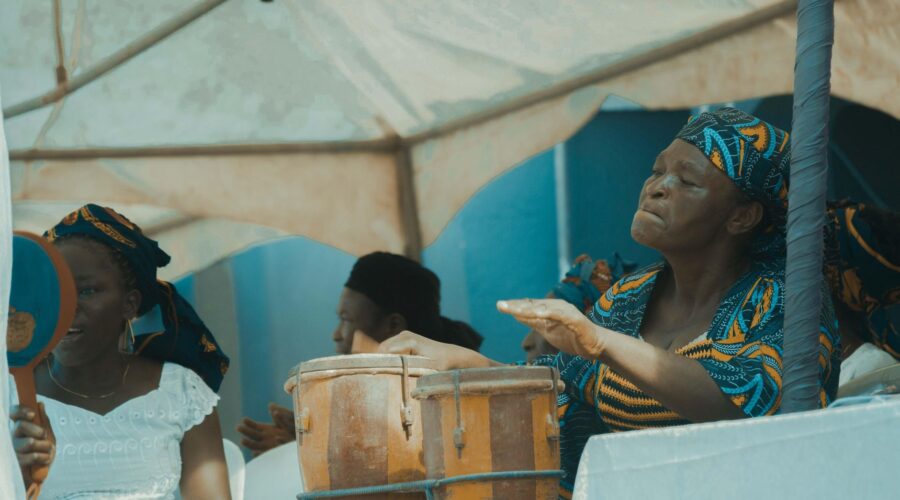
Image: Pexels – oloruntoba john