African Democracy Needs More Than Elections – Simões Pereira
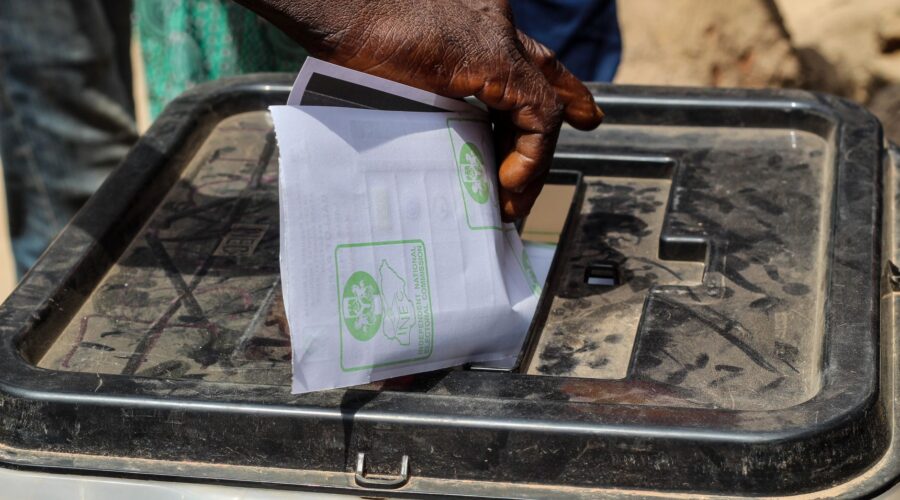
True democracy in Africa cannot be defined solely by the ballot box, according to Bissau-Guinean politician Domingos Simões Pereira. Speaking at a conference in Lisbon, the leader of the African Party for the Independence of Guinea and Cape Verde (PAIGC) argued that free and fair elections are hollow without consolidated institutions and oversight mechanisms that protect citizens between voting cycles.
“The citizen cannot be sovereign only on the day they vote,” Simões Pereira told attendees at the ISCTE – University Institute of Lisbon. The politician was there to discuss his latest book, On Democracy in Africa, which critiques the gap between liberal democratic doctrine and the actual lived experience of citizens on the continent.
A State Proclaimed but Not Built
Simões Pereira, who has been in Portugal since July following a period of imprisonment in Guinea-Bissau, identified the fragility of the state as the primary obstacle to progress. Using his home country as a case study, he suggested that while independence was formally declared, the structural foundation of a functioning state was never truly established.
“One of the fundamental prerequisites for democratic construction is our greatest deficit: the issue of state consolidation,” he said. “Our state was proclaimed; it was not built.”
The politician’s perspective is shaped by recent turbulence. He was detained by a military court following the November 2025 coup d’état that ousted President Umaro Sissoco Embaló. The coup occurred just one day before the scheduled release of election results, effectively freezing the country’s democratic process. After months in detention and house arrest, Simões Pereira eventually traveled to Portugal.
Challenging the “Western Import” Myth
During his address, Simões Pereira rejected the frequent claim that democracy is an alien, Western concept incompatible with African realities. Instead, he argued that democratic struggles are universal and that issues like corruption—which he called a major hurdle—are not “identity traits” of African nations but phenomena that must be actively dismantled.
He urged the next generation of scholars and leaders to reject “fatalistic” views of the continent’s future. “We feel some frustration because we see time passing and we cannot benefit from the quality of life we aspired to,” he admitted, “but there is no room for fatalism. Other countries have faced similar difficulties and managed to build better societies.”
A Call for Institutional Substance
While the politician declined to comment on his immediate political future or his potential return to Guinea-Bissau for upcoming elections, his academic focus remains clear. He argues that the true test of a democracy lies in the “substance of rights” and the actual conditions under which people exercise their freedom.
“History is not a sentence; it is an experience from which we can learn,” he told the students, calling for a commitment to correcting institutional mistakes rather than resigning to them. “Let us not accept that Africa’s complexity be presented as an excuse for resignation.”
Image: Pexels – Fatima Yusuf