Banana Plantations of Santiago: Cape Verde’s Green Valleys
Rising from the turquoise depths of the Atlantic Ocean, the archipelago of Cabo Verde (Cape Verde) presents a landscape of dramatic contrasts. While the islands are famously part of the Sahelian semi-arid belt—often associated with volcanic peaks and sun-scorched plains—the island of Santiago offers a lush, green surprise. Tucked into the deep valleys and along the base of towering mountains, vast banana plantations thrive, serving as a testament to the ingenuity of Cape Verdean agriculture in the arid tropics.
The Green Valleys of Santiago
Santiago is the largest and most populous island of the archipelago, home to the capital city of Praia and nearly half of the nation’s population. Geologically, Santiago is characterized by its rugged interior, where ancient volcanic structures and 128-million-year-old pillow lavas form a jagged spine across the island. It is within these dramatic geographical features that the “Green Cape” (the literal translation of Cabo Verde) truly earns its name.
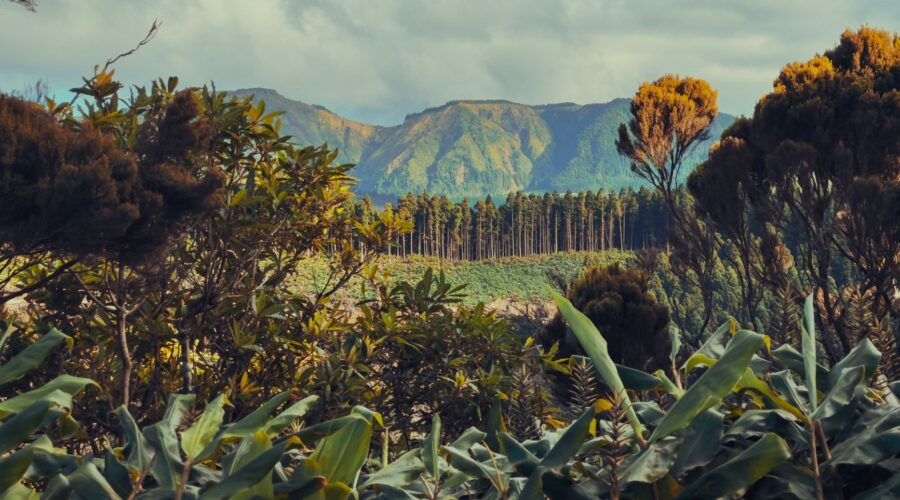
Unlike the flat, sandy islands of Sal or Boa Vista, Santiago possesses high altitudes that create unique microclimates. As humid Atlantic air hits the steep mountains, orographically induced precipitation occurs. This condensation, often appearing as a thick mist or “wet fog,” provides the lifeblood for the island’s agriculture. In valleys like Santa Cruz and Ribeira Grande, the arid slopes suddenly give way to emerald-green canopies of banana trees, standing in stark defiance of the surrounding volcanic rock.
Agriculture in the Arid Tropics: A Balancing Act
Farming in Cape Verde is a feat of endurance and adaptation. With less than two percent of the archipelago’s land classified as arable, every square meter of fertile soil in Santiago is precious. The banana plantations represent one of the most significant agricultural outputs of the island, alongside sugarcane and coffee.
Water Management and Irrigation
The primary challenge for Santiago’s banana farmers is the irregularity of rainfall. Cape Verde typically experiences a brief rainy season between August and October, characterized by heavy but infrequent downpours. To sustain water-intensive crops like bananas during the long dry months, farmers rely on a sophisticated system of levadas (irrigation channels) that capture mountain spring water and runoff. In recent years, there has been an increased shift toward drip irrigation to maximize water efficiency, a necessity as the country faces the growing threats of climate change and desertification.
The Varieties and Local Economy
The bananas grown on Santiago are primarily for domestic consumption, forming a staple part of the local diet. You will often see the “Dwarf Cavendish” variety, which is well-suited to the tropical climate and easier to protect from the high winds that occasionally sweep across the Atlantic. These plantations are not just industrial sites; they are the backbone of rural communities. In towns like Assomada and the surrounding hills, the harvest provides a vital source of income for thousands of families.
Cultural Significance and The Market Experience
The banana is more than just a crop; it is woven into the cultural fabric of Santiago. A visit to the vibrant Mercado de Sucupira in Praia reveals the bounty of these plantations. Stacks of green and yellow bananas are sold alongside local papayas, mangoes, and the iconic grogue (sugarcane spirit). For many Cape Verdeans, the sight of the verdant banana groves in the interior is a symbol of resilience—a sign that life can flourish even in a land formed by fire and shaped by drought.
Ecotourism and the Future of Farming
For international travelers, the banana plantations offer a gateway to a side of Cape Verde rarely seen in brochures for beach resorts. Hiking through the valleys of Santiago allows visitors to see the “dry monsoon forests” and the carefully terraced plots where bananas grow under the shade of taller trees. It is a masterclass in tropical ecology.
However, the future of these plantations faces modern hurdles. Cape Verde has been identified as one of the most endangered nations due to climate change. In 2023, Portugal and Cape Verde signed a landmark “debt-for-nature” swap, converting €140 million of debt into environmental and climate investments. This funding is crucial for protecting the watersheds that feed the banana plantations, ensuring that the next generation of farmers can continue to harvest the green gold of the valleys.
Quick Facts for Travelers
- Where to see them: The best plantations are found in the interior of Santiago, particularly in the Santa Cruz and Organos regions.
- Climate: The best time to visit the lush interior is just after the rainy season (November to January) when the vegetation is at its peak.
- Language: While Portuguese is the official language, you will hear the farmers speaking Cape Verdean Creole (Crioulo), the soulful language of the islands.
- Sustainability: Cape Verde aims to generate 50% of its energy from renewable sources by 2030, a move that will help power the pumps and infrastructure needed for sustainable farming.
Conclusion
The banana plantations of Santiago are a living bridge between Cape Verde’s volcanic past and its sustainable future. They represent the “Green Cape” in its truest form—a place where human perseverance and the unique geography of the Macaronesia ecoregion combine to produce life in the middle of the Atlantic. For any visitor to Santiago, a journey into these verdant valleys is an essential chapter in understanding the heart of this resilient island nation.
Image: Pexels – Duncan Light