Caminho das Estrelas: Stargazing in Cape Verde’s Highlands
As the sun dips below the horizon of the Atlantic Ocean, painting the volcanic peaks of Santo Antão and Fogo in hues of burnt orange and deep violet, a second world begins to emerge. In the high-altitude plateaus of Cape Verde, far removed from the neon glow of modern metropolises, the sky doesn’t just get dark; it transforms into a crystalline dome of celestial fire. This is the stage for the ‘Caminho das Estrelas’—the Path of the Stars—a burgeoning movement to position the Cape Verdean highlands as a premier global destination for astrotourism.
Cape Verde (Cabo Verde) has long been celebrated for its morabeza (hospitality), its soul-stirring morna music, and its pristine beaches. However, the archipelago is now looking upward, leveraging its unique geography and lack of light pollution to seek formal Dark Sky Certification. This initiative aims to protect one of the planet’s most endangered natural resources: the darkness of the night sky.
The Geography of Darkness: Why Cape Verde?
Cape Verde possesses a rare combination of geographical traits that make it an astronomer’s paradise. Situated approximately 500 kilometers off the coast of West Africa, the islands benefit from a tropical maritime climate, but it is the verticality of the terrain that provides the greatest advantage. On islands like Fogo, Santo Antão, and São Nicolau, the topography rises sharply from the sea to heights exceeding 2,000 meters.
At these altitudes, observers are often positioned above the “marine layer” or trade wind inversion. This means the air is exceptionally dry, stable, and transparent. Furthermore, the archipelago’s location near the equator allows for a unique viewing perspective: stargazers can witness the constellations of the Northern Hemisphere while catching glimpses of the Southern Cross and the Magellanic Clouds, typical of the Southern Hemisphere.
Chã das Caldeiras: A Natural Observatory
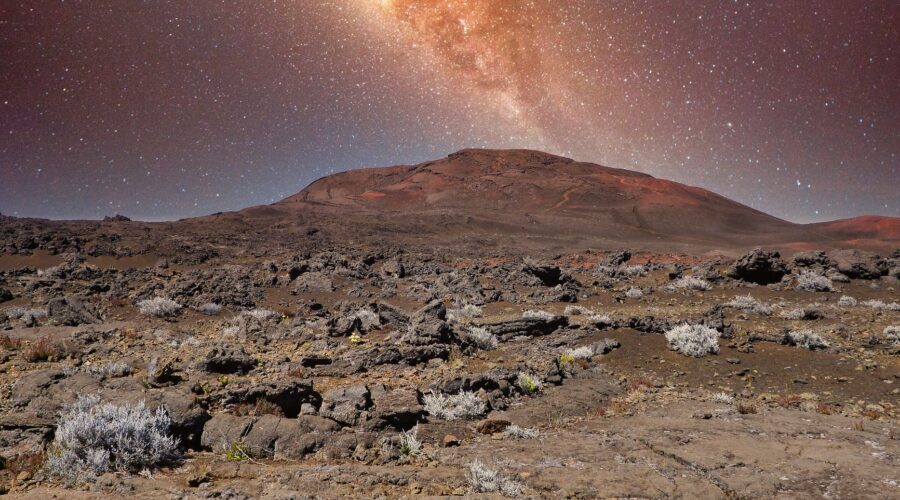
Perhaps the crown jewel of the ‘Caminho das Estrelas’ is Chã das Caldeiras on the island of Fogo. Nestled inside a massive volcanic crater at 1,700 meters above sea level, the village is shadowed by the towering Pico do Fogo. The crater walls act as a natural barrier against light pollution from coastal towns. Here, the Milky Way is not a faint smudge, but a vivid, structural river of light that casts soft shadows on the volcanic soil. The silence of the crater, combined with the overwhelming brilliance of the stars, offers a near-spiritual experience for visitors.
The Quest for Dark Sky Certification
The Cape Verdean government, in collaboration with international astronomical organizations and local environmental groups, is actively pursuing Dark Sky Certification from the International Dark-Sky Association (IDA). This certification is not merely a badge of honor; it is a commitment to rigorous environmental standards.
To achieve this, several “Dark Sky Reserves” or “Parks” are being mapped out. The process involves:
- Light Pollution Monitoring: Using sky-quality meters to scientifically prove the darkness of the sky.
- Sustainable Lighting Policies: Implementing “star-friendly” LED lighting in highland villages to ensure that light is directed downward and uses warmer color temperatures that do not interfere with nocturnal wildlife or astronomical viewing.
- Community Education: Engaging local populations to understand that “darkness” is an economic and ecological asset.
By securing this certification, Cape Verde aims to join the ranks of world-renowned sites like the Aoraki Mackenzie in New Zealand or the Canary Islands in Spain, signaling to the global scientific community and “eclipse chasers” that the archipelago is open for discovery.
Astrotourism: A New Pillar for Sustainable Travel
The ‘Caminho das Estrelas’ is more than a scientific endeavor; it is a strategic move toward high-value, low-impact tourism. Astrotourism attracts a demographic of travelers who are environmentally conscious, stay longer, and are interested in the authentic culture of the islands.
Economic Impact on Highland Communities
Traditionally, tourism in Cape Verde has been concentrated on the flat, sandy islands of Sal and Boa Vista. The development of stargazing routes brings economic opportunities to the more rugged, interior regions. Local guides are being trained in ethno-astronomy—the study of how Cape Verdean ancestors used the stars for navigation and agriculture. This creates a bridge between modern science and traditional folklore, preserving oral histories that might otherwise be lost.
Small eco-lodges in Santo Antão and São Nicolau are beginning to offer “Stargazing Packages,” complete with telescopes, red-light torches, and specialized photography workshops. This diversification helps alleviate the pressure on coastal ecosystems and spreads the wealth of tourism across the archipelago.
Cultural Significance: The Stars in Cape Verdean Soul
The stars have always been part of the Cape Verdean identity. For a nation of mariners and explorers, the celestial map was the original GPS. In the highlands, elders still recall a time when the movements of the Pleiades (locally known as Setestrelo) signaled the beginning of the planting season for corn and beans.
The ‘Caminho das Estrelas’ seeks to honor this heritage. By protecting the night sky, Cape Verde is protecting its history. Modern festivals are now incorporating “star parties” where traditional music is played under the open sky, creating a multisensory experience that connects the terrestrial terra with the celestial céu.
Practical Information for Aspiring Stargazers
If you are planning to follow the Path of the Stars, here are a few tips for an optimal experience:
When to Go
The best time for stargazing in Cape Verde is during the “dry season” from November to June. During these months, the skies are most likely to be clear. However, be mindful of the Bruma Seca (dry haze), a weather phenomenon where Saharan dust can occasionally obscure visibility for a few days in winter.
Where to Stay
- Fogo: Stay in one of the guesthouses within Chã das Caldeiras for an immersive experience.
- Santo Antão: The plateaus of Norte and Cova offer spectacular views away from the trekking hubs of the Ribeira Grande valley.
- São Nicolau: The area around Monte Gordo National Park provides some of the most pristine dark skies in the Atlantic.
What to Bring
Even in the tropics, the highlands get cold at night. Pack thermal layers and a windbreaker. If you are a photographer, a sturdy tripod and a wide-angle lens with a fast aperture (f/2.8 or lower) are essential for capturing the Milky Way.
A Bright Future for Dark Skies
The ‘Caminho das Estrelas’ represents a shift in how we perceive the environment. It challenges the notion that “development” must always mean more lights and more urbanization. In the volcanic highlands of Cape Verde, the message is clear: there is immense value in the void.
As the archipelago moves closer to its Dark Sky Certification, it offers a beacon of hope for conservationists worldwide. It proves that by looking upward, a nation can find a sustainable path forward—one that protects the environment, empowers local communities, and allows us all to remain connected to the infinite wonders of the universe.
Image: Pexels – laurent planson crequer