The Salt Flats of Sal: History of Pedra de Lume & Santa Maria
In the middle of the vast Atlantic Ocean, approximately 570 kilometers off the coast of West Africa, lies the island of Sal. Part of the Barlavento (windward) group of the Cape Verde archipelago, Sal is a geological wonder: flat, sandy, and exceptionally dry. While the islands of Santiago and Santo Antão are known for their towering mountains and lush vegetation, Sal is defined by its arid landscape—a terrain so influenced by the sun and sea that it gave birth to a thriving industry that once shaped the nation’s economy.
The Island of Salt: A Geological Gift
Originally named Llana (flat), the island was renamed Sal (Portuguese for “salt”) when the true extent of its natural resources was discovered. Geologically, the archipelago was formed 40–50 million years ago, but Sal is one of the oldest islands, dating back roughly 20 million years. Its flat topography and volcanic history created the perfect conditions for natural salt evaporation, specifically within the calderas of extinct volcanoes and low-lying coastal basins.
For centuries, the “white gold” of Sal was the backbone of the Cape Verdean economy. Before the rise of modern tourism, the salt flats, or salinas, of Pedra de Lume and Santa Maria were the centers of industrial life, exporting salt to Africa, Europe, and the Americas.
Pedra de Lume: Salt from a Volcano
The crown jewel of Sal’s industrial history is undoubtedly Pedra de Lume. Located on the eastern coast of the island, this site is unique because the salt pans are situated inside the crater of an extinct volcano. The crater floor sits below sea level, allowing salt water to seep through the porous volcanic rock from the nearby ocean. Once inside the sun-drenched crater, the water evaporates, leaving behind thick, shimmering crusts of high-quality salt.
From Discovery to Industry
Though the islands were discovered in the mid-15th century by navigators like António de Noli and Diogo Gomes, the industrial exploitation of Pedra de Lume didn’t begin in earnest until the late 18th century. In 1796, Manuel António Martins, an influential businessman and governor, began developing the site for export.
The logistics were a marvel of 19th and early 20th-century engineering. To transport the salt from the crater to the port, an elaborate wooden cable car system was built. The remains of these pylons still stand today, haunting the landscape like skeletal monuments to a bygone era. At its peak, Pedra de Lume exported thousands of tons of salt annually, primarily to Brazil and West Africa.
A Modern Wellness Destination
Today, the industrial hum has faded, but Pedra de Lume remains a primary tourist attraction. Because the salt concentration in the crater’s ponds is extremely high—often compared to the Dead Sea—visitors can float effortlessly on the surface of the water. The mineral-rich mud and salt are also prized for their therapeutic properties for the skin.
Santa Maria: The Port that Salt Built
While Pedra de Lume offered a dramatic volcanic setting, the Santa Maria Salinas on the southern tip of the island were equally vital. The town of Santa Maria itself was founded in 1835 specifically to support the salt industry.
The Life of the Salinas
Unlike the volcanic seepage of Pedra de Lume, the Santa Maria salt flats were engineered closer to the coast, using a series of evaporation ponds. The process was labor-intensive: sea water was channeled into shallow pans, and as the fierce Saharan winds and relentless sun evaporated the water, workers would manually rake the salt into piles. Even today, as you walk along the edge of the town toward the dunes, you can see the geometric remains of these old salt pans.
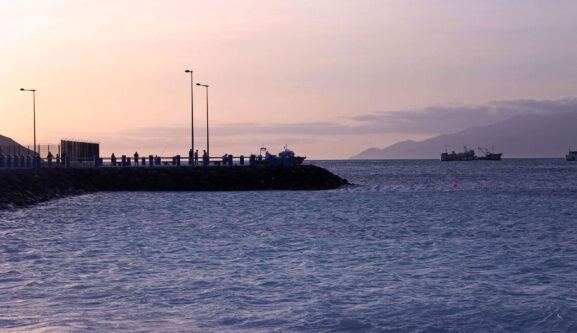
The salt trade turned Santa Maria into a bustling hub. The town’s pier, which is still a focal point for local fishermen and tourists today, was originally the primary loading point for salt-bearing ships. The decline of the trade in the mid-20th century, caused by increased international competition and the lack of modernization, led the island to pivot toward its current economic driver: international tourism.
Cultural and Economic Context
The history of the salt flats is deeply intertwined with the broader history of Cape Verde. The archipelago, which became independent in 1975, has always had to be resourceful due to a lack of traditional natural resources. As noted in historical records, the islands were a strategic stopping point for shipping routes—including the voyage of Charles Darwin on the HMS Beagle in 1832—and the salt from Sal was a key commodity traded at these stops.
The salt industry also reflected the diverse makeup of the Cape Verdean people. The labor at the salinas was performed by a population tracing its ancestry to West African populations and Portuguese settlers, creating a unique Creole culture that persists today in the local language, music, and food.
Traveler’s Guide: Visiting the Salt Flats Today
For those planning a trip to Cabo Verde, a visit to the salt flats is a journey through time. Here are a few tips for making the most of the experience:
- Pedra de Lume: There is a small entrance fee to enter the crater. Wear water shoes, as the salt crystals can be sharp. Don’t forget to rinse off in the freshwater showers provided at the exit, as the high salt content can become itchy once dry.
- Santa Maria: You can easily walk to the Santa Maria salinas from most hotels in the town. It is a fantastic spot for photography, especially at sunset when the light reflects off the remaining salt crusts.
- Sustainability: Cape Verde is a leader in renewable energy in Africa, aiming for 50% renewable sources by 2030. When visiting these sensitive natural sites, ensure you follow “leave no trace” principles to protect the delicate volcanic and coastal ecosystems.
Conclusion
The salt flats of Sal are more than just a backdrop for holiday photos; they are the physical remnants of the industry that gave the island its name and its purpose. From the dramatic volcanic crater of Pedra de Lume to the historic pans of Santa Maria, these sites tell a story of human ingenuity in the face of an arid, challenging environment. As Cape Verde continues to grow as a stable, democratic “success story” in Africa, the salinas remain as a proud testament to the islands’ resilient past.
Image: Pexels – Bibi Kiekens