Diogo Afonso: The Discovery of Cape Verde’s Barlavento Islands
In the mid-15th century, the Atlantic Ocean was the final frontier for European explorers. Driven by the ambitions of Prince Henry the Navigator, Portuguese sailors pushed further south and west than ever before, seeking new trade routes and expanding the known world. While names like António de Noli and Alvise Cadamosto are frequently cited in the annals of Macaronesian discovery, the role of Diogo Afonso is pivotal, particularly concerning the northern cluster of the Cape Verde archipelago: the Barlavento Islands.
The Dawn of Discovery in the Mid-Atlantic
Cape Verde (officially Cabo Verde) is an archipelagic nation located between 600 and 850 kilometers west of Dakar, Senegal. Formed by volcanic activity millions of years ago, these ten islands remained uninhabited by humans until the Portuguese arrivals in the 1450s and 60s. The archipelago is geographically split into two distinct groups: the Sotavento (Leeward) islands to the south, and the Barlavento (Windward) islands to the north.
While the southern islands like Santiago and Fogo were the first to be sighted and settled—leading to the establishment of Ribeira Grande (now Cidade Velha), the first permanent European settlement in the tropics—the northern islands remained a mystery for a few years longer. It was here that Diogo Afonso, a Portuguese navigator and esquire of Prince Fernando, Duke of Viseu, etched his name into history.
Diogo Afonso and the Mapping of the Barlavento
Historical records indicate that the discovery of Cape Verde was a collaborative, multi-stage effort involving Genoese and Portuguese navigators. While António de Noli is often credited with the initial discovery of the southern islands around 1456, Diogo Afonso is the figure most closely associated with the identification of the northern reaches of the archipelago.
In the early 1460s, Afonso embarked on a series of voyages under the commission of the Portuguese crown. His primary contribution was the sighting and naming of several islands in the Barlavento group, including:
- São Vicente: Traditionally sighted on Saint Vincent’s Day.
- Santo Antão: The westernmost and most mountainous of the group.
- São Nicolau: A rugged island that would later become a cultural and intellectual hub for the archipelago.
- Santa Luzia: The only uninhabited island of the main ten.
- The Islets of Branco and Raso: Small, rocky outcrops near São Nicolau.
By identifying these landmasses, Afonso completed the mental and physical map of Cape Verde. His explorations ensured that the Portuguese Crown could claim the entire “horseshoe-shaped” cluster, securing a strategic foothold in the Atlantic that would later facilitate the transatlantic slave trade and the global shipping routes of the 19th century.
The Strategic Importance of Afonso’s Discoveries
The Barlavento islands discovered by Afonso differed significantly from the Sotavento group. While Santiago was fertile enough to support early agriculture and the infamous slave trade economy, islands like Sal and Boa Vista (also part of the Barlavento) were flatter and more arid. However, these discoveries were no less important. The Barlavento islands offered natural harbors and, eventually, the vast salt flats of Sal and Maio which became vital commodities for preserving food on long sea voyages.
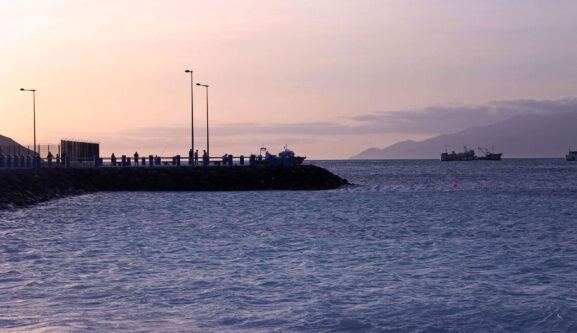
Furthermore, the island of São Vicente, discovered by Afonso, would centuries later become the crown jewel of Cape Verdean commerce. Its deep-water harbor at Mindelo became a crucial refueling station for British coal ships and Atlantic steamers, transforming a once-barren island into the cultural capital of the nation.
Legacy and Recognition
Diogo Afonso’s impact is memorialized in the very fabric of Cape Verdean identity. In the city of Mindelo, on the island of São Vicente—an island he is credited with discovering—a prominent statue of the navigator stands looking out toward the sea. This monument serves as a reminder of the “Age of Discovery” that birthed the modern Cape Verdean nation, a unique Creole culture formed from the blending of Portuguese settlers and West African populations.
Though the era of exploration is often viewed through a complex lens today—given the subsequent centuries of the transatlantic slave trade that used these islands as a primary hub—explorers like Afonso were the catalysts for the globalization of the Atlantic world. Their voyages turned an uninhabited volcanic archipelago into a bridge between Europe, Africa, and the Americas.
Modern Cape Verde: From Discovery to Democracy
Today, the islands Diogo Afonso helped map are part of one of Africa’s most stable and successful democracies. Since gaining independence in 1975, Cape Verde has transitioned from a colonial outpost to a thriving service-oriented economy. The Barlavento islands, once just spots on a 15th-century maritime chart, are now world-class tourism destinations.
The island of Sal, with its white sand beaches, and Santo Antão, with its lush “laurel forests” and towering volcanic peaks, attract thousands of international visitors annually. The country’s commitment to sustainability—targeting 50% renewable energy by 2030—shows a nation that is still pioneering, though now in the realm of environmental preservation rather than maritime conquest.
Conclusion
The discovery of the Barlavento islands by Diogo Afonso was more than just a footnote in Portuguese naval history; it was the completion of an archipelago that would go on to change the world. By bridging the gap between the African continent and the open Atlantic, Afonso’s voyages set the stage for the diverse, democratic, and resilient Republic of Cabo Verde we know today.
Fast Facts: Diogo Afonso & The Barlavento
- Role: Portuguese navigator and explorer.
- Key Discoveries: São Vicente, Santo Antão, São Nicolau, and Santa Luzia.
- Time Period: Circa 1461–1462.
- Legacy: His discoveries helped form the full Cape Verde archipelago, which today is a leader in African democracy and renewable energy.
Image: Pexels – damien Saillet