Mestre de Calafate: The Dying Art of Cape Verdean Caulking
In the quiet, salt-sprayed corners of the Porto Grande in Mindelo or the rustic shores of Ribeira da Barca, a rhythmic sound echoes across the water: *tack, tack, tack*. It is the sound of a heavy wooden mallet striking a metal chisel, a heartbeat that has pulsed through the Cape Verdean archipelago for centuries. This is the sound of the Mestre de Calafate—the Master Caulker—at work.
For a nation born from the crossroads of the Atlantic, the wooden boat is more than a vessel; it is a lifeline, a provider, and a cultural icon. However, as fiberglass and steel dominate modern maritime commerce, the ancient art of caulking and the spiritual rituals surrounding wooden hull maintenance are slipping into the shadows of history. To understand the Mestre de Calafate is to understand the soul of Cape Verdean resilience.
The Anatomy of the Craft: What is Caulking?
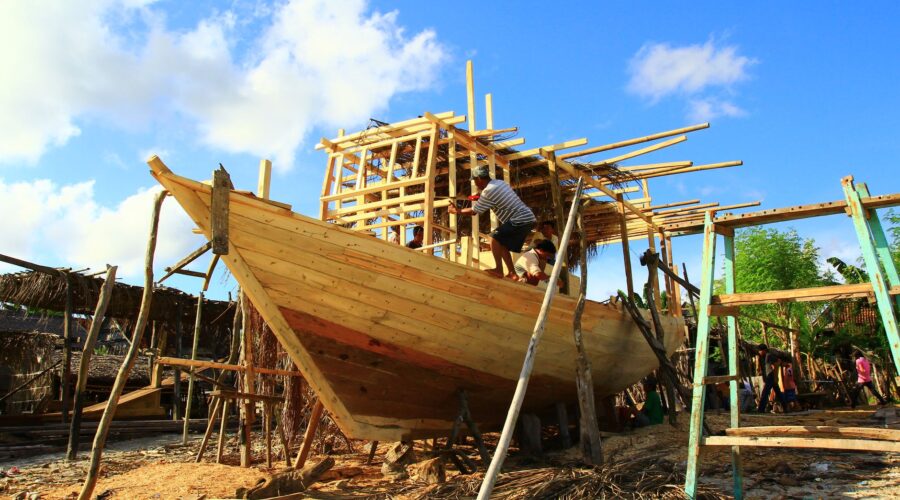
At its most basic, caulking is the process of making a wooden boat watertight. Wooden hulls are constructed with planks (strakes) laid side-by-side. Because wood expands and contracts with moisture and temperature, these joints can never be perfectly fused. The Calafate fills these gaps with a combination of fibrous material and sealant.
In Cape Verde, the process is a labor of intense physical endurance and surgical precision. The Master Caulker uses a “caulking iron” to drive estopa (untwisted hemp or cotton fiber) deep into the seams between the planks. Once the fiber is packed tight, it is sealed with a layer of hot pitch or a specialized putty. When the boat is launched, the wood swells against the packed fiber, creating a seal so tight that not a drop of the Atlantic can penetrate the hull.
Being a Mestre is not merely about manual labor; it is about “listening” to the wood. A Master knows by the pitch of the mallet’s strike whether a seam is tight enough or if the timber underneath is suffering from the “dry rot” that plagues tropical vessels.
The Spiritual Shield: Protection Beyond the Physical
In Cape Verdean maritime culture, the ocean is viewed with a mixture of profound respect and existential fear. The sea provides the djunta-mon (collective help) of the fishing harvest, but it is also a graveyard. Consequently, the maintenance of a wooden hull is not just a technical necessity—it is a spiritual undertaking.
The Mestre de Calafate often acts as a guardian of the boat’s spirit. During the maintenance process, it is common to see traditional rituals integrated into the work. Before a major overhaul, a small “blessing” might occur, involving the sprinkling of grogue (local sugarcane spirit) on the keel to appease the sea and ensure the vessel’s safe return.
There is also the belief in the “breath” of the boat. A boat that is poorly caulked is said to be “gasping,” unable to find its rhythm with the waves. The Mestre ensures that the vessel is “sealed in peace.” This spiritual protection extends to the choice of colors used in the final painting—vibrant blues, yellows, and reds—which are not merely aesthetic choices but are believed to make the boat visible to the saints and invisible to the malevolent spirits of the deep.
The Symbolic ‘Eyes’ of the Boat
While more common in Mediterranean traditions, the Cape Verdean Calafates often oversee the placement of the “eyes” on the bow of the *bote*. These eyes are meant to “see” the schools of tuna and navigate through the treacherous bruma seca (dry haze) that often descends upon the islands. For the Master, his work ensures that the body of the boat is strong enough to carry its spirit through the storms.
The Shipyards of Mindelo and Beyond
São Vicente, specifically the city of Mindelo, has historically been the epicenter of this craft. As a major Atlantic coaling station in the 19th century, Mindelo developed a sophisticated class of artisans. The shipyards (estaleiros) were once bustling hubs where apprentices learned for years under the watchful eye of a Mestre.
In these shipyards, the hierarchy was absolute. An apprentice might spend three years just cleaning the seams and heating the pitch before being allowed to handle the caulking iron. The knowledge was passed down through oral tradition and muscle memory; there were no blueprints for the curve of a fishing bote, only the Mestre’s intuition.
A Dying Art in the Age of Fiberglass
Today, the Mestre de Calafate is a vanishing breed. The reasons for this decline are three-fold:
1. The Rise of Modern Materials
Fiberglass boats are lighter, faster, and require significantly less maintenance than wooden ones. For a young fisherman, the economic argument for a modern hull is hard to ignore. Unlike wood, fiberglass doesn’t rot, and it doesn’t require the annual, expensive services of a Master Caulker.
2. The Scarcity of Timber
Cape Verde’s arid climate means that high-quality shipbuilding timber—like mahogany or oak—often has to be imported. The rising cost of wood makes the construction and repair of traditional boats a luxury that many local fishing communities can no longer afford.
3. The Generational Gap
The youth of Cape Verde are increasingly looking toward the digital economy, tourism, or emigration. The grueling, sun-scorched labor of the shipyard holds little appeal compared to modern professions. When the current generation of Masters—now mostly in their 60s and 70s—retires, there are few waiting to take the mallet.
Why Preservation Matters
The loss of the Calafate is not just the loss of a job category; it is the amputation of a piece of Cape Verdean identity. These wooden boats, with their hand-caulked seams, are moving museums. They represent the ingenuity of a people who took colonial maritime influences and forged something uniquely Creole.
Efforts are being made by local cultural organizations and maritime enthusiasts to document the techniques of the remaining Masters. There is a growing movement to recognize the Calafate heritage as “Intangible Cultural Heritage,” similar to the status of Morna music. By turning these skills into a recognized art form, there is hope that a new generation might see the value in maintaining the vessels that defined their ancestors’ lives.
Conclusion: The Last Echoes of the Mallet
As the sun sets over the bay of Mindelo, the *tack-tack-tack* of the Mestre de Calafate continues, albeit more faintly than in decades past. Each strike is a defiance against the erasure of time. These men are the last keepers of a secret language between wood, hemp, and water.
To visit a Cape Verdean shipyard today is to witness a living history. It is a reminder that in a world of mass production, there is still something sacred about a vessel held together by human hands, protected by ancient rituals, and sealed with the pride of a Master. Protecting the Mestre de Calafate is not just about saving boats; it is about ensuring that Cape Verde never loses its ability to stay afloat on the currents of its own history.
Image: Pexels – Deden Alifa