Inside Cape Verde’s Housing Crisis: One in Seven Without Bathrooms
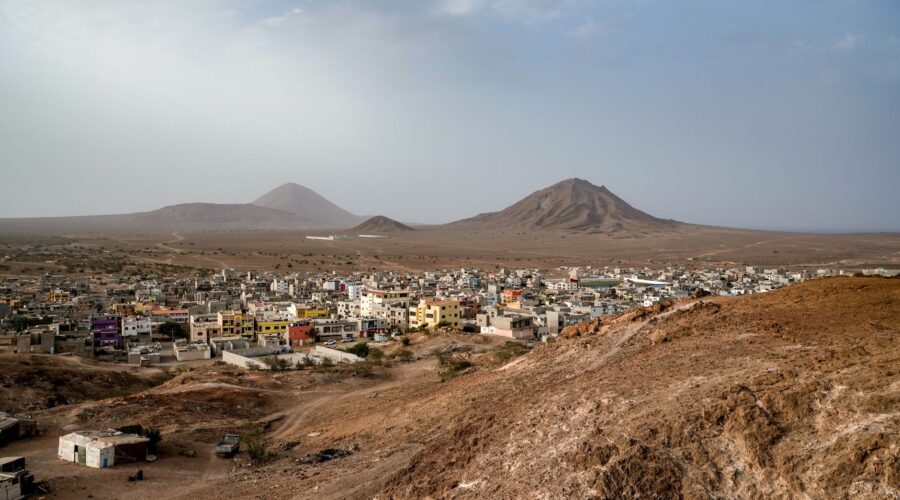
In a house still scarred by fire in the Achada Mato neighborhood of Praia, Maria Freire and her family cram their lives into a single covered room. A bed, a mattress, and a lone suitcase of clothes occupy the space. Outside, on the dirt ground, sits an improvised kitchen made of cinder blocks and corrugated metal, situated near pigs the family raises for survival.
“I’ve lived here for over ten years,” the 54-year-old says, her eyes fixed on the unfinished walls. “We built our own house so we wouldn’t have to pay rent, but the money is never enough to finish it.”
Maria’s story is a reflection of a national crisis. As the world marked World Habitat Day on October 5, fresh data reveals a stark reality for the Cape Verdean archipelago: thousands of families are living in precarious, self-built structures that lack the most basic human necessities.
A Crisis of ‘Self-Construction’
According to the National Institute of Statistics (INE), the housing deficit in Cape Verde is staggering. Nearly 23,000 families—one in every seven—live in homes without a bathroom. More than half of the country’s households, approximately 85,500 families, do not have a shower.
The root of the problem lies in how Cape Verdeans occupy the land. Roughly 80% of the country’s housing stock is the result of “self-construction,” where residents build their own homes incrementally as funds allow. Often, the funds run out long before the roof is laid or the plumbing is installed.
In the Simão Ribeiro area, Quinta de Oliveira, a mother of three who emigrated from Guinea-Bissau, lives in a skeleton of a building covered by metal sheets. Without a bathroom, her family uses basins and disposes of the waste manually. “There is no piped water,” she says, carefully washing her son’s school uniform in less than two liters of water. “We have to buy it from trucks.”
The High Cost of Basic Dignity
For many, the choice to move into unfinished homes is a desperate financial calculation. Dulcelina Tavares, 37, moved her three children into a structure where iron rebar still sprouts from the cement. “I came here because the land was cheaper,” she explains. “But materials are expensive. We lack transportation, water, and sanitation.”
Nearby, 45-year-old street vendor Maria Semedo works from 6:00 a.m. preparing sweets in a tiny metal-clad kitchen to support four children. It took her over a decade to finally save enough to build a bathroom, ending years of using containers inside her living space.
Government Pledges a ‘Zero Shack’ Future
The Cape Verdean government, under the newly elected administration that took office in June, says it is ready to tackle the deficit. Minister of Infrastructure, Housing, and Territorial Planning Carlos Tavares announced a restructuring of the “Casa para Todos” (House for All) program.
Backed by an 18-million-euro investment, the government aims to build 5,000 houses by 2031. The centerpiece of the strategy is the “Barraca Zero” (Zero Shacks) project, designed to resettle families currently living in the most precarious conditions into formal housing.
“The scale of the challenge is immense,” Minister Tavares admitted, noting that housing is the primary concern raised by municipal mayors across the islands. “We need to repair roofs, build bathrooms, and improve sanitary conditions for thousands who have been left behind.”
For residents like Maria Freire, the promise of government intervention is a distant hope. For now, she continues to wait for the day she can finally look up and see a permanent roof over her head instead of the Cape Verdean sky.
Image: Pexels – Nico Marín