Pano de Terra: The Textile Currency of Cape Verde
In the quiet weaving sheds of Santiago and Fogo, the rhythmic clack-clack of the manual loom serves as a heartbeat for a tradition that predates the modern global economy. This is the craft of the Pano de Terra (Cloth of the Earth), an artisanal textile that represents far more than just aesthetic beauty. For centuries, these strips of woven cotton were the backbone of the Cape Verdean economy, serving as a recognized currency that bridged the gap between the Atlantic islands and the mainland of West Africa.
The story of the Pano de Terra is a complex narrative of cross-cultural fusion, colonial strategy, and social prestige. It is a textile born from the intersection of African weaving techniques and European demand, eventually becoming a commodity so stable and valued that it was used to buy freedom, secure alliances, and form the essential dowries of Cape Verdean families.
The Origins: A Fusion of Loom and Land
The history of Cape Verdean textiles begins shortly after the discovery and settlement of the uninhabited archipelago by the Portuguese in the 15th century. Because the islands lacked precious metals like gold or silver, the early settlers and the enslaved West Africans they brought with them had to innovate to create tradeable value.
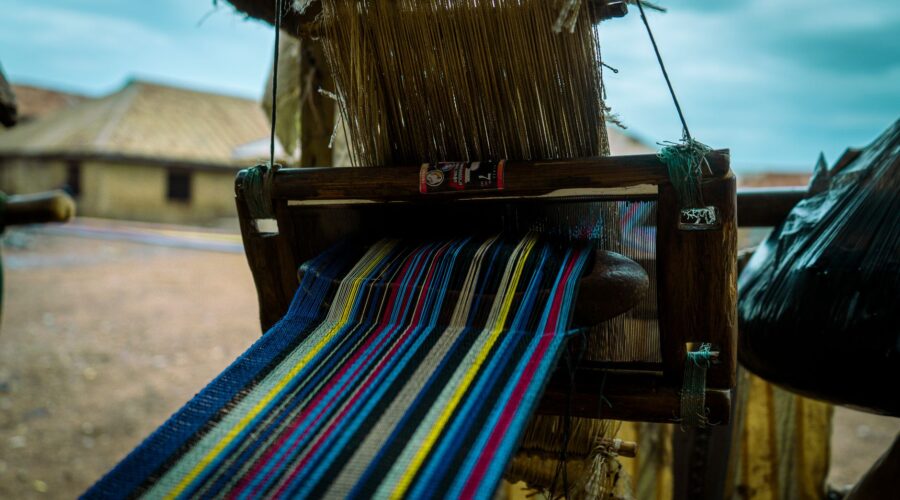
The Portuguese introduced cotton (Gossypium barbadense) and indigo plants to the islands, which flourished in the arid volcanic soil. However, the technology used to transform these raw materials came directly from the African mainland. Enslaved weavers from the Upper Guinea Coast—modern-day Senegal, Gambia, and Guinea-Bissau—brought their expertise with the narrow-strip loom. Unlike the wide looms of Europe, these looms produced long, narrow bands of fabric, usually no more than 15 to 20 centimeters wide.
These strips, known as bandas, were then sewn together edge-to-edge to create a larger cloth. This technique resulted in the classic Pano de Terra, characterized by intricate geometric patterns and the deep, rich blue of natural indigo.
The Textile as Currency: The ‘Pano’ as Money
By the 16th and 17th centuries, the Pano de Terra had evolved from a local garment into a standardized unit of value. In the Cape Verdean and West African markets, these cloths were used as a “primitive currency” in a way that modern society uses banknotes.
The Portuguese Crown quickly recognized the power of these textiles. They were used to pay officials’ salaries, settle debts, and, most significantly, as the primary medium of exchange in the Rios de Guiné (the Rivers of Guinea) trade. Cape Verdean merchants would sail to the mainland, using stacks of Panos to purchase wax, ivory, hides, and, tragically, enslaved people.
The value of a Pano was remarkably stable. Because the production was labor-intensive—requiring the growing of cotton, the extraction of dye, and hundreds of hours of manual weaving—inflation was naturally controlled. The Pano was divisible; a single banda could be used for small purchases, while a full six-strip Pano represented a significant investment. This economic system was so entrenched that the Portuguese government tried (and largely failed) to regulate and tax the textile trade as they would a mint.
Types of Pano de Terra
Not all Panos were created equal. Their value was determined by the complexity of the weave and the amount of indigo used:
- Pano Bicho: The most complex and expensive, featuring elaborate geometric patterns that often mimicked local flora or fauna.
- Pano Obra: A high-quality cloth with detailed craftsmanship, often reserved for the elite or for significant ceremonial gifts.
- Pano Simples: A plain, often un-dyed or lightly striped cloth used for everyday wear and smaller commercial transactions.
The Social Dowry: A Weaver of Identity
Beyond the marketplace, the Pano de Terra held—and continues to hold—deep spiritual and social significance within Cape Verdean culture. It is an essential component of the Morgado system and family heritage.
Historically, a Cape Verdean woman’s wealth was measured by the number of Panos she owned. These textiles formed the core of a bride’s dowry. Passed down from mother to daughter, they represented a safety net; in times of extreme hardship or famine, a woman could sell a Pano to provide for her family, giving her a degree of economic independence rare for the era.
The Pano also played a vital role in the rites of passage. It was used to wrap newborns, and it served as a prestigious shroud for the deceased. Even today, the Pano d’obra is worn by traditional dancers and is draped over the shoulders of women during the Tabanka festivals, symbolizing a connection to the ancestors and the resilient spirit of the “Caboverdianidade.”
The Batuku and the Pano
No discussion of the Pano de Terra is complete without mentioning Batuku, the oldest musical genre in Cape Verde. The performers, mostly women (batukadeiras), tie a Pano de Terra around their hips, often over a wad of cloth called the tchabeta, which serves as a percussion instrument. As they beat the rhythm, the Pano becomes a visual extension of the music—a symbol of resistance and the preservation of African identity against colonial suppression.
The Modern Legacy: From Trade to Art
With the introduction of factory-made European textiles in the 19th century, the Pano de Terra lost its status as a primary currency. The labor-intensive process could not compete with the industrial revolution. However, the craft did not die.
Today, the Pano de Terra is undergoing a renaissance. It is no longer “money” in the literal sense, but it is “cultural capital.” The Centro de Artesanato e Design in Mindelo and various cooperatives in Santiago are working to preserve the technical knowledge of the master weavers (tecelões).
Contemporary Cape Verdean fashion designers are incorporating Pano de Terra patterns into modern silhouettes, bringing the ancient geometric designs to runways in Lisbon, Paris, and Dakar. It has become a symbol of national pride, frequently gifted to visiting foreign dignitaries as a representation of Cape Verde’s unique position as a bridge between Africa and Europe.
Practical Information for Travelers
For those visiting Cape Verde who wish to experience this history firsthand, the island of Santiago is the heart of textile production. The village of Santa Cruz and the town of Assomada are excellent places to find authentic, hand-woven Panos.
When purchasing a Pano de Terra, look for the following to ensure authenticity:
- The Width: Authentic Panos are always made of narrow strips (bandas) sewn together. If the cloth is one wide piece, it is likely machine-made.
- The Texture: Hand-woven cotton has a distinct, slightly irregular weight and a sturdy feel that softens beautifully over time.
- The Smell: True indigo-dyed cloth has a unique, earthy scent that lingers for years.
Conclusion
The Pano de Terra is more than just a beautiful fabric; it is a woven record of Cape Verdean history. It tells a story of survival, of a people who took the tools of their oppressors and the skills of their homeland to create a system of value that sustained them for centuries. Whether used as a currency to navigate the complex waters of Atlantic trade or as a dowry to secure a family’s future, the Pano de Terra remains the ultimate thread connecting Cape Verde’s past to its vibrant present.
Image: Pexels – Silvanus Solomon