
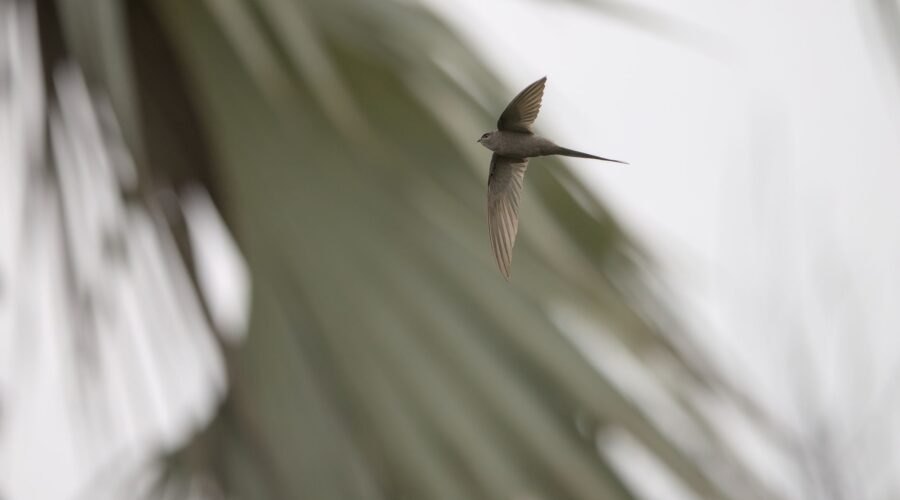
Alexander’s Swift: Cape Verde’s Unique Aerial Acrobat
In the vast, azure expanse of the eastern Atlantic, where volcanic peaks rise sharply from the sea to form the archipelago of Cape Verde (Cabo Verde), the skies are ruled by a small but extraordinary inhabitant. While the islands are famous for their soulful Morna music and dramatic landscapes, birdwatchers and nature enthusiasts are increasingly drawn to a specific aerial acrobat: Alexander’s Swift (Apus alexandri).
Endemic to this horseshoe-shaped cluster of ten islands, Alexander’s Swift is more than just a bird; it is a symbol of the archipelago’s unique evolutionary history and its isolation from mainland Africa. As Cape Verde continues to position itself as a leader in environmental conservation and sustainable tourism, understanding this “aerial acrobat” offers a window into the delicate biodiversity of the Macaronesia ecoregion.
A Product of Oceanic Isolation
Cape Verde’s geography is the primary architect of its biodiversity. Located approximately 570 kilometers (350 miles) off the coast of West Africa, the islands were formed by volcanic activity between 8 and 20 million years ago. Unlike the African mainland, these islands remained uninhabited until the 15th century, allowing species like Alexander’s Swift to evolve in relative solitude.
Alexander’s Swift is a member of the Macaronesian “evolutionary laboratory,” sharing an ecoregion with the Azores, the Canary Islands, and Madeira. However, unlike its larger cousin, the Common Swift, Apus alexandri is found nowhere else on Earth. It is a specialist of the Cape Verdean environment, perfectly adapted to the rugged cliffs and deep ravines of islands like Santiago, Santo Antão, and Fogo.
Physical Characteristics and Aerial Mastery
To the untrained eye, Alexander’s Swift might appear as a dark, flickering crescent against the sun. However, close observation reveals a medium-sized bird with a slender, aerodynamic body designed for a life lived almost entirely on the wing. They are slightly smaller and paler than the swifts found in Europe, with a subtle grey-brown plumage that blends into the volcanic basalt of the islands’ interior.
The term “aerial acrobat” is no exaggeration. Alexander’s Swifts are renowned for their high-speed maneuvers. They feed exclusively on “aerial plankton”—tiny insects carried by the wind—which they catch while flying at breakneck speeds. Interestingly, these birds even sleep and mate while in flight, only touching solid ground to nest and tend to their young in the crevices of steep mountain cliffs or the rafters of old colonial buildings in cities like Praia and Mindelo.
Habitat: From Arid Coasts to Humid Peaks
Cape Verde’s climate is a study in contrasts. While islands like Sal and Boa Vista are flat, sandy, and arid—receiving less than 150 mm of rain annually—high-altitude islands like Santiago and Santo Antão feature humid mountain zones where ocean mists condense to form lush “laurel forests.”
Alexander’s Swift is remarkably versatile. It can be seen screaming through the dry canyons of the Sotavento (leeward) islands or gliding over the sugarcane fields and banana plantations that cling to the slopes of Pico do Fogo. Their presence is a constant across the archipelago, from the bustling capital of Praia to the remote, wind-swept heights of the Barlavento islands.
Nesting in a Volcanic Landscape
The volcanic nature of the islands provides the perfect real estate for these birds. The archipelago is dominated by igneous rocks and dramatic calderas—most notably the 2,829-meter interior cone of Pico do Fogo. The cracks and fissures formed by ancient lava flows provide secure nesting sites, protecting the swifts from predators and the intense Atlantic winds.
Conservation in the Face of Climate Change
Despite their agility, Alexander’s Swifts face a precarious future. Cape Verde has been identified as one of the most endangered nations regarding climate change and flooding. As a country on the “frontlines of the existential crisis,” according to UN Secretary-General António Guterres, changes in weather patterns can disrupt the insect populations the swifts rely on.
Fortunately, Cape Verde is a regional leader in environmental action. The government has set ambitious goals to source 50% of its energy from renewables by 2030. Furthermore, a pioneering “debt-for-nature” swap with Portugal—where €140 million of debt was forgiven in exchange for environmental investment—is providing the funds necessary to protect endemic species like Alexander’s Swift and the Raso Lark.
Practical Tips for Birdwatchers
If you are planning a trip to the “Green Cape” to spot this endemic marvel, here are a few tips:
- Best Time to Visit: The swifts are residents year-round, but the months between August and October (the rainy season) often see a surge in insect activity, leading to more dramatic feeding displays.
- Key Locations: The mountains of Santo Antão offer the most spectacular backdrops for photography. In Santiago, the area around the historic Cidade Velha (a UNESCO World Heritage site) provides a mix of cultural history and excellent birdwatching.
- Look Up: Unlike the Iago Sparrow, which is often found hopping near outdoor cafes, Alexander’s Swift will almost always be high above. Listen for their distinctive high-pitched screaming calls, which often precede their arrival.
Conclusion
Alexander’s Swift is a testament to the resilience and uniqueness of Cape Verdean nature. As the Republic of Cabo Verde continues to thrive as one of Africa’s most stable democracies and a rising star in eco-tourism, this small bird remains a vital piece of the ecological puzzle. To see one darting through the mist of a mountain ridge or circling a volcanic crater is to witness the very spirit of the islands: wild, independent, and perfectly at home in the middle of the Atlantic.
Image: Pexels – Derek Keats