Pijiguiti Massacre: The Spark for Cape Verde’s Independence
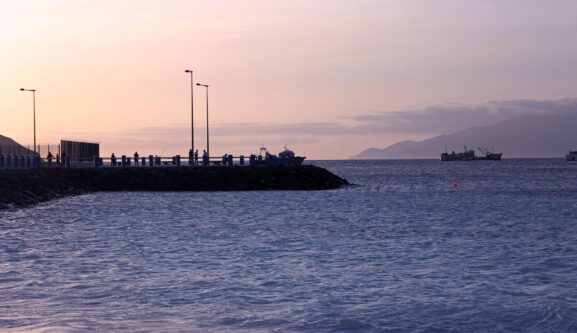
In the quiet, humid afternoon of August 3, 1959, at the Pijiguiti docks in Bissau, a group of striking dockworkers stood their ground against colonial shipping authorities. They were demanding better wages and more humane working conditions—a standard labor dispute by modern definitions. However, in the context of the Portuguese Empire under the Salazar dictatorship, this act of defiance was viewed as an existential threat. Within twenty minutes, the Portuguese police opened fire, leaving over 50 workers dead and hundreds wounded.
While the Pijiguiti Massacre took place on the mainland of what was then Portuguese Guinea (now Guinea-Bissau), its impact reverberated across the Atlantic to the archipelago of Cape Verde. It was not merely a tragedy; it was the definitive catalyst that transformed the African Party for the Independence of Guinea and Cape Verde (PAIGC) from a clandestine political group seeking reform into a revolutionary force committed to armed struggle. For Cape Verdeans and Guineans alike, Pijiguiti was the moment of no return.
The Seeds of Dissent: Cape Verde and the PAIGC
To understand the weight of the massacre, one must look at the unique relationship between Cape Verde and the mainland. Established as a Portuguese colony in the 15th century, the archipelago served as a strategic hub for the transatlantic slave trade. By the 20th century, despite its role as a commercial center and maritime stopping point, the islands suffered from chronic neglect, devastating droughts, and a lack of political autonomy.
In 1951, the Portuguese government attempted to stifle rising nationalism by reclassifying Cape Verde from a “colony” to an “overseas province.” This semantic change did little to improve the lives of the population. In 1956, a visionary Cape Verdean agronomist named Amílcar Cabral, along with a small group of intellectuals, founded the PAIGC. Their initial goal was modest and non-violent: to lobby for improved economic, social, and political conditions through peaceful protest and negotiation.
The Peaceful Illusion Shattered
For three years, the PAIGC operated in the shadows, attempting to mobilize workers and build a base of support. They believed that the Portuguese authorities could be reasoned with or pressured through civil disobedience. The events at the Pijiguiti docks on August 3, 1959, shattered that illusion entirely. The brutal efficiency with which the colonial police suppressed the dockworkers proved to Cabral and his associates that the Salazar regime would never concede power through dialogue.
The massacre acted as a clarifying lens. It demonstrated that the colonial structure was maintained by force, and therefore, could only be dismantled by force. In the immediate aftermath, the PAIGC leadership held a secret meeting in Bissau, where they made a historic decision: they would abandon the policy of non-violence and prepare for an armed insurrection.
The Shift to Armed Struggle
The transition was not immediate, but it was methodical. In 1960, the PAIGC moved its headquarters to Conakry in the neighboring Republic of Guinea, which had recently gained independence from France. From this safe haven, Amílcar Cabral began the arduous task of training soldiers and organizing a guerrilla network.
By 1961, acts of sabotage had begun. By 1963, the conflict had escalated into a full-scale colonial war. This was a “war of the people,” where 10,000 PAIGC soldiers took on a technologically superior force of 35,000 Portuguese and African troops. While the bulk of the physical fighting occurred on the mainland, the ideological heart of the movement remained deeply Cape Verdean. Many of the movement’s top strategists and thinkers were from the islands, creating a unified front that sought the liberation of both territories.
Amílcar Cabral’s Legacy and the Road to 1975
Amílcar Cabral remains one of the most significant anti-colonial thinkers in history. He famously argued that national liberation was an “act of culture.” Unfortunately, Cabral did not live to see the final victory; he was assassinated in 1973. However, his brother, Luís Cabral, and the momentum generated by the struggle carried the movement forward.
The turning point for the islands themselves came not from a battlefield in Mindelo or Praia, but from a coup in Lisbon. The 1974 Carnation Revolution in Portugal overthrew the dictatorship, leading to the rapid decolonization of African territories. Following an agreement signed in December 1974, Cape Verde established a transitional government. Finally, on July 5, 1975, the archipelago officially became an independent nation, fulfilling the mission born out of the tragedy at Pijiguiti sixteen years earlier.
Cape Verde Today: A Legacy of Resilience
Today, the Republic of Cabo Verde is recognized as one of Africa’s most stable and successful democracies. Ranking highly on global democracy indices, it has transitioned from a neglected colonial outpost to a thriving service-oriented economy with a burgeoning tourism sector. In 2024, the nation reached a significant milestone by being declared malaria-free, showcasing its continued progress in public health and development.
The memory of the Pijiguiti Massacre is still honored every August 3rd, known as the Day of the Martyrs of Colonialism. It serves as a reminder that the peace and stability Cape Verdeans enjoy today were paid for by those who stood on the docks in 1959. The massacre proved that while violence is a tragedy, the refusal to be silenced is the foundation upon which independent nations are built.
Key Facts About the Independence Struggle
- 1956: PAIGC founded by Amílcar Cabral.
- August 3, 1959: The Pijiguiti Massacre occurs in Bissau.
- 1963: Formal start of the armed struggle against Portuguese rule.
- 1973: Assassination of Amílcar Cabral; Guinea-Bissau declares independence.
- July 5, 1975: Cape Verde officially gains independence from Portugal.
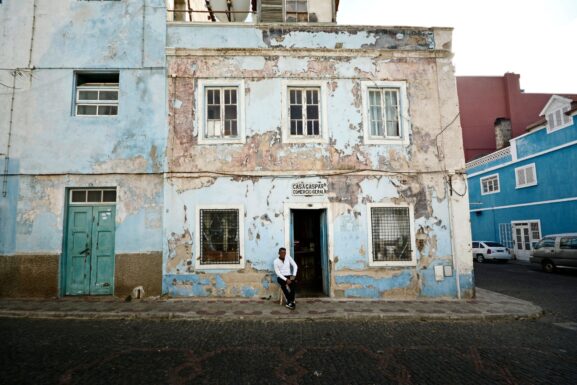
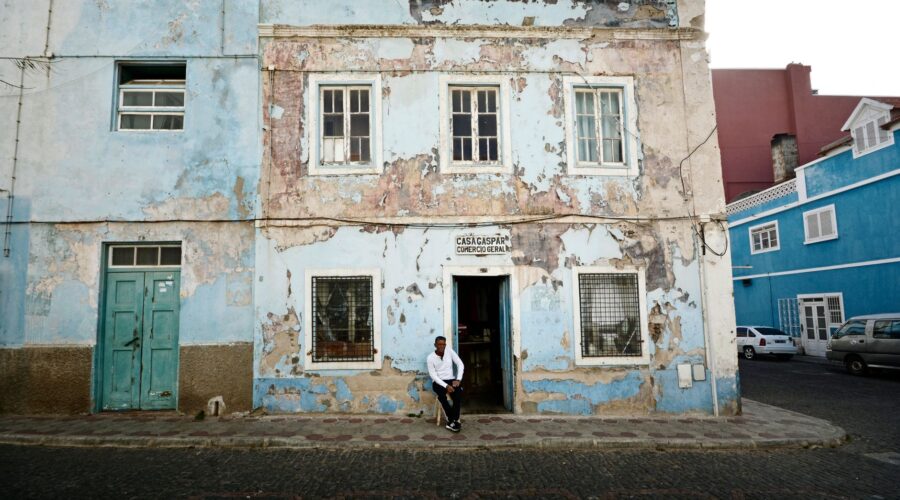
For the modern traveler visiting the colorful streets of Mindelo or the bustling markets of Praia, the history of Pijiguiti might seem distant. Yet, it remains the essential “Turning Point”—the moment when a group of islands and a mainland neighbor decided that the price of freedom, however high, was a price they were finally willing to pay.
Image: Pexels – damien Saillet