1456 Discovery of Cape Verde: Alvise Cadamosto’s Legacy
In the mid-15th century, the world was expanding at the edges of the known maps. While the Renaissance was blooming in Europe, a group of intrepid navigators was pushing southward along the coast of West Africa, driven by the ambition of Prince Henry the Navigator. Among these pioneers was Alvise Cadamosto, a Venetian merchant-adventurer whose 1456 voyage would change the geography of the Atlantic forever. His discovery of the Cape Verde Islands—a volcanic archipelago previously unknown to the world—marked a pivotal moment in the Age of Discovery.
The Uninhabited Frontier: Cape Verde Before 1456
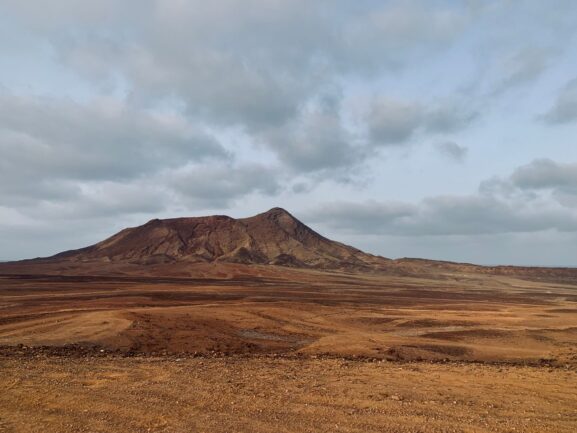
Unlike many other Atlantic territories, the ten islands of Cape Verde, located between 600 and 850 kilometers off the coast of modern-day Senegal, were entirely uninhabited when the first European sails appeared on the horizon. Formed by volcanic activity approximately 40 to 50 million years ago, these islands—divided into the Barlavento (Windward) and Sotavento (Leeward) groups—remained isolated from human contact for millennia.
The archipelago’s name, “Cabo Verde” (Green Cape), is actually a geographical misnomer derived from the African mainland. It was named after the Cap-Vert peninsula in Senegal, which had been sighted by Portuguese explorers in 1444. When navigators eventually stumbled upon the islands, they applied the name to this new, rugged territory.
Enter Alvise Cadamosto: The Venetian Trailblazer
While Portuguese official records often emphasize the role of António de Noli and Diogo Gomes, the journals of Alvise Cadamosto provide one of the most vivid accounts of the 1456 discovery. Cadamosto, a young Venetian in the service of Prince Henry the Navigator, was a man of sharp intellect and keen observation. His voyages were not merely missions of conquest, but also of trade and scientific inquiry.
In 1456, while sailing past the Cap-Vert peninsula, Cadamosto’s fleet was blown out to sea by a fierce storm. As the winds subsided, they sighted a cluster of islands that had never appeared on any Venetian or Portuguese chart. Cadamosto’s account describes the initial discovery of the eastern islands, most notably Boa Vista and Sal. His meticulous logs documented the flora, fauna, and the distinct absence of human life, setting the stage for one of the first European experiments in tropical settlement.
The Debate of Discovery: Cadamosto, De Noli, and Gomes
The historical record of Cape Verde’s discovery is a tapestry woven by several navigators. While Cadamosto is credited with the 1456 sighting, the Genoese navigator António de Noli and the Portuguese explorer Diogo Gomes are often cited as the figures who landed and explored the islands more thoroughly in the following years. Gomes claimed to have been the first to land on the largest island, Santiago, and gave it its name. Despite the overlapping claims, Cadamosto’s role as the primary chronicler ensured that the 1456 voyage was etched into the annals of European maritime history.
From Discovery to Settlement: The Birth of Cidade Velha
Following the discovery, the Portuguese Crown moved quickly to secure the archipelago. In 1462, the first permanent settlers arrived on the island of Santiago. They founded Ribeira Grande (now known as Cidade Velha), which holds the historic distinction of being the first permanent European settlement in the tropics.
The strategic value of the islands became immediately apparent. Situated at the crossroads of Atlantic trade routes, Cape Verde became a vital re-supply point for ships navigating the “Volta do Mar”—the circular wind pattern that allowed sailors to return from Africa to Europe. However, this strategic position also brought a darker chapter: the islands became a central hub for the transatlantic slave trade during the 16th and 17th centuries.
The Legacy of 1456: Shaping a Modern Nation
The initial discovery by Cadamosto and his contemporaries set in motion a unique cultural synthesis. Because the islands were uninhabited, the population that emerged was a direct result of the interaction between Portuguese settlers and West African populations brought to the islands. This gave birth to the Cape Verdean people and Crioulo (Cape Verdean Creole), the national language that remains the heartbeat of the country today.
Today, Cape Verde is celebrated as one of Africa’s most stable and democratic nations. The “Success Story” described by world leaders like Barack Obama has its roots in the resilience of a people forged in the isolation of the Atlantic. From the dry salt flats of Sal to the towering volcanic peak of Pico do Fogo, the islands have transitioned from a remote naval outpost to a thriving service-oriented economy and a leader in renewable energy.
Quick Facts: The Discovery Era
- 1444: The Cap-Vert peninsula in Senegal is named by Portuguese explorers.
- 1456: Alvise Cadamosto sights the first islands of the archipelago.
- 1462: Settlement begins in Ribeira Grande (Cidade Velha).
- 1832: Charles Darwin makes Cape Verde his first stop on the voyage of the HMS Beagle.
- 1975: Cape Verde gains full independence from Portugal.
Conclusion
The 1456 discovery of Cape Verde was more than a mere maritime accident; it was the opening of a gateway between continents. Through the eyes of Alvise Cadamosto, the world first learned of these volcanic peaks rising from the Atlantic. While the islands’ history has seen the heights of commercial prosperity and the depths of the slave trade and colonial struggle, the spirit of discovery remains. Today, the Republic of Cabo Verde stands as a testament to the enduring legacy of those 15th-century navigators who dared to sail beyond the edge of the map.
Image: Pexels – Ana Marta Jorge