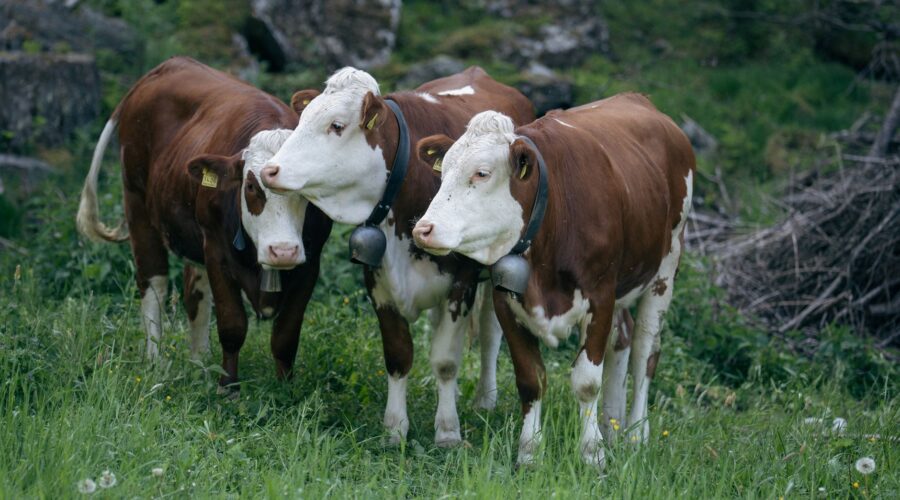
Vaca de Lata: Modernizing Cape Verdean Herding with Tech
In the rugged, semi-arid highlands of Santiago and Fogo, the landscape of Cape Verde is defined by dramatic volcanic peaks and deep, arid valleys known as ribeiras. For centuries, the backbone of rural life here has been livestock herding. However, a silent revolution is brewing in the “Middle Belt” of the archipelago. Cape Verdean tech innovators are bridging the gap between ancestral tradition and the digital age with a project affectionately and technically known as the Vaca de Lata—the “Tin Cow.”
By integrating smart collars, GPS telemetry, and Internet of Things (IoT) sensors, local startups are tackling one of the islands’ oldest challenges: managing livestock in a climate-stressed environment where water is scarce and the terrain is unforgiving. This fusion of Silicon Valley tech and Sahelian grit is transforming how shepherds manage their flocks, offering a blueprint for modernizing traditional agriculture across the African continent.
The Challenge: Herding in a Volcanic Archipelago
Cape Verdean agriculture is a testament to human resilience. With only 10% of its land considered arable and a chronic lack of rainfall, livestock—primarily goats, cattle, and pigs—serve as a living bank account for thousands of families. In the highlands, traditional herding is an arduous task. Shepherds spend entire days traversing steep slopes to ensure their animals find grazing patches or water sources.
The challenges are multifaceted. Overgrazing in specific areas leads to rapid soil erosion, a critical issue for an archipelago fighting desertification. Furthermore, livestock theft (abigeato) remains a persistent economic threat to small-scale farmers. When an animal goes missing in the jagged terrain of the interior, finding it can take days, often resulting in the loss of the animal to thirst or predators.
Enter the ‘Vaca de Lata’: The Rise of Smart Telemetry
The term Vaca de Lata originated as a local nickname for the early prototypes of GPS-enabled collars developed by Cape Verdean engineers and tech entrepreneurs. Today, the concept has evolved into a sophisticated telemetry system specifically designed for the unique geography of the islands.
Unlike commercial GPS collars used in the flat pastures of Europe or North America, Cape Verdean startups had to innovate around two major hurdles: extreme topography and limited connectivity. The deep valleys often block traditional cellular signals, making standard GPS trackers ineffective.
How the Technology Works
Current startups in the space are utilizing LoRaWAN (Long Range Wide Area Network) technology. This low-power, long-range wireless protocol is ideal for the Cape Verdean highlands because it can transmit data over several kilometers even in areas without 4G or 5G coverage. The “Smart Collar” system works through several layers:
- The Collar: A rugged, solar-powered or long-battery-life device equipped with a GPS module and an accelerometer.
- Geofencing: Farmers can set digital boundaries on a smartphone app. If a cow or goat wanders outside a designated safe zone or enters a protected forest area where grazing is prohibited, the farmer receives an instant SMS or app alert.
- Biometric Monitoring: Advanced versions of the collars track the animal’s movement patterns. A sudden change in activity—such as a cow remaining stationary for too long—can indicate illness, injury, or a birth in progress.
Economic Impact: From Loss Prevention to Data-Driven Farming
For a Cape Verdean farmer, a single cow can represent a significant portion of their annual income. The primary economic driver for adopting telemetry is risk mitigation. By reducing the time spent searching for lost animals, farmers can dedicate more time to other productive activities, such as terrace farming or supplementary businesses.
However, the benefits go beyond just tracking. The data collected by these startups is providing the first-ever granular look at grazing patterns in the semi-arid highlands. This “Big Data for Small Farmers” approach allows for:
1. Sustainable Land Management
By analyzing heat maps of where livestock spend the most time, agricultural departments can work with farmers to rotate grazing areas. This prevents the total depletion of vegetation, allowing the fragile highland ecosystem to recover and reducing the risk of landslides during the rare but intense rainy seasons.
2. Improved Veterinary Care
Early detection of lethargy or unusual movement patterns allows for faster veterinary intervention. In remote areas of Santo Antão or Brava, where a vet might be hours away, early warning is the difference between a treatable infection and the death of the animal.
3. Financial Inclusion
One of the most exciting developments is how telemetry is opening doors to credit. Traditionally, banks are hesitant to lend to herders because livestock is considered a “volatile asset.” With GPS tracking and health data logs, a farmer can provide a “digital pedigree” and proof of asset security, making it easier to secure micro-loans for farm expansion.
The Local Tech Ecosystem: Bridging the Divide
The success of the Vaca de Lata movement is rooted in the “Digital Cabo Verde” initiative. The government’s push to turn the islands into a mid-Atlantic tech hub has fostered an environment where young coders from the University of Cape Verde (Uni-CV) are looking toward the mountains rather than just the sea.
Startups are collaborating with the Ministério da Agricultura e Ambiente (Ministry of Agriculture and Environment) to subsidize the cost of these collars for cooperatives. By focusing on low-cost, locally repairable hardware, these companies ensure that the technology doesn’t become a “white elephant” but a permanent tool in the shepherd’s kit.
Cultural Resilience in the Digital Age
There was initial skepticism among the older generation of shepherds. The image of a rugged mountain man checking a smartphone to find his goats seems at odds with the romanticized image of Cape Verdean rural life. However, the adoption has been surprisingly high. The reason is simple: the technology respects the tradition; it doesn’t replace it.
The shepherd still climbs the mountain, and the relationship between the herder and the herd remains sacred. The technology simply acts as a “digital sheepdog,” providing a safety net in an increasingly unpredictable climate.
Looking Ahead: The Future of Cabo Verdean Agrotech
As Cape Verde continues to face the realities of climate change, the lessons learned from the Vaca de Lata project are being scaled. There are already discussions about expanding the telemetry systems to monitor water levels in remote mountain springs and integrating weather station data to provide farmers with localized drought forecasts.
The “Tin Cow” has become a symbol of Cape Verdean ingenuity—a testament to the fact that you don’t need a sprawling Silicon Valley to innovate. Sometimes, all you need is a steep mountain, a resilient herd, and the drive to make an ancient way of life sustainable for the next generation.
Conclusion
The modernization of livestock herding in Cape Verde is more than just a tech story; it is a story of survival and adaptation. By embracing smart collars and GPS telemetry, the semi-arid highlands are no longer “disconnected” from the modern world. Instead, they are becoming a testing ground for how traditional societies can use the Fourth Industrial Revolution to protect their heritage, their economy, and their environment. For the shepherds of Santiago and Fogo, the future isn’t just coming—it’s already grazing in the highlands, one ping at a time.
Image: Pexels – eberhard grossgasteiger