
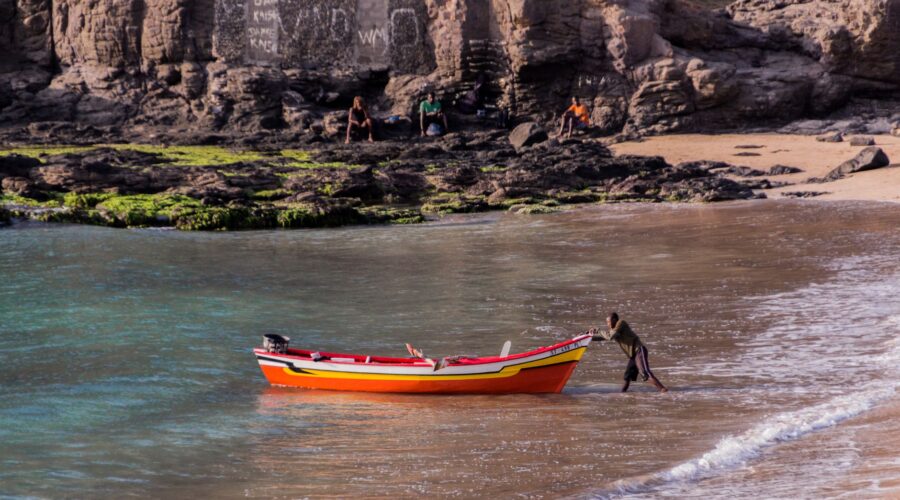
The Secret Symbolism of Cape Verdean ‘Rabolo’ Boats
Along the sun-drenched coastlines of the Sotavento islands in Cape Verde, a vibrant spectacle dances upon the waves. These are not the sleek, fiberglass yachts of modern tourism, but the Rabolos—traditional wooden fishing vessels that represent the heartbeat of the archipelago’s maritime heritage. To the casual observer, their bright primary colors are merely aesthetic. However, to the seasoned fisherman and the master boatbuilder, every stroke of paint and every geometric curve is a silent prayer, a coded language, and a powerful shield against the unpredictable temper of the Atlantic Ocean.
The Genesis of the Rabolo: A Vessel of Survival
The term “Rabolo” typically refers to the traditional rowing and sailing boats found predominantly on the islands of Santiago, Maio, and Brava. Born out of necessity during the colonial era, these vessels were crafted from scavenged wood, often imported pine or cedar, and designed to navigate the treacherous currents between the islands. Unlike the larger, motorized faluchos, the Rabolo is an intimate craft, usually manned by two to four fishermen who rely on physical strength and ancestral knowledge to bring home the day’s catch.
The construction of a Rabolo is a sacred process. The “Mestre” (Master Builder) does not follow blueprints found in books; the designs are held in the mind, passed down through oral tradition. The hull is deep and sturdy, designed to crest heavy Atlantic swells, while the pointed bow acts as a spear, cutting through the whitecaps. But it is only after the structural work is complete that the true “soul” of the boat is awakened through the application of paint and symbolism.
The Geometry of Protection: Decoding the Symbols
When you stand on the black sands of Tarrafal or the shores of Cidade Velha, the visual language of the Rabolo becomes apparent. The designs are a syncretic blend of West African spiritualism, Portuguese maritime tradition, and uniquely Cape Verdean superstitions. These are not merely decorations; they are “protection spells” rendered in oil paint.
The All-Seeing Eye (O Olho)
Perhaps the most striking feature on the bow of many Rabolos is the stylized eye. While reminiscent of the Mediterranean Nazar or the ancient Egyptian Eye of Horus, in Cape Verde, this symbol serves a specific dual purpose. It is believed to allow the boat to “see” hidden rocks and treacherous currents in the dark, and it serves to deflect the mau olhado (the evil eye) from jealous rivals or malevolent sea spirits. A boat without an eye is considered blind and vulnerable to the whims of the deep.
The Star and the Compass Rose
Geometric stars, often with six or eight points, are frequently painted on the stern or the gunwales. These represent the North Star or the “Guiding Light.” In the days before GPS, Cape Verdean sailors navigated by the stars and the flight patterns of seabirds. Painting a star on the vessel is a ritualistic plea to the heavens for a safe return to land. The precision of the geometry is intentional; perfect symmetry is thought to maintain the spiritual balance of the craft on the uneven sea.
The Zig-Zag and the Wave
Often found lining the rim of the boat, zig-zag patterns (known locally as denti de tubarão or shark’s teeth) are symbolic barriers. Just as a shark is the predator of the sea, these patterns are meant to intimidate the spirits of the deep, signaling that the vessel is fortified and “sharp.”
The Alchemy of Color: More Than Just Aesthetics
The color palette of a Rabolo is rarely accidental. While modern paints offer a wider variety, the traditional choices remain rooted in symbolic meaning:
- Blue: Used to camouflage the boat against the sea from the perspective of the fish, but also associated with the Virgin Mary (Nossa Senhora de Fátima), a primary patron of sailors.
- Red: The color of strength and life-blood. It is often applied to the keel or the waterline to give the boat “vitality” and speed.
- Yellow/Orange: Symbolizing the sun and prosperity. It is a magnet for schools of tuna and mackerel.
- White: Representing purity and peace, often used to outline the geometric shapes to make them “pop” and catch the spiritual eye.
The Ritual of the ‘Batismo’ (Baptism)
A Rabolo is never launched without a ceremony. Before the hull touches the salt water, a local priest or a respected elder in the community performs a blessing. This often involves splashing the bow with grogue (local sugarcane rum) or holy water. The boat is given a name—usually that of a saint, a beloved mother, or a distant land (e.g., “Esperança,” “Flor do Mar,” or “Terra Longe”).
It is during this ceremony that the “secret” spells are truly activated. Many fishermen believe that the boat possesses a spiritu (spirit). If treated with respect, the boat will groan or “speak” to the crew when danger is near, warning them of an approaching storm before the clouds even darken the horizon.
Modern Challenges and the Preservation of Craft
Today, the tradition of the Rabolo faces significant threats. The influx of cheaper, mass-produced fiberglass boats is changing the landscape of Cape Verdean fishing. These modern vessels are lighter and require less maintenance, but they lack the spiritual depth and cultural resonance of the wooden Rabolo.
Furthermore, the master boatbuilders are an aging demographic. The younger generation, drawn toward the tourism industry or emigration, rarely has the patience to learn the meticulous geometry and wood-bending techniques required to build a traditional vessel. However, in recent years, there has been a resurgence of pride in Cabo-verdianidade (Cape Verdean identity). Cultural festivals and local NGOs are working to document these designs and ensure that the “Architects of the Sea” do not take their secrets to the grave.
Traveling to See the Rabolos
For travelers wishing to witness these masterpiece vessels, the best locations are:
1. Tarrafal, Santiago
The bay of Tarrafal is a living museum. Here, dozens of Rabolos are lined up on the sand, offering a masterclass in geometric symbolism. You can often see fishermen repainting their vessels in the afternoons.
2. Vila do Maio, Maio
Maio offers a more tranquil look at maritime life. The boats here often feature unique color combinations specific to the island’s salt-mining history.
3. Pedra de Lume, Sal
While Sal is more touristy, the older fishing docks still harbor traditional boats that stand in stark contrast to the nearby luxury catamarans.
Conclusion: The Soul of the Archipelago
The Rabolo is more than a tool for extraction; it is a floating testament to the resilience and creativity of the Cape Verdean people. In a world that is increasingly standardized, these vessels remain stubbornly unique—protected by their painted eyes, guided by their geometric stars, and sustained by the ancestral spells of the “Architects of the Sea.” To see a Rabolo cresting a wave at sunset is to see the history of Cape Verde itself: colorful, enduring, and eternally tied to the rhythm of the Atlantic.
Image: Pexels – Thomas Schwaak

