Panela di Lopi: The Sacred Wedding Stew of Fogo Island
In the high-altitude volcanic landscape of Fogo, Cape Verde, traditions run as deep as the roots of the vines in the Cha das Caldeiras. Among the archipelago’s most storied islands, Fogo is renowned for its fire, its wine, and its fierce sense of identity. Yet, beyond the dramatic silhouette of the Pico do Fogo, there lies a culinary tradition that serves as the beating heart of the island’s social fabric: the Panela di Lopi.
Literally translating to “Lope’s Pot” or “The Pot of Lopi,” this is far more than a simple wedding stew. It is a multi-day communal ritual, a display of genealogical pride, and a symbolic transition of power and partnership. To understand the Panela di Lopi is to understand the soul of Fogo—a place where food is not just sustenance, but a language of love, labor, and lineage.
The Origins and Meaning of Panela di Lopi
While the exact etymology of “Lopi” remains a subject of local debate—some attributing it to a legendary chef or a specific family lineage—the tradition itself is uniquely Fogoan. Unlike the national dish, Cachupa, which is eaten daily across the ten islands, the Panela di Lopi is reserved strictly for the grand theater of a wedding celebration.
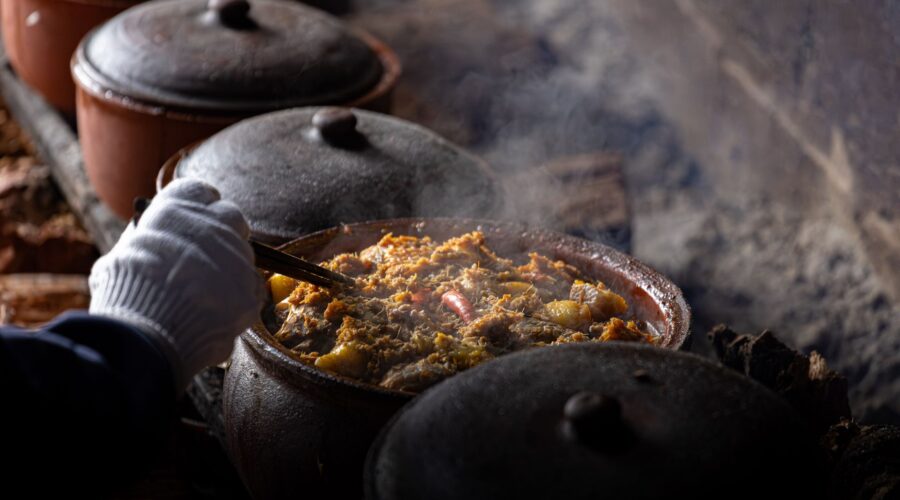
In Cape Verdean culture, weddings (kaza) are not merely the union of two individuals but the merging of two vast extended families. The Panela di Lopi serves as the culinary anchor of this union. It is a massive, slow-cooked meat stew, traditionally prepared in enormous iron pots over open wood fires. The scale of the dish is a reflection of the family’s hospitality; a “small” Panela di Lopi is almost unheard of, as the goal is to feed the entire village and any traveler who happens to pass by.
The Ritual of Preparation: A Labor of Love
The magic of the Panela di Lopi begins days before the wedding ceremony. It is a process defined by djunta-mon (joining hands), the Cape Verdean philosophy of communal labor. The preparation is typically divided by gender, with each role carrying its own set of traditional expectations.
The Butchering and the Fire
On the eve of the wedding, the men of the family gather. This is a time for storytelling and the sharing of grogue (local sugarcane spirit). The ritual begins with the slaughtering of livestock—usually cows, pigs, and goats raised specifically for this occasion. The quality of the meat is a point of immense pride for the groom’s family. The men are responsible for the heavy lifting: hauling the massive iron pots, chopping the wood, and tending the fires that must burn consistently for hours on end.
The Seasoning and the Soul
Once the meat is prepared, the women take over the seasoning process. This is where the “secrets” of the Panela di Lopi reside. While recipes vary from family to family, the base typically involves a rich marinade of garlic, bay leaves, onions, peppers, and malagueta (local chili). The meat is slow-cooked until it becomes incredibly tender, creating a thick, dark, and aromatic gravy that is the hallmark of a well-executed stew.
The cooking process is a marathon. The pots are stirred with large wooden paddles, and the scent of woodsmoke and slow-cooked beef wafts through the cobblestone streets of São Filipe or the rural hamlets of Mosteiros, signaling to the community that a celebration is imminent.
Symbolism in Every Ladle
The Panela di Lopi is rich with symbolism. It represents the “fat of the land”—an offering of abundance in a landscape that can often be harsh and arid. By sharing this rich, meat-heavy dish, the families demonstrate their ability to provide for the new couple and their future children.
Furthermore, the act of eating from the same pot reinforces social cohesion. In traditional Fogo weddings, the hierarchy of service is important. The elders are served first, followed by the wedding party, and finally the community. To be invited to share in the Panela di Lopi is to be recognized as a member of the family’s inner circle.
The Wedding Feast: How Panela di Lopi is Served
On the day of the wedding, after the religious ceremony and the formal processions, the “unveiling” of the pots takes place. The Panela di Lopi is rarely served alone. It is almost always accompanied by xerém—coarsely ground corn that has been cooked to a creamy or fluffy consistency, depending on the cook’s preference. The pairing of the heavy, savory stew with the mild, earthy corn reflects the balance of Cape Verdean agriculture.
In many Fogo weddings, there is also the tradition of the almoço de convidados (the guests’ lunch). Tables are laden with bottles of Fogo’s famous Vinho do Fogo (Manecom), a potent, handmade wine grown in volcanic ash. The combination of the spicy, tender meat, the cooling xerém, and the tart volcanic wine creates a flavor profile that is entirely unique to this island.
Preserving the Tradition in a Modern World
As the Cape Verdean diaspora grows—with more Fogoans living in the United States, Portugal, and the Netherlands than on the island itself—traditions like Panela di Lopi face the challenge of modernization. In Boston or Lisbon, finding the space to light a massive wood fire and cook a cow in an iron pot is difficult.
However, the diaspora has proven remarkably resilient in preserving this ritual. Even in modern wedding halls in Pawtucket or Rotterdam, Fogoan families will ensure that a version of the wedding stew is served. It may be cooked on a gas stove instead of a wood fire, but the intention remains the same: to honor their Fogoan roots and provide a taste of home to the next generation.
Back on the island, the Panela di Lopi remains a vital part of the economy and culture. It supports local farmers and keeps the ancient craft of iron-pot cooking alive. For a visitor lucky enough to witness a Fogo wedding, the sight of the steam rising from the pots against the backdrop of the volcanic peak is an unforgettable image of Cape Verdean hospitality.
A Culinary Legacy
The Panela di Lopi is more than just a recipe; it is a testament to the resilience and warmth of the people of Fogo. It tells a story of an island that, despite its history of volcanic eruptions and droughts, always finds a way to celebrate life with abundance and communal joy.
For the bride and groom, the first taste of the stew represents the start of their journey together—a journey supported by the hands of their neighbors, the strength of their ancestors, and the enduring fire of Fogo. Whether you are a culinary traveler or a student of culture, the Panela di Lopi offers a profound insight into how a single pot of food can hold the history of an entire people.
Practical Tips for Travelers
- Respect the Ritual: If you are invited to a wedding in Fogo, it is a great honor. Dress formally and come with an empty stomach!
- Taste the Wine: Always pair the wedding stew with local Fogo wine (Manecom) for the authentic experience.
- Seek Out Local Festivals: If you aren’t attending a wedding, look for the Festas de São Filipe in late April, where communal cooking and traditional stews are often featured prominently.
Image: Pexels – Hồng Quang Official