Guardians of Grogue: Cape Verde’s Distilling Heritage
In the rugged valleys of Santo Antão and the emerald highlands of São Nicolau, a scent as old as the islands themselves hangs heavy in the humid air. It is the sweet, earthy aroma of fermenting sugarcane juice, a precursor to the creation of Cabo Verde’s liquid soul: Grogue. While the beverage is the national drink of the archipelago, its quality, spirit, and survival depend entirely on one central figure—the Mestre de Alambique (Distillery Master).
To call the Mestre de Alambique a mere distiller would be an understatement. In Cape Verdean culture, these individuals are the “Guardians of the Grogue,” the keepers of a centuries-old artisanal tradition that bridges the gap between the islands’ volcanic soil and their colonial history. To understand Grogue is to understand the Mestre, a craftsman whose tools are intuition, tradition, and an unbreakable bond with the land.
The Legacy of the Copper Still
The history of Grogue is inextricably linked to the history of Cape Verde itself. Sugarcane was introduced to the islands shortly after their discovery in the 15th century. While sugar production was the initial goal, the isolated nature of the islands and the microclimates of the mountainous regions favored the production of aguardente—a potent cane spirit.
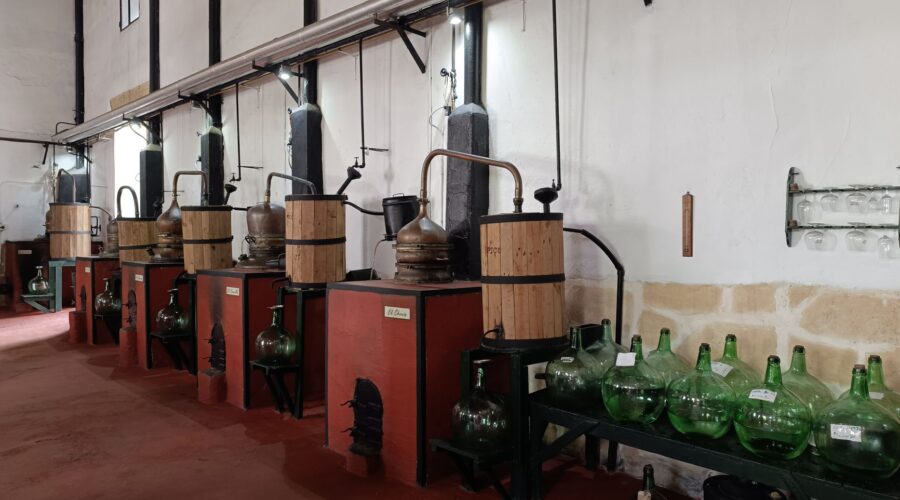
The Alambique, the traditional copper pot still, became the heartbeat of rural communities. Unlike industrial rum produced in massive column stills elsewhere in the world, Cape Verdean Grogue remains a purely artisanal product. The Mestre de Alambique is the custodian of this technology, often operating equipment that has been passed down through three or four generations. These copper stills are more than machinery; they are heirlooms, polished by decades of use and infused with the character of the thousands of liters that have flowed through them.
The Rhythms of the Harvest: The Mestre’s Calendar
The life of a Mestre follows the seasonal pulse of the sugarcane. In Cape Verde, the harvest (safra) typically occurs between January and June. During this window, the Mestre’s role is one of constant vigilance. The process begins not at the still, but in the fields. A true Mestre knows exactly when the cane has reached its peak sugar content, often checking the stalks by sight and taste long before modern refractometers were ever introduced to the islands.
Once the cane is harvested, it is crushed in a trapiche—traditionally powered by oxen, though increasingly by small motors. The resulting juice, known as caldo, is where the Mestre’s alchemy begins. The fermentation process in Cape Verde is natural; no commercial yeasts are added. The Mestre must monitor the bubbling vats, listening to the “singing” of the fermentation and smelling the air to ensure the wild yeasts are doing their work correctly. This stage can take anywhere from five to ten days, depending on the altitude and temperature.
The Art of the Cut
The most critical moment in the life of a Mestre de Alambique occurs during distillation. As the fermented juice is heated over a wood fire, the vapor rises through the “swan neck” of the copper still and condenses into liquid. This is where the “Guardian” earns their title.
The Mestre must separate the “heads” (the first liquid to emerge, which contains harmful alcohols), the “heart” (the premium Grogue), and the “tails” (the final, weaker portion). There are no digital sensors here. The Mestre uses their senses: they watch the pearling of the liquid, smell the sharpness of the vapors, and occasionally taste the warm spirit as it drips from the condenser. Determining the exact moment to “cut” the run is the difference between a harsh, industrial-tasting spirit and a smooth, aromatic Grogue that carries notes of banana, citrus, and white pepper.
A Sacred Cultural Role
The Mestre de Alambique is a respected figure in the Ribeiras (valleys) of Santo Antão. They are often the elders of the community, serving as informal historians and mentors to the youth. In a country where emigration has historically thinned the population, the Mestre represents continuity. They hold the “secret” recipes—though the ingredients are always just cane and water, the “secret” lies in the timing, the heat of the fire, and the “hand” of the maker.
Grogue is also deeply intertwined with Morabeza—the famed Cape Verdean hospitality. A Mestre will never let a visitor pass the trapiche without offering a calice (small glass) of the freshest run. It is a social lubricant, a medicine, and a ritual. From the batuku circles of Santiago to the funeral wakes in the mountains, Grogue is present, and the Mestre is the one who ensured its quality.
Challenges and the Modern Era
Despite the sacred nature of their role, the Guardians of the Grogue face significant challenges. In 2015, the Cape Verdean government introduced new legislation to regulate the production of Grogue. This was a double-edged sword: while it aimed to eliminate “adulterated” spirits made with added sugar or chemicals (known as grogue de açúcar), it also placed a heavy bureaucratic burden on traditional, small-scale producers.
The Mestre now must navigate a world of certifications, health inspections, and tax requirements. Furthermore, climate change poses a threat to the water-intensive sugarcane crop. In some years, prolonged droughts have forced stills to stay silent, threatening the transmission of knowledge from old Masters to the next generation.
However, there is a silver lining. Cape Verdean Grogue is gaining international recognition as a “pure single rum” in the global spirits market. European connoisseurs are beginning to treat Grogue with the same respect as French Cognac or Mexican Mezcal. This international demand is providing a new economic incentive for young Cape Verdeans to stay on the islands and learn the trade of the Mestre.
Visiting the Masters: A Guide for Travelers
For the traveler wishing to witness the work of the Mestre de Alambique, the island of **Santo Antão** is the ultimate destination. Specifically, the valleys of **Paul** and **Ribeira da Cruz** are home to some of the most traditional distilleries.
Tips for an Ethical Visit:
- Visit during the Safra: Plan your trip between February and May to see the stills in active operation.
- Respect the Workspace: A distillery is a place of work with high temperatures and heavy machinery. Always ask permission before entering the area around the still.
- Buy Direct: The best way to support the Mestre is to buy a bottle directly from the source. Look for labels that say “Grogue Natural” or “100% Cana.”
- Engage with the Process: Ask about the wood used for the fire or the age of the still. Most Mestres are incredibly proud of their craft and enjoy sharing the nuances of their specific valley’s flavor profile.
Conclusion: The Spirit of the Future
The Mestre de Alambique is more than a producer of alcohol; they are a vital link in the chain of Cape Verdean identity. As the world becomes increasingly homogenized, the artisanal, slow-paced world of the Grogue distillery stands as a testament to the value of tradition. By protecting the methods of the past, these “Guardians” ensure that the spirit of Cabo Verde—resilient, warm, and authentic—remains distilled in every drop.
Whether enjoyed neat in a village tavern or as the base of a refreshing Pontche (Grogue mixed with molasses and lime), the drink in your glass is the result of a Mestre’s lifelong dedication. To toast with Grogue is to toast to the Mestre de Alambique, the silent hero of the islands’ heritage.
Image: Pexels – Fotografías de El Puerto de Santa María