Cape Verde PM Slams Former Gov Over ‘Mountain of Debt’
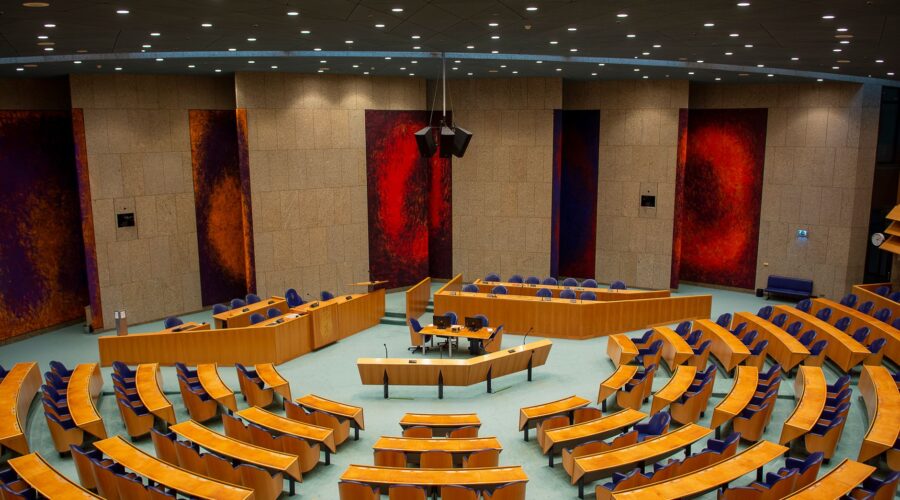
Cape Verdean Prime Minister Francisco Carvalho launched a scathing critique of the previous administration during Wednesday’s State of the Nation debate, accusing the former government of leaving behind a trail of “commitments and debts” designed to handicap the new executive.
A Bitter Financial Inheritance
Addressing Parliament, Carvalho claimed the Movement for Democracy (MpD) government spent its final days in power draining the state’s resources. “They consumed the financial image of the State and left the new government with bills to be paid. That is what the MpD did on the eve of the election,” Carvalho stated.
Despite the alleged financial strain, the Prime Minister vowed to reorganize public accounts without compromising essential services. He promised that the burden of the debt would not fall on low-income citizens, pledging a management style rooted in transparency and rigor. “We inherited a country where institutions were attacked and violated,” Carvalho said. “But we are not going to make excuses. Our priority is to regain the trust of the people.”
The ‘Two Cape Verdes’
Carvalho highlighted a stark disconnect between government rhetoric and the reality on the ground, describing what he called “two Cape Verdes.” One, he argued, exists in official statistics and optimistic speeches; the other is the daily struggle of the population.
“There was talk of growth while thousands of young people were packing their bags to leave the country,” the Prime Minister declared. “There was talk of prosperity while families couldn’t afford a doctor, buy medicine, or pay tuition.”
In a move toward national unity, Carvalho announced a shift in how the central government interacts with municipal councils. He guaranteed that support would be distributed based on transparent criteria, regardless of which party controls local government. “We are not going to build a PAICV State against the MpD,” he said, referencing his African Party for the Independence of Cape Verde. “We are going to build a State for all Cape Verdeans.”
Opposition Fires Back
The MpD parliamentary leader, Luís Carlos Silva, vigorously rejected these accusations, accusing the new government of trying to manufacture a narrative of a “dilapidated” country with “empty coffers.”
Silva argued that the government’s own documents, including the Rectifying Budget, tell a different story—one of economic growth and rising revenues. “In political discourse, he finds a bankrupt country. In official documents, he recognizes a country that is growing and has the margin to finance more spending,” Silva countered. He maintained that the MpD handed over a credible nation with a high international standing, providing the new executive with “conditions to move forward, not excuses to move backward.”
Calls for a New Economic Model
The debate also featured critiques from other political corners. João Santos Luís of the Independent and Democratic Cape Verdean Union (UCID) called for a complete overhaul of the national economic model. He argued for a shift toward national production and a fairer distribution of wealth.
“The true State of the Nation is measured by the quality of life of families and the confidence of our youth,” Santos Luís said, emphasizing that dignity, justice, and security are the true benchmarks of success.
Carla Lima, parliamentary leader of the PAICV, stood by the Prime Minister, stating that the recent election results reflected a public demand for change due to widespread social exclusion and an over-reliance on imports.
The PAICV returned to power on May 17 after a decade of MpD rule. Prime Minister Carvalho’s “New Course” program focuses on a broad range of priorities, including health, education, housing, anti-corruption measures, and the modernization of infrastructure.
Image: Pexels – Jan van der Wolf