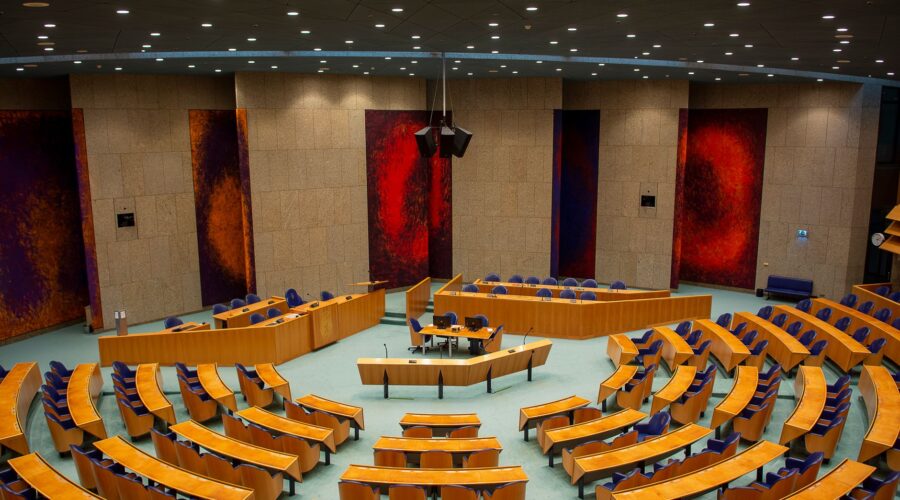
Cape Verde Parliament Passes New Government Program Confidence Motion
In a decisive move for the future of Cape Verde, the national parliament approved a motion of confidence in the government program spearheaded by the African Party for the Independence of Cape Verde (PAICV) on Friday. The vote officially clears the path for the legislative agenda of the party that secured victory in the May 17 general elections.
A Vision for Social Justice and Growth
The motion, a constitutional requirement for the executive branch to begin its duties, passed with 37 votes from the PAICV majority. The opposition, comprising the Movement for Democracy (MpD) and the Independent and Democratic Cape Verdean Union (UCID), cast 32 votes against the measure.
Addressing the assembly at the conclusion of the debate, Prime Minister Francisco Carvalho described the program as a “contract of renewed trust.” He emphasized a vision for the next five years that balances fiscal responsibility with aggressive social reforms. “It is a realistic, ambitious, and mobilizing vision,” Carvalho stated, noting that the plan seeks to bridge the gap between economic growth and national cohesion.
The Prime Minister’s administration has labeled several key areas as non-negotiable priorities:
- Free access to healthcare and public university education.
- Subsidized professional training programs.
- The creation of a more affordable and efficient inter-island transport system to better connect the archipelago.
Opposition voices skepticism
The opposition was quick to challenge the feasibility of the PAICV’s roadmap. Luís Carlos Silva, leader of the MpD parliamentary group, criticized the document for being unfocused, suggesting it “seeks to do everything at the same time.” He also pointed to contradictions between the government’s promise to reduce the size of the state while simultaneously creating new administrative structures.
UCID President João Santos Luís acknowledged that the program accurately identifies the nation’s hurdles but warned that it risked becoming “just a catalog of good intentions” without clear execution strategies.
Government under the shadow of legal allegations
The political victory comes at a turbulent time for the Prime Minister. Just three days prior to the debate, the Public Prosecutor’s Office filed charges against Carvalho related to his tenure as the head of the Praia Municipal Council, a role he has held since 2020.
The indictment includes 26 alleged crimes, ranging from abuse of power and embezzlement to document forgery and qualified fraud. Three other councilors are also named in the case. Carvalho has vehemently denied the allegations, dismissing the legal proceedings as a “persecution” and an “attempted coup d’état disguised as opposition.”
While the MpD attempted to use the legal case as a primary reason to reject the government’s program, the PAICV majority remained unified. Parliamentary leader Carla Lima defended the program as a vital “guiding document” for the five-year mandate, noting that specific financial details will be addressed in the upcoming State Budget.
Image: Pexels – Jan van der Wolf