500-Year-Old Hospital Unearthed in Cape Verde’s First Capital
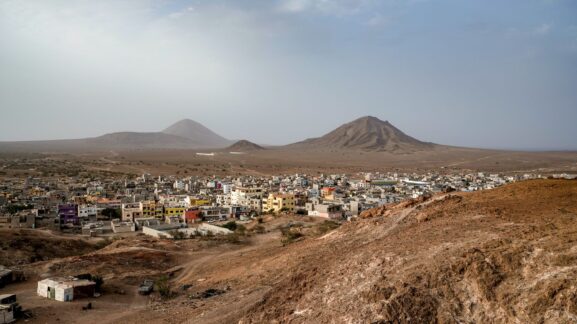
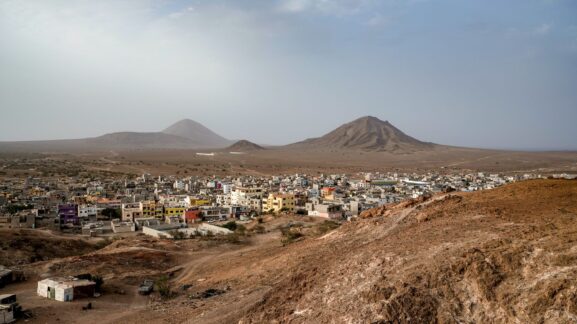
Archaeologists in Cape Verde have unearthed the 500-year-old ruins of the Hospital of Misericórdia, one of the earliest healthcare facilities ever built in the Atlantic. The discovery, located in the historic hillsides of Cidade Velha—the nation’s first capital—offers a rare glimpse into the “experimental” beginnings of early European overseas expansion.
The site has appeared in historical records since the late 15th century, just decades after the Portuguese first arrived on the islands in 1460. “Since the beginning of overseas expansion, it was understood that healthcare spaces were necessary,” explained André Teixeira, an archaeologist from Universidade Nova de Lisboa. “This is one of those early experiments. Cape Verde was, in many ways, a space of experimentation on the Portuguese trade routes.”
A ‘Monumental’ Discovery
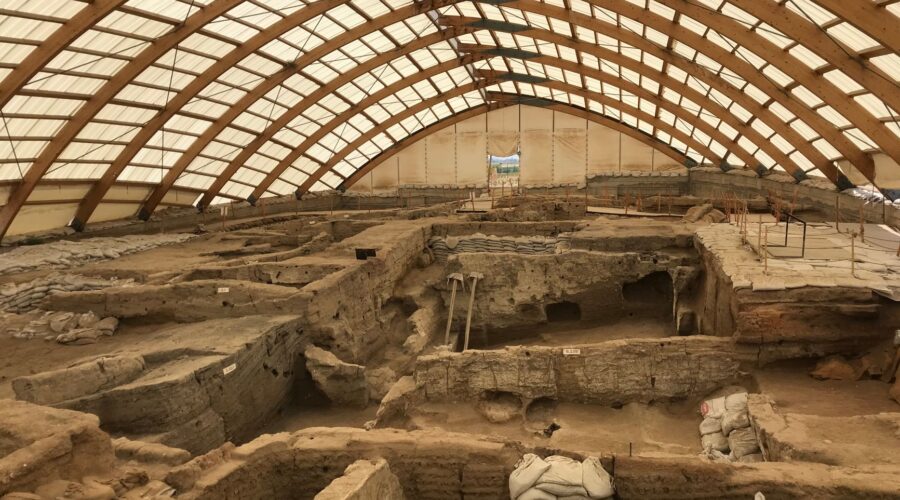
What began 18 months ago as a project to investigate a few protruding stones has transformed into a major excavation. Archaeologists from the Cape Verdean Cultural Heritage Institute (IPC) and Universidade Nova say the scale of the complex far exceeded their initial expectations. While only a bell tower was visible above the surface for centuries, the team has now revealed a “monumental structure” featuring a church, hospital wards, and what is believed to have been a bishop’s residence.
The ruins reveal the dual nature of the “Misericórdias” (Houses of Mercy), which integrated social assistance with medical care. The central nave of the Church of Misericórdia is now visible, showcasing traces of walls still decorated with fragments of painted tiles. Historians say this space even served as the See of Cape Verde for over a century while the main cathedral was under construction.
Clues to Ancient Patient Care
The excavation is providing intimate details of daily life and medical practices from half a millennium ago. Teixeira highlighted the discovery of a pipe found alongside porcelain fragments, suggesting that “using smoke to relieve pain” was a practiced medical technique at the site.
Nearby, the team found locally produced ceramics and chicken bones near what appears to be a ground-floor kitchen or dining area. These artifacts suggest a bustling facility that operated until the 19th century, when the capital was moved to Praia and the hospital was eventually swallowed by the rocky slope.
A New Cultural Landmark
The significance of the find has prompted authorities to redesign a major rehabilitation project for Cidade Velha, which is a UNESCO World Heritage site. Supported by the World Bank, the ruins will be transformed into the city’s first museum center.
“Everything will be completely different,” says IPC archaeologist Jaylson Monteiro. “There will be a musealized space and a protective structure to prevent degradation from the weather. This will give the area a new image.”
The project aims to bolster Cape Verde’s growing tourism industry by integrating heritage preservation with the visitor experience, ensuring that one of the Atlantic’s oldest stories of healing is preserved for future generations.
Image: Pexels – İamucex