
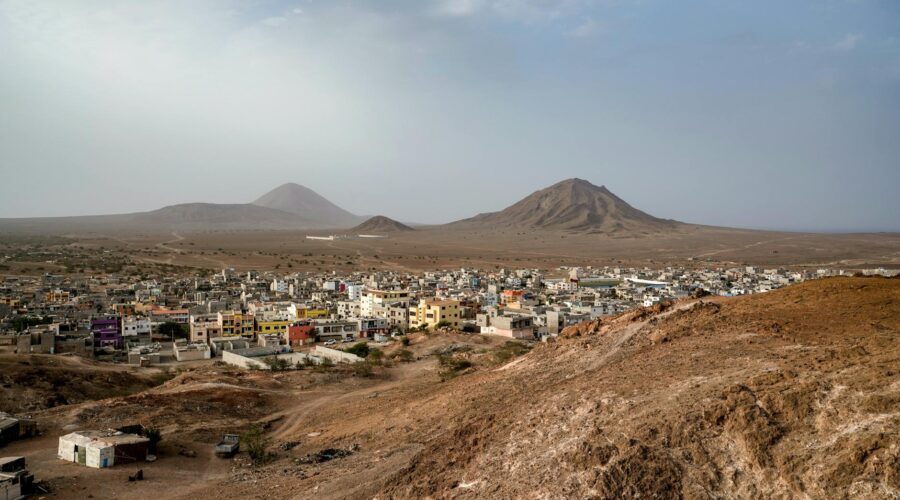
The Rabelados of Santiago: Cape Verde’s Religious Rebels
In the rugged, emerald-green peaks of the Serra Malagueta mountains on the island of Santiago, Cape Verde, lives a community that time—and modern society—almost forgot. Known as the Rabelados (the “Rebels”), this unique group represents one of the most profound examples of religious and cultural resistance in the African diaspora. For nearly a century, they lived in self-imposed isolation, defying both the colonial Catholic Church and the Portuguese state to preserve a way of life they believed was divinely ordained.
The Origins of Rebellion: A Schism in the 1940s
The story of the Rabelados begins not with ancient tribal traditions, but with a theological and political clash in the 1940s. At the time, Cape Verde was a colony of Portugal, and the Catholic Church held immense power over the social and spiritual lives of the population. In the early 1940s, the Church introduced several liturgical reforms and sent new priests from Portugal to “standardize” religious practice in the archipelago.
These changes included new ways of celebrating Mass, different interpretations of scripture, and a more rigid ecclesiastical hierarchy. However, in the interior of Santiago, a group of devout peasants saw these changes as a betrayal of the “true” faith. Led by charismatic local figures like Nhâ Agostinho, they refused to follow the new priests, arguing that the traditional ways practiced by their ancestors were the only valid path to God. They were dubbed Rabelados—those who rebelled.
Cultural Isolation as a Survival Strategy
The institutional response to this defiance was harsh. The Portuguese colonial administration, fearing that religious rebellion would spark a wider independence movement, persecuted the group. Leaders were arrested, deported to other islands like Fogo or Brava, or relegated to the most inhospitable mountainous regions.
In response, the Rabelados retreated further into the interior of Santiago. They established secluded communities, most notably in Espinho Branco. Here, they created a parallel society. They stopped sending their children to state schools, refused to participate in the census, and avoided modern medicine. They transitioned into a lifestyle of extreme self-sufficiency, relying on subsistence farming, traditional weaving, and pottery.
By cutting themselves off from the “corrupting” influences of the outside world, the Rabelados became a living time capsule of Cape Verdean rural life from the early 20th century. Their houses, known as funco, were traditionally built with dry stone walls and thatched roofs, blending seamlessly into the volcanic landscape.
Faith, Art, and the Spirit of Espinho Branco
At the heart of Rabelado identity is their unique spiritual practice. While they consider themselves the “true” Catholics, their rituals are a syncretic blend of archaic Catholicism and deep-rooted African-Atlantic traditions. They do not use standard churches; instead, they gather in simple community prayer houses. Their worship involves long vigils, chanting, and a deep reverence for the elders who act as spiritual guides.
In recent decades, however, the perception of the Rabelados has shifted from that of “religious fanatics” to “cultural icons.” This transition is largely due to their extraordinary artistic output. In the late 1990s and early 2000s, with the help of local and international artists, the community began to express their history and worldviews through painting.
The art of the Rabelados is characterized by its raw, “naive” style, often using vivid colors and bold lines to depict scenes of daily life, religious visions, and the natural world. These paintings have been exhibited in galleries across Europe and are now a primary source of income for the community, allowing them to engage with the modern economy on their own terms.
The Role of Finezas and Other Leaders
Nho Agostinho was the spiritual architect of the movement, but figures like Tcheka and particularly the community at Espinho Branco have kept the flame alive. Today, the community is led by elders who balance the need to preserve their heritage with the reality that the younger generation seeks more connection with the modern world.
The Rabelados in Post-Independence Cape Verde
When Cape Verde gained independence from Portugal in 1975, many expected the Rabelados to reintegrate into society. However, the group remained wary. They viewed the new Marxist-leaning government with the same suspicion they held for the colonialists. It wasn’t until the 1990s, with the advent of democracy and a more pluralistic approach to Cape Verdean identity, that the tension began to ease.
Today, the government of Cape Verde recognizes the Rabelados as a vital part of the nation’s cultural heritage. Development projects have brought electricity, water, and health clinics to their villages, though these were initially met with resistance. Education remains a complex issue; while more Rabelado children now attend school, the community still emphasizes traditional knowledge and the Badiu (Santiago highland) culture.
Visiting the Rabelados: A Cultural Responsibility
For travelers exploring the island of Santiago, a visit to Espinho Branco offers a rare glimpse into a vanishing world. However, visiting the Rabelados is not like visiting a typical tourist attraction. It requires a high degree of respect and cultural sensitivity.
- Engage with the Art: Visiting the community art studio in Espinho Branco is the best way to support the local economy. Purchasing a painting directly supports the artists and their families.
- Hire a Local Guide: Navigating the mountains and understanding the complex social etiquette of the Rabelados is best done with a guide who speaks Crioulo and has a relationship with the community.
- Respect Privacy: While the Rabelados are generally welcoming, their homes are private spaces. Always ask for permission before taking photographs of people or their religious sites.
Conclusion: The Legacy of the Rebels
The Rabelados of Santiago are more than just a historical curiosity; they are a testament to the power of human conviction and the desire for self-determination. In an era of globalization where local cultures are often homogenized, the Rabelados stand as a reminder of the beauty found in resistance and the importance of preserving one’s roots.
Their story is a vital thread in the tapestry of Cape Verdean history—a story of how a small group of mountain dwellers chose poverty and isolation over the sacrifice of their spiritual integrity, eventually emerging as symbols of the archipelago’s enduring African heritage.
Image: Pexels – Nico Marín