Saving the Santiago Heron: Protecting Cape Verde’s Biodiversity
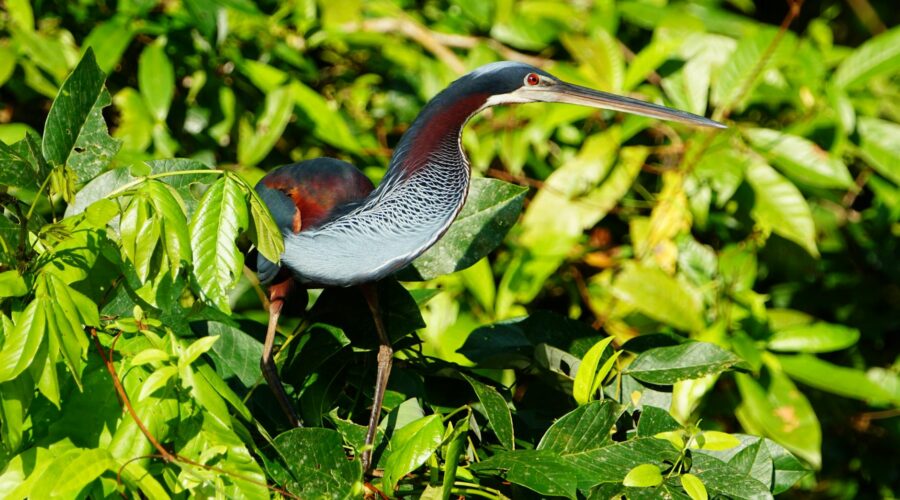
On the rugged slopes of Santiago Island in Cape Verde, conservationists are scaling trees and navigating treacherous terrain to save a bird found nowhere else on Earth. The Bourne’s heron—locally known as the “Santiago heron”—is a unique subspecies of the Purple Heron that has become a symbol of the archipelago’s fragile biodiversity.
The environmental organization Lantuna is leading the charge to protect these birds from a wave of modern threats. In the municipality of São Domingos, just a few kilometers from the capital city of Praia, technicians brave intense sun and slippery, thorn-covered paths to monitor the few colonies that remain.
High-Stakes Monitoring
“We are monitoring the colonies and have had nests under surveillance since last year,” environmental technician Samir Martins told Lusa. “We are ringing chicks, collecting biometric data, and taking blood samples for genetic studies to better understand this unique population.”
The work is high-tech and high-risk. While some technicians like Nadito Barbosa use their climbing skills to reach nests in tall trees, the team also employs drones, GPS tracking on adult birds, and surveillance cameras to study their behavior and feeding patterns. “When you love what you do, the difficulties become smaller,” says Barbosa, who joined the team in 2023.
A Race Against Extinction
Unlike other herons that stick to the coast, the Bourne’s heron prefers the wooded, humid interiors of the island. However, their numbers are dwindling. Researchers have identified 23 colonies across the island, but several locations have seen a sharp decline in bird counts compared to previous years.
The threats are man-made and difficult to mitigate. Introduced predators like feral cats stalk the nests, while open water reservoirs—meant for agriculture—act as accidental drowning traps for the birds. Perhaps most concerning is the human element: the capture of herons and the theft of their eggs for food or recreation.
“These are threats that are difficult to control,” Martins admits, noting that other species in the archipelago, such as the frigatebird and the red-billed tropicbird, are already facing local extinction. “We are losing many species. There is little information, and some are gradually disappearing.”
Community Conservation
To combat these losses, Lantuna is working to turn the local population into protectors. By visiting schools and meeting with farmers, the organization highlights the heron’s vital ecological role: the birds act as natural pest control, feeding on the rodents that plague local crops.
There are signs of hope. A growing interest in birdwatching is beginning to turn the Bourne’s heron into a destination for eco-tourists. Tour guides are increasingly learning to identify the species, providing an economic incentive for the community to ensure the bird’s survival.
For the team at Lantuna, the goal is clear: to bridge the gap in scientific data and create a future where the Santiago heron remains a permanent fixture of the Cape Verdean skyline.
Image: Pexels – René Wechet