Guide to Cape Verde’s Best Cultural & Music Festivals
In the middle of the Atlantic Ocean, the ten volcanic islands of Cape Verde (Cabo Verde) offer much more than just turquoise waters and sahara-like dunes. They host a vibrant, rhythmic soul born from a fusion of African traditions and Portuguese colonial history. This cultural melting pot expresses itself most vibrantly through its festivals—spectacular displays of music, dance, spirituality, and “Morabeza” (the local spirit of hospitality).
For the traveler, attending a festival in Cape Verde is the ultimate way to understand the archipelago’s identity. From the glitter of the Carnival in Mindelo to the rhythmic pounding of the drums during the Tabanka, here is a comprehensive guide to the most important cultural festivals in Cape Verde.
1. Carnival: The “Little Rio” of Mindelo (February/March)
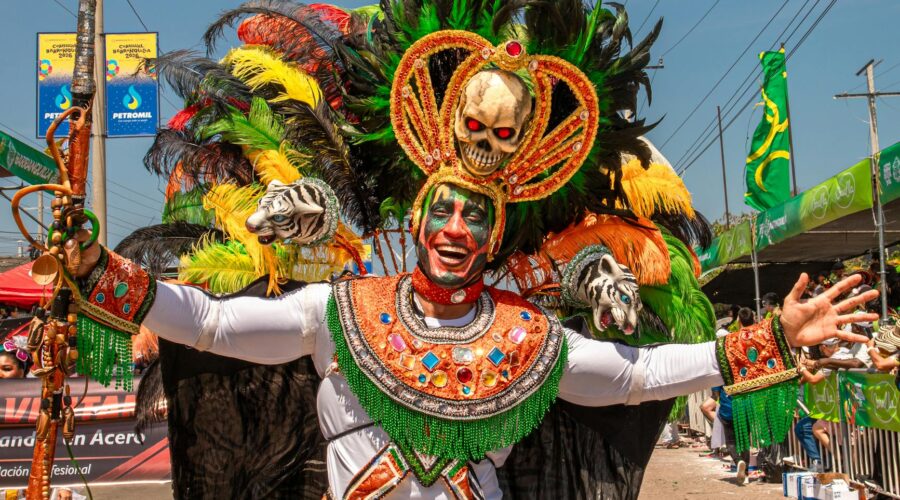
While Carnival is celebrated across all the islands, the city of Mindelo on the island of São Vicente is its undisputed capital. Often compared to the Rio de Janeiro Carnival, Mindelo’s celebration is the most sophisticated and visually stunning event in the country.
The streets of Mindelo transform into a stage for elaborate floats, synchronized dance troupes, and extravagant costumes adorned with feathers and sequins. The main parade involves competing “groups” that spend an entire year preparing their themes, music, and choreography. What sets the Cape Verdean Carnival apart is its blend of Brazilian energy and Portuguese tradition, all set to the local rhythms of Samba and Batuku. If you plan to attend, book your accommodation months in advance, as the island fills to capacity.
2. Festival de Baía das Gatas (August)
If Carnival is the soul of São Vicente, Baía das Gatas is its heartbeat. Held during the first full moon of August on the beach of Baía das Gatas, this is one of the oldest and largest open-air music festivals in West Africa.
The festival originated in 1984 as a simple gathering of friends playing music by the sea. Today, it attracts tens of thousands of people. The stage hosts international stars and local legends, performing genres ranging from Morna and Coladeira to Zouk and Reggae. The most unique aspect of this festival is the atmosphere: families camp on the beach, the shallow lagoon stays warm even at night, and the music continues until the sun rises over the volcanic peaks.
3. Gamboa Festival (May)
On the island of Santiago, in the capital city of Praia, the Gamboa Festival is the premier musical event. Held annually in May to coincide with the festivities of the Municipality of Praia, this beach festival focuses heavily on contemporary Cape Verdean music and Lusophone (Portuguese-speaking) artists from Angola, Brazil, and Portugal.
Gamboa is a high-energy event that showcases the modern side of Cape Verde. It is the best place to hear Funaná—the fast-paced, accordion-heavy music that was once banned under colonial rule for being “too sensual” but is now a symbol of national pride.
4. Tabanka: A Celebration of Resistance (May/June)
Tabanka is more than just a festival; it is a profound cultural expression of Santiago and Maio islands. Characterized by a “court” of symbolic characters (including a King and Queen), Tabanka involves rhythmic processions led by the blowing of conch shells and the steady beat of drums.
Historically, Tabanka served as a mutual aid society for the enslaved and later the poor. It represents a form of cultural resistance against colonial oppression. The festivities peak around the feasts of Santa Cruz (May 3rd), Santo António (June 13th), and São João (June 24th). Watching a Tabanka procession is a hauntingly beautiful experience that connects the modern visitor directly to the African roots of the islands.
5. The Feast of São João (St. John)
While celebrated throughout the archipelago, the San Jon (São João) celebrations on the island of Santo Antão (specifically in Porto Novo) are legendary. Held every June 24th, this is a dizzying mix of religious devotion and pagan ritual.
The highlight is the pilgrimage where devotees carry a statue of the saint for miles from Ribeira das Patas to Porto Novo. This is accompanied by the “Kola San Jon”—a rhythmic dance involving the simulated bumping of hips, accompanied by whistling and drums. The air is filled with the smell of roasting corn and traditional sweets, making it a feast for all the senses.
6. Sal Stage (September)
As the most touristic island in Cape Verde, Sal has developed its own major cultural draw: the Santa Maria Music Festival (Sal Stage). Usually held in mid-September on the sands of Santa Maria beach, this event caters to a diverse international crowd.
The festival serves as a bridge between Cape Verdean culture and the thousands of tourists visiting the island. It features a mix of traditional folk music, modern pop, and world music. The setting, with the stage literally steps away from some of the world’s clearest waters, is second to none.
7. Cape Verde Atlantic Music Expo (April)
For music industry professionals and hardcore world music fans, the Atlantic Music Expo (AME) in Praia is a must. While it functions as a trade fair, it features “showcases” that are open to the public. It is immediately followed by the Kriol Jazz Festival.
The Kriol Jazz Festival attracts world-class jazz musicians who experiment with Creole rhythms. It has gained international acclaim for its high production values and the sophisticated “Kriol” vibe, blending the soul of the Sahel with Atlantic jazz influences.
8. Nossa Senhora da Piedade (August)
On the rugged, fire-forged island of Fogo, the festival of Nossa Senhora da Piedade is a highlight. While Fogo is famous for its Bandeira (Flag) festivals in April/May (which include horse racing and traditional cake making), the August celebrations in São Filipe are equally captivating.
These festivals often feature horse races on the black volcanic sand, communal meals, and “cavalhadas” (equestrian games). The background of the towering Pico do Fogo volcano adds a dramatic flair to the festivities that you won’t find on any other island.
Practical Tips for Festival-Goers
- Inter-Island Flights: During major festivals like Carnival or Baía das Gatas, flights between islands sell out weeks in advance. Book early via BestFly Cabo Verde.
- Language: While Portuguese is the official language, the heart of these festivals is in Kriolu (Creole). Learning a few phrases like “Obrigadu” (Thank you) or asking “Tudo dretu?” (Everything good?) will go a long way.
- Safety: Cape Verdean festivals are generally safe and welcoming, but like any large gathering, be mindful of your belongings in crowded areas.
- Respect the Traditions: Many festivals, particularly Tabanka and São João, have deep religious and historical roots. While photos are usually welcome, always be respectful of participants during spiritual rituals.
Conclusion
Cape Verde’s festivals are the ultimate expression of the “Morabeza” spirit. They are not just parties; they are historical narratives told through drums, accordion bellows, and dance. Whether you are dancing in the glitter of Mindelo’s Carnival or following a drum procession through the valleys of Santiago, you are participating in a culture that has mastered the art of survival and celebration against all odds. To visit Cape Verde during a festival is to see the islands in their truest, most vibrant color.
Image: Pexels – Mister Edits